Purushu Arie, is a Chennai based fashion designer, educator, and founder of India’s first exclusively ungendered fashion label. A NIFT New Delhi alumnus, his work reimagines Tamil heritage and street clothing through functional design, cultural identity, and contemporary urban wear rooted in everyday movement.
Raised in Chennai and working across fashion, fine art and portraiture, Shaheen’s work draws from her cultural landscape and the people she grew up among, all while reimagining ways of seeing through memory and place. Her practice is grounded in a playful fascination with gesture, colour, and the materiality of cloth.
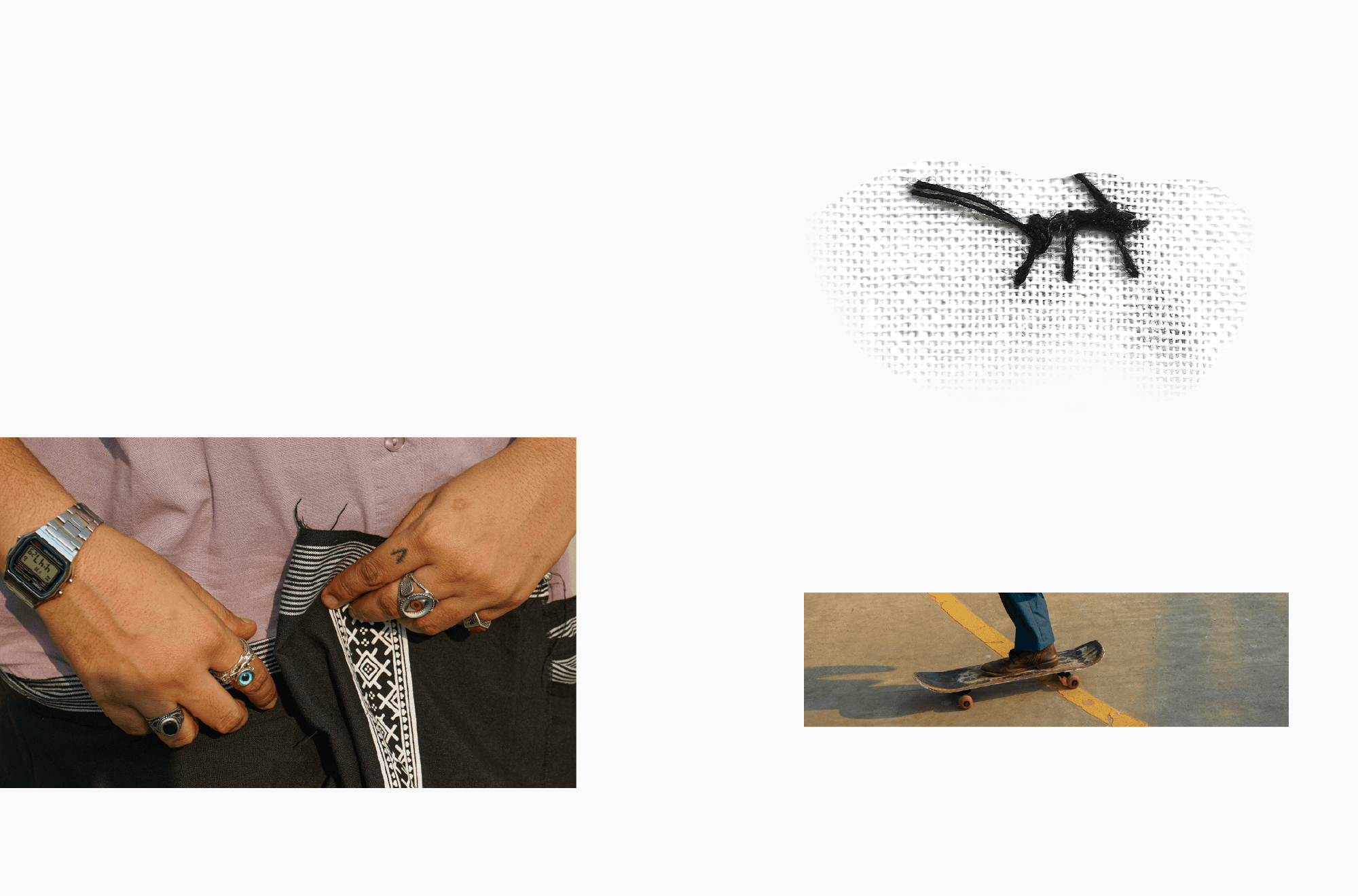
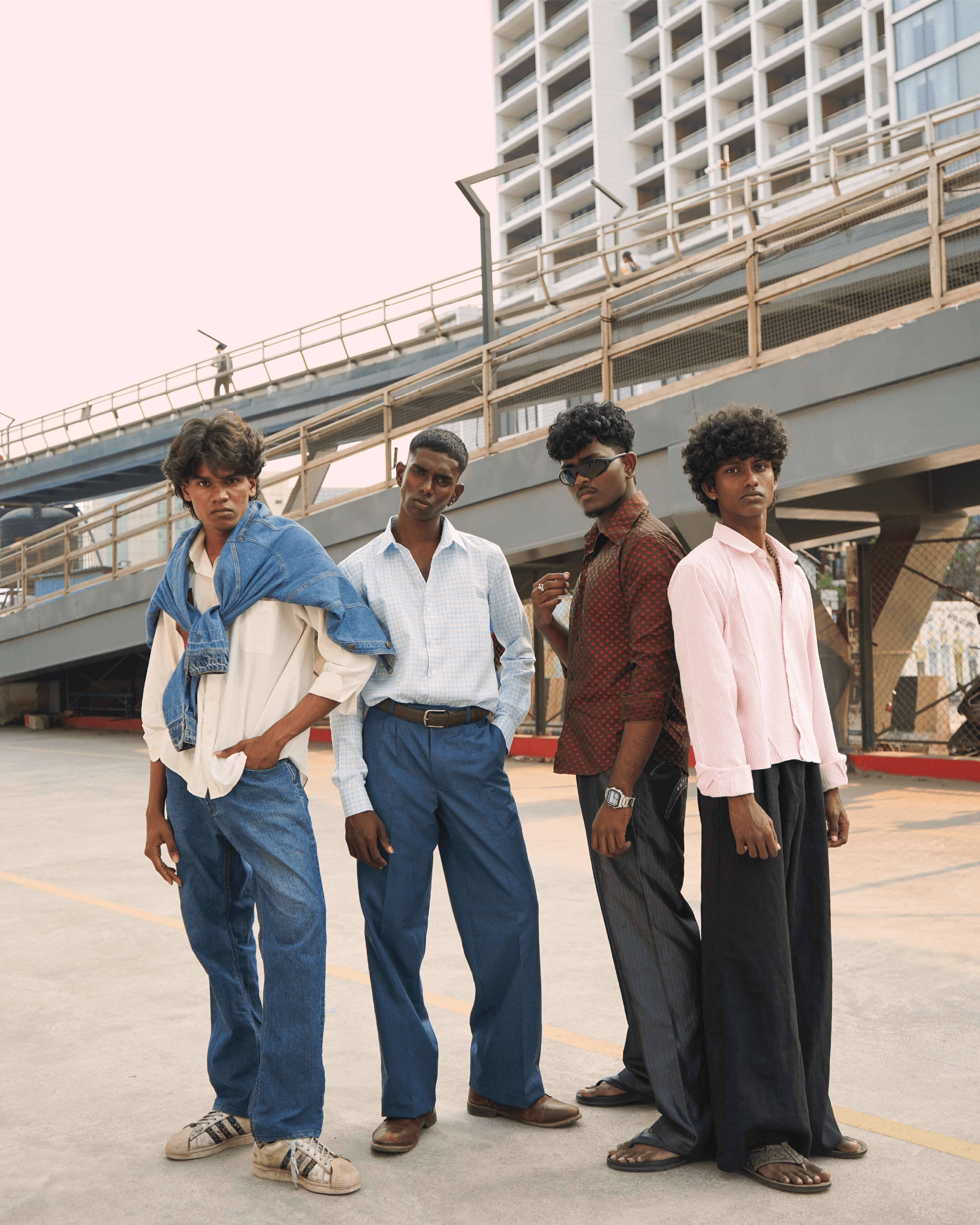
It is a soft four o’clock Chennai sun, the kind that sits kindly on skin and concrete, the kind photographers quietly approve of. The Thiruvanmiyur MRTS Children’s Park sits tucked beneath the elevated railway tracks, like a vivid strip of colour and play. Near one corner is a small skateboarding patch, its flat grey surface in quiet contrast to the vibrantly painted train pillars around it.
Only a handful of people are scattered across the park. Four young men stand out among them, college students dressed in their own versions of street style. I scouted them on Instagram, through a stream of chaotic, whacky fashion reels. In one of the reels that caught my attention, Rocky skateboards down a Chennai street in a lungi.
“I thought, since lungi is what we wear at home, why not skateboard in it?” Rocky laughs. In another video, he skateboards wearing a veshti, or dhoti. The videos have attracted several hundred thousand views on Instagram.
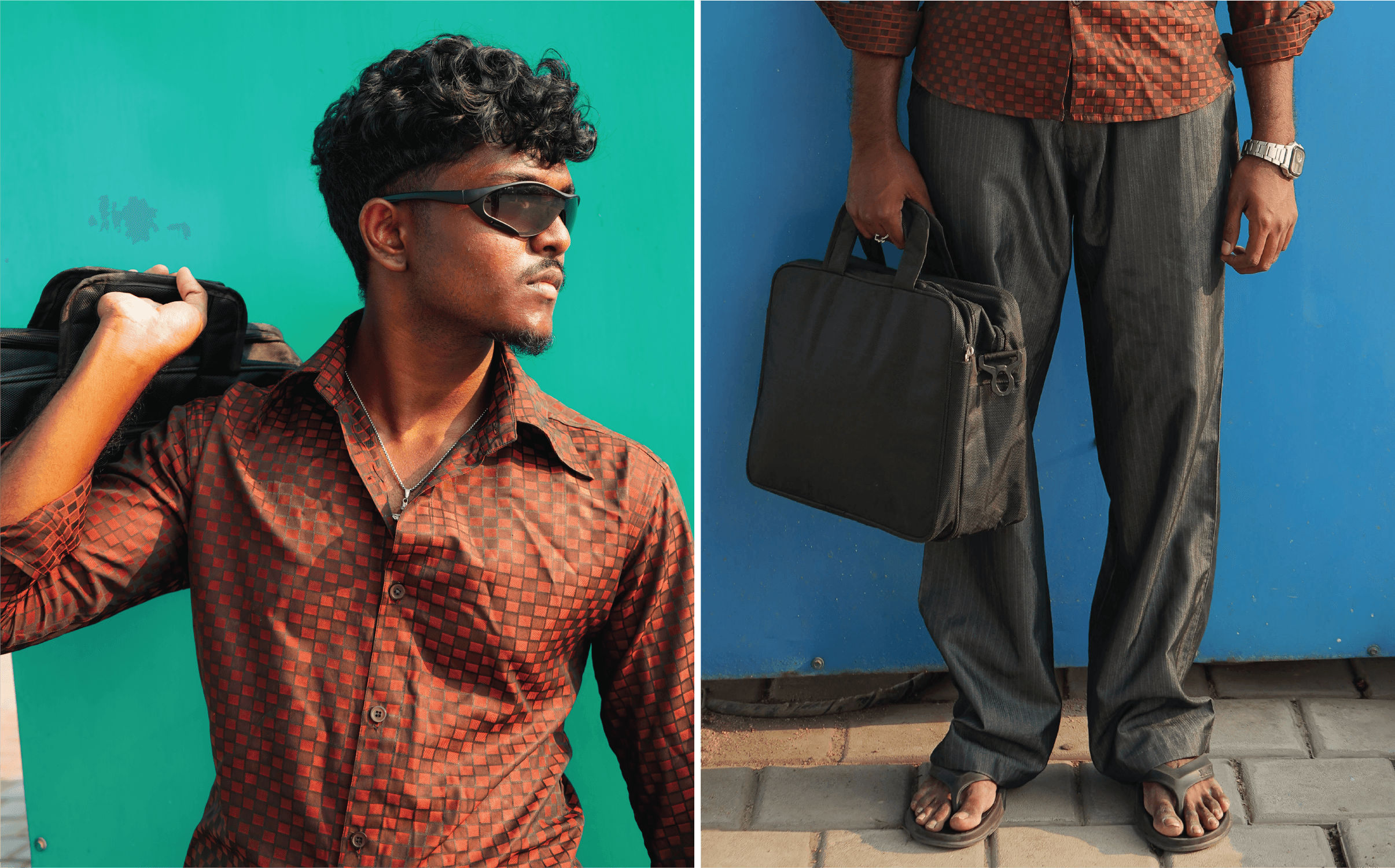
The four friends are no strangers to this park. It is their hood. Many of their Instagram posts were shot right here. Dharshan is dressed in a black pullover and jorts, with large over-ear headphones resting on his K-pop-inspired hairstyle. Thamizh’s outfit is muted. A steel chain pendant rests at his chest, gleaming in the light. Dhivakar’s shirt is cropped, something he altered and customised himself. Rocky, dressed in tailored formals, holds a skateboard, waiting for his turn to roll across the concrete.
For Rocky, the skateboard was where everything began.
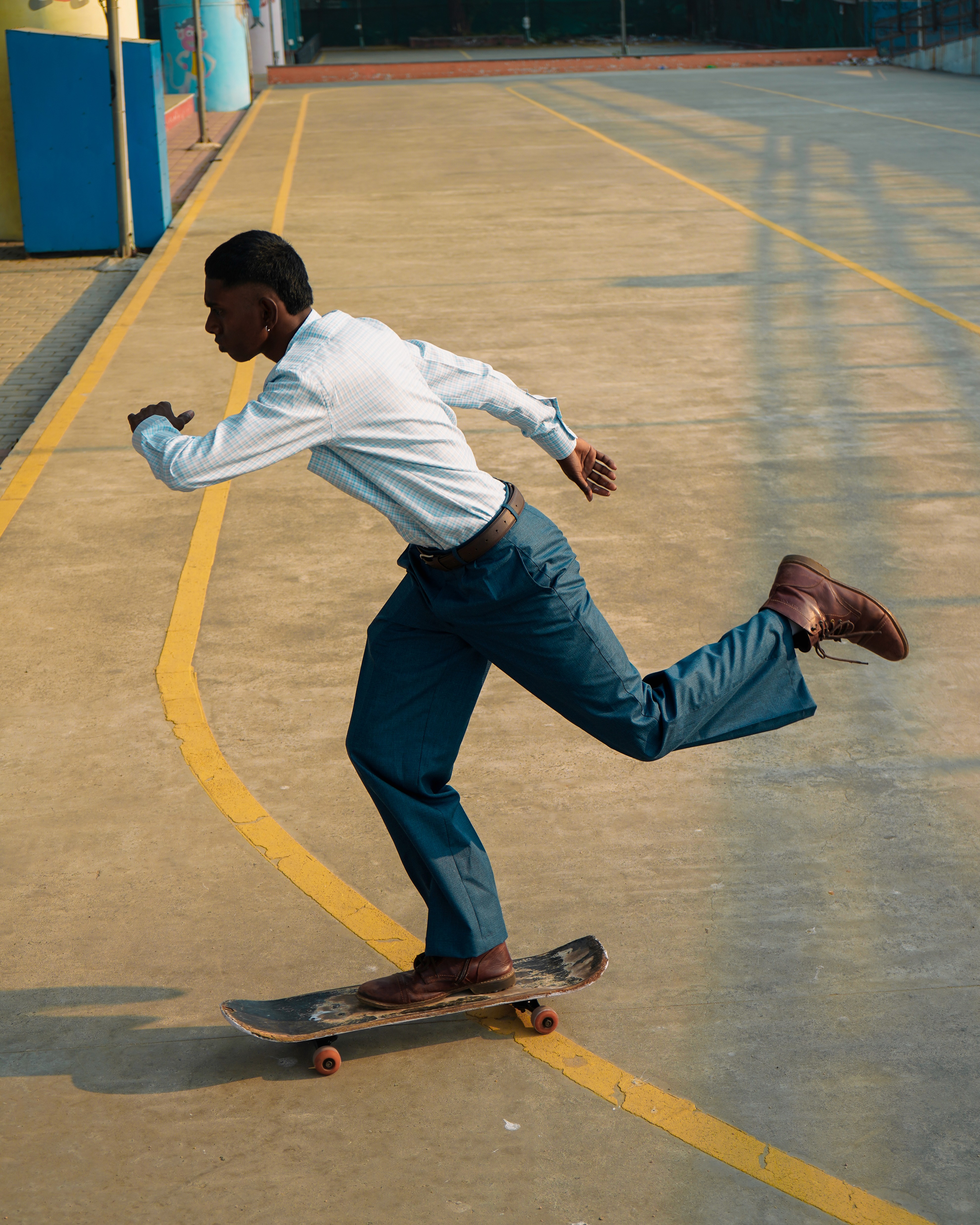
“I got into skateboarding after watching The Amazing Spider-Man,” he recalls. “Andrew Garfield rides a skateboard in that film. My friend Dharshan and I saw that and started skating.”
Soon skateboarding began shaping how he dressed.
“Every skater has their own style,” Rocky explains. “Some wear jorts. Some wear full baggy clothes. Some wear skinny pants. Watching them is where my dressing inspiration came from.”
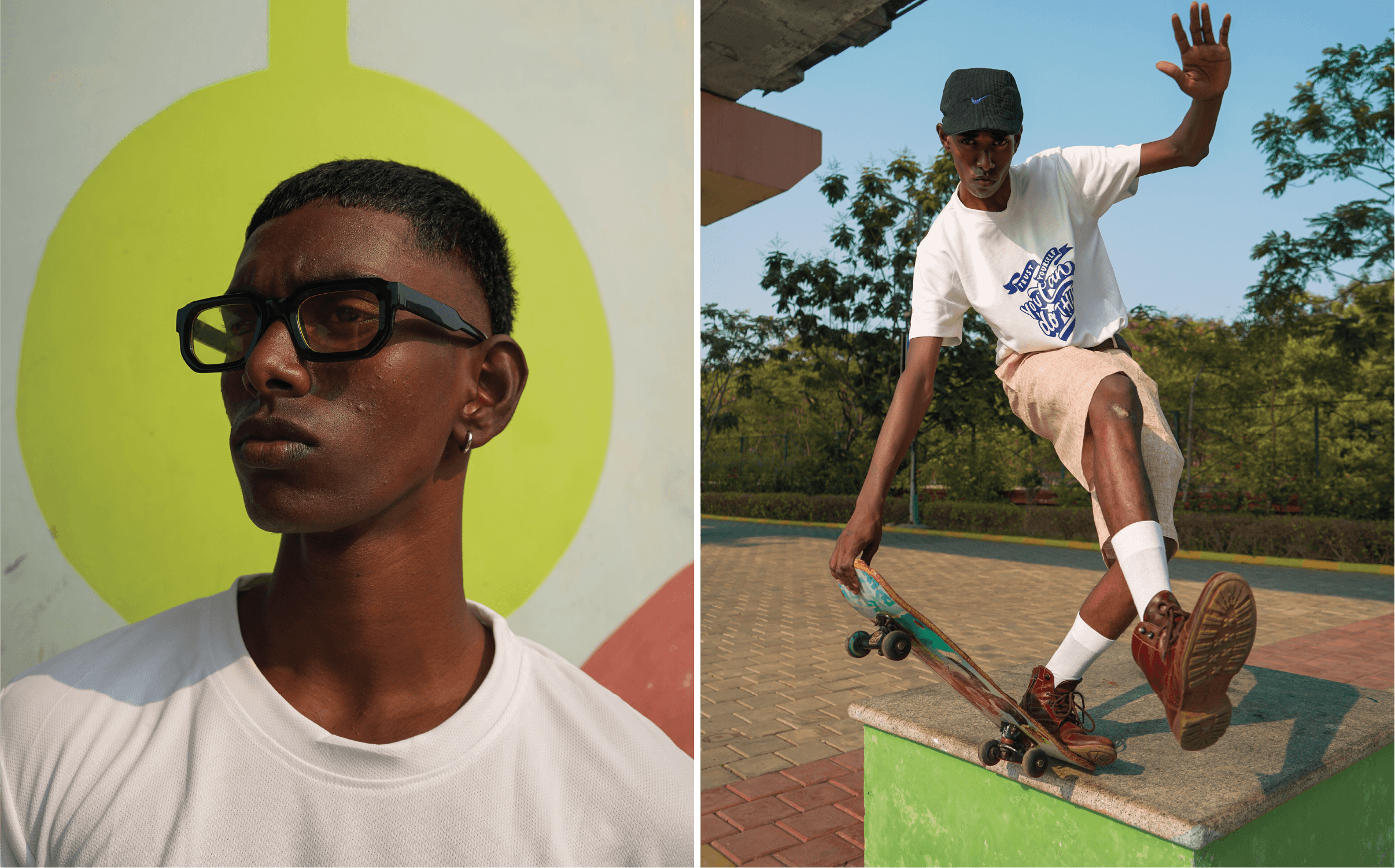
The four of them pose effortlessly for the camera. With the skateboard. Leaning against pillars. Moving through the colourful landscape of the park. Their movements feel practised. As if they have studied poses like these somewhere before. Fashion photographs, perhaps. Instagram reels. YouTube?
The park watchman keeps an eye on us a little too carefully. A man walking past slows down and stares as he moves on. Two women whisper to each other as they watch the photoshoot. Most others carry on with their afternoon. The photographs come easily. No crowd gathers. No one interferes.
Real life feels almost indifferent. The internet, though, has not always been so generous. On Tamil meme pages, this kind of street style is often mocked as pullingo. The word circulates easily through reels, memes and comment sections. Sometimes playfully, often with contempt.
Pullingo Subculture & Gaana Music
Around 2019, a gaana song titled “Gumbalaga Suthuvom” by the singer Gaana Stephen spread rapidly among Tamil youth. The song went viral with an infectious rhythm and a visual language rooted in North Madras streets. Within months it crossed tens of millions of views on YouTube.
In its tongue-in-cheek lyrics, the song popularised a familiar street figure. In Chennai slang, he was called the pullingo. A boy from the neighbourhood streets, instantly recognisable through his style. Funky hairstyles. Crocs. Fitted or ripped jeans. Bright shirts. Chains. A Dio scooter revving through narrow lanes. His body language carried a mixture of youthful swagger and playfulness.
The music that accompanies this aesthetic rarely comes from playlists approved by elite cultural gatekeepers. It comes from gaana, a genre of music born in the working-class neighbourhoods of North Chennai.
Thamizh remembers the moment he decided to use it in one of his fashion reels.
“I had a ramp walk video,” he says. “Everyone told me to use an English song. Something like Kendrick Lamar.”
Instead, he chose a gaana track.
“When I posted it first, my friends mocked it. They said it wouldn’t work. But the reel got good reach.”
“Some people look down on gaana. They like to flex hip hop and rap, not gaana,” he adds. “But hip hop was also criminalised when it first started.”
“That’s when we realised gaana and fashion can mix,” Thamizh says with a grin. “Later many people started doing similar reels.”
Internet's Hierarchy of Taste
But the same internet that amplified these styles also found ways to mock them.
During the pandemic years, platforms like TikTok briefly disrupted India’s media landscape. For the first time, creators from villages, small towns, and working-class neighbourhoods began appearing on millions of phone screens.
Kerala-based poet and Dalit feminist writer Aleena remembers that moment clearly.
“TikTok gave visibility to people who usually don’t appear in mainstream media,” she says. “People from villages, small towns. But at the same time everything about them was mocked. Their accents, their hairstyle, their clothes, the way they spoke, the way they danced, even the quality of their videos.”
The ridicule quickly found its vocabulary.
Across the Indian internet, the word chapri began circulating widely. Originally linked to the Chapparband caste, historically associated with roof making, the term evolved online into a slur used to dismiss the aesthetics of creators from rural and lower-class backgrounds, many of them from marginalised castes.
“We all know chapri is a casteist slur,” Aleena points out. “Now it functions almost like an aesthetic to be mocked.”
For her, the judgement is rarely about clothing alone.
“It is less about the clothes and more about who is wearing them,” she explains. “When something is associated with people on the margins, it has less perceived value. When the same style is appropriated by people from dominant groups, suddenly it becomes fashionable.”
The process is familiar across cultures. A hairstyle, a colour, a way of dressing slowly travels upward through social hierarchies, often shedding its origins along the way.
“In India many cultural expressions associated with oppressed caste people are seen as less desirable,” Aleena says. “But when upper-caste or elite people appropriate them, it becomes a cool thing to do.”
In this hierarchy of taste, styles associated with neighbourhood youth cultures are rarely read as fashion.
Too loud. Too bright. Too eager to be seen.
Tone it down.
Lakshmi, an androgynous Chennai resident who pairs a punk haircut with malli poo and gold jewellery, says the ridicule feels familiar.
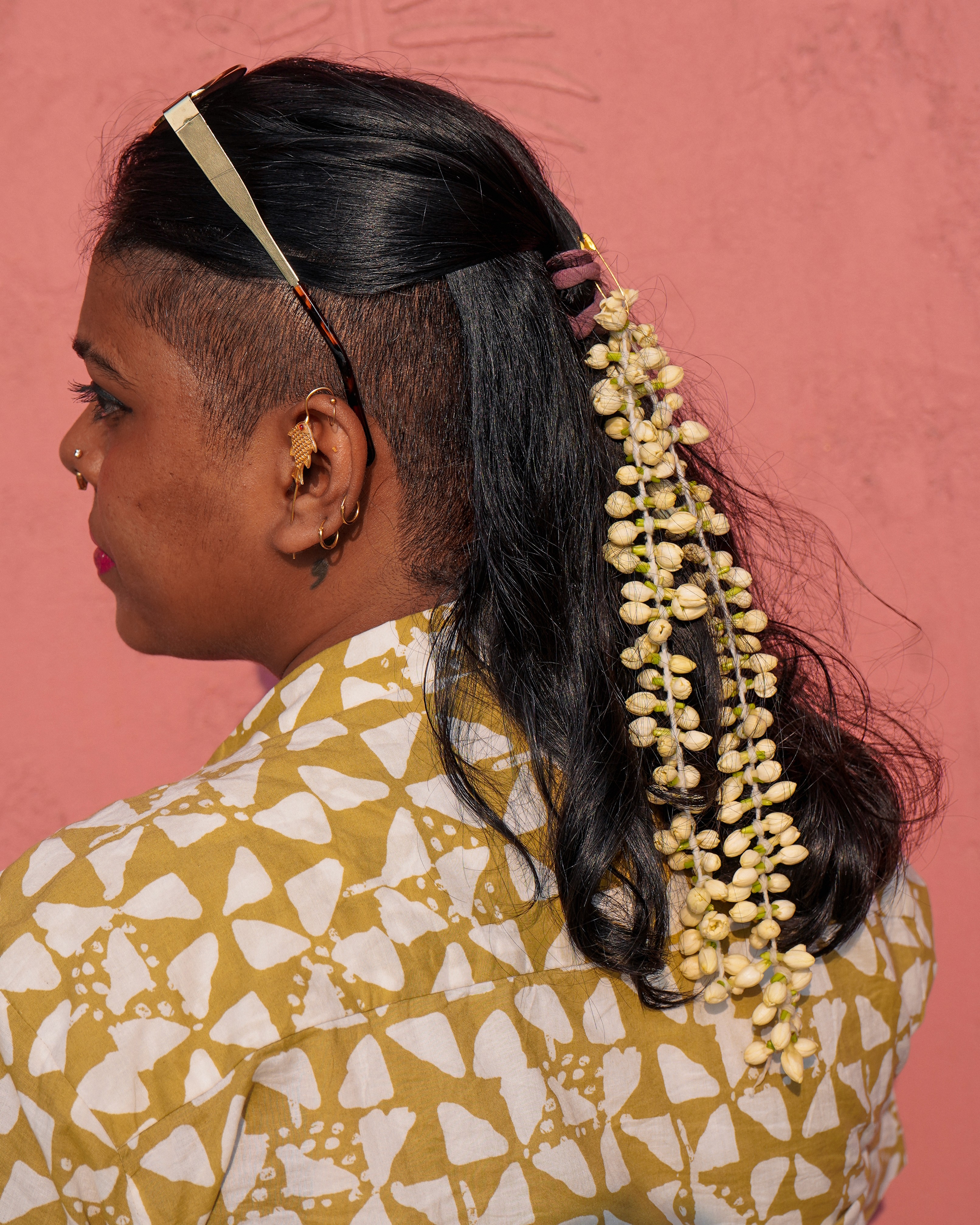
“People have mocked me too, saying I look like a pullingo,” they say. “When I was in school, classmates used to compare my braided hair to the Otteri Nari character in the Tamil film Ghilli. But I still like braiding my hair.”
They pause before adding that the internet can be both cruel and strangely democratic.
“I don’t like the large scale effects social media has,” they say. “But I also appreciate that it gives everyone a playground. Content creation has become accessible to so many people.”
The boys had already encountered that ridicule themselves. Rocky knows that laughter well.
“Some people abused us in the comments section,” he admits.
He laughs, adding that he deleted many of those comments.
“Friends encouraged me though,” he smiles. “Others just teased.”
But the views kept growing. One reel in particular went viral beyond their usual circle. In it, Thamizh, Dharshan, and Dhivakar appear at a neighbourhood tea shop dressed in trench coats, posing to a gaana song. The contrast was deliberate. Western outerwear at an everyday roadside Chennai tea stall.
The reel crossed a million views.
“Many people recreated parody reels to mock us at first,” Thamizh laughs. “Later a lot of them started copying the same idea. First people criticise. Later they follow.”
Mockery and imitation often travel together online. Words like pullingo and chapri circulate easily through memes and comment sections, and for those who wield them in contempt, the problem is rarely the clothing alone. It is the audacity of being seen. The bright shirt, a distinctive hairstyle, and a carefully altered pair of jeans become small gestures of presence in a culture where the elitist upper caste gaze often dismisses them.
Yaari, a queer tech worker in Chennai whose style includes short hair and veshtis worn with shirts, recalls the first time they heard labels like chapri.
“The first time I heard terms like chapri or pullingo, I didn’t even know where they came from,” they say. “Later I realised people use them to mock someone simply because they are styling themselves the way they like.”
“When I see people dressing in what others call pullingo style, I see them being happy and authentic,” they add. “That’s something I aspire to as well. As a queer person, I have always wanted to be myself regardless of what others say.”
The Blue Dandy - Style as Authorship
On 6 February 2025, Instagram user @hypatiaa16 shared the dress code announcement for that year’s Met Gala. The theme was “Superfine: Tailoring Black Style”, a celebration of Black dandyism and the long history of clothing as a language of pride and resistance. Below the announcement, she added a thought of her own. Indian street style, she wrote, deserved to be studied with the same seriousness. What was emerging across India’s streets, she suggested, was the ‘Blue Dandy’, a phrase she coined for this aesthetic. The “blue” in the name carries its own symbolism. It is a quiet tribute to Dr. B.R. Ambedkar, whose blue suits have long come to represent dignity, self respect, and the politics of being seen.
The phrase also echoes the longer history of dandyism itself. Across cultures, the dandy has used clothing not simply as decoration but as a way of asserting presence.
Seen this way, the pullingo stands in a similar lineage, even if that recognition has not yet arrived. Their clothing may not appear in museum exhibitions. But the impulse behind it is familiar. To claim space. To insist on visibility.
For some, clothing also becomes a way of negotiating gender.
“As a queer person I enjoy dressing in a masculine way,” Yaari says. “Veshti gives me a lot of gender euphoria.”
They had always wanted to wear one but hesitated.
“I was scared it might slip or fall down,” they say. “Eventually a friend gifted me a black veshti. That’s when I started wearing it.”
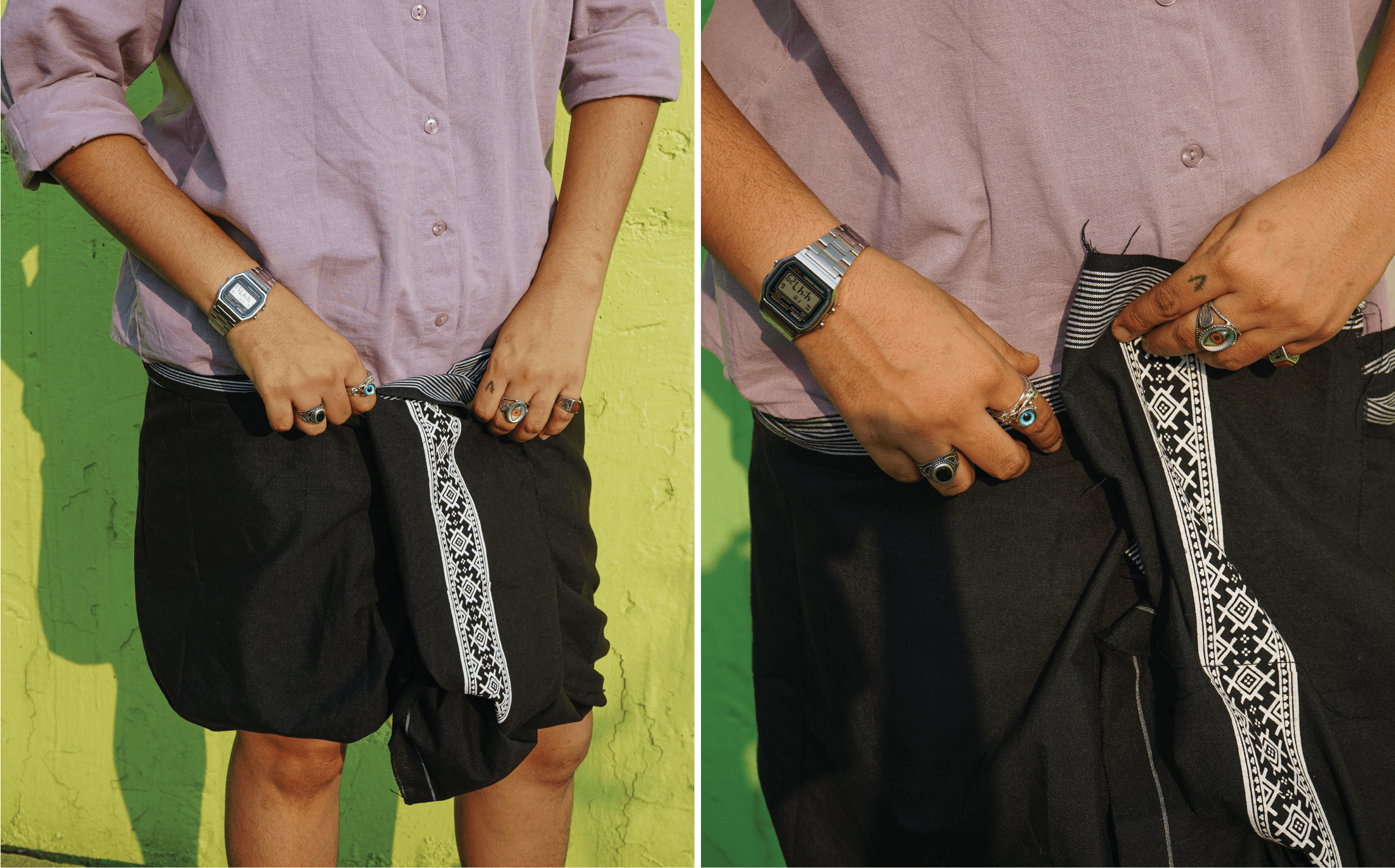
In this sense, the Blue Dandy’s style is not merely flamboyant. It is expressive. Look closely and the aesthetic begins to reveal its own grammar. There is care in these details. A chain bought from a pavement stall. A shirt borrowed from a friend. A pair of jeans altered at home. Pieces gathered slowly and assembled into style.
For Dhivakar, this process often begins in the thrift shops of Parrys, a busy wholesale shopping district in Chennai.
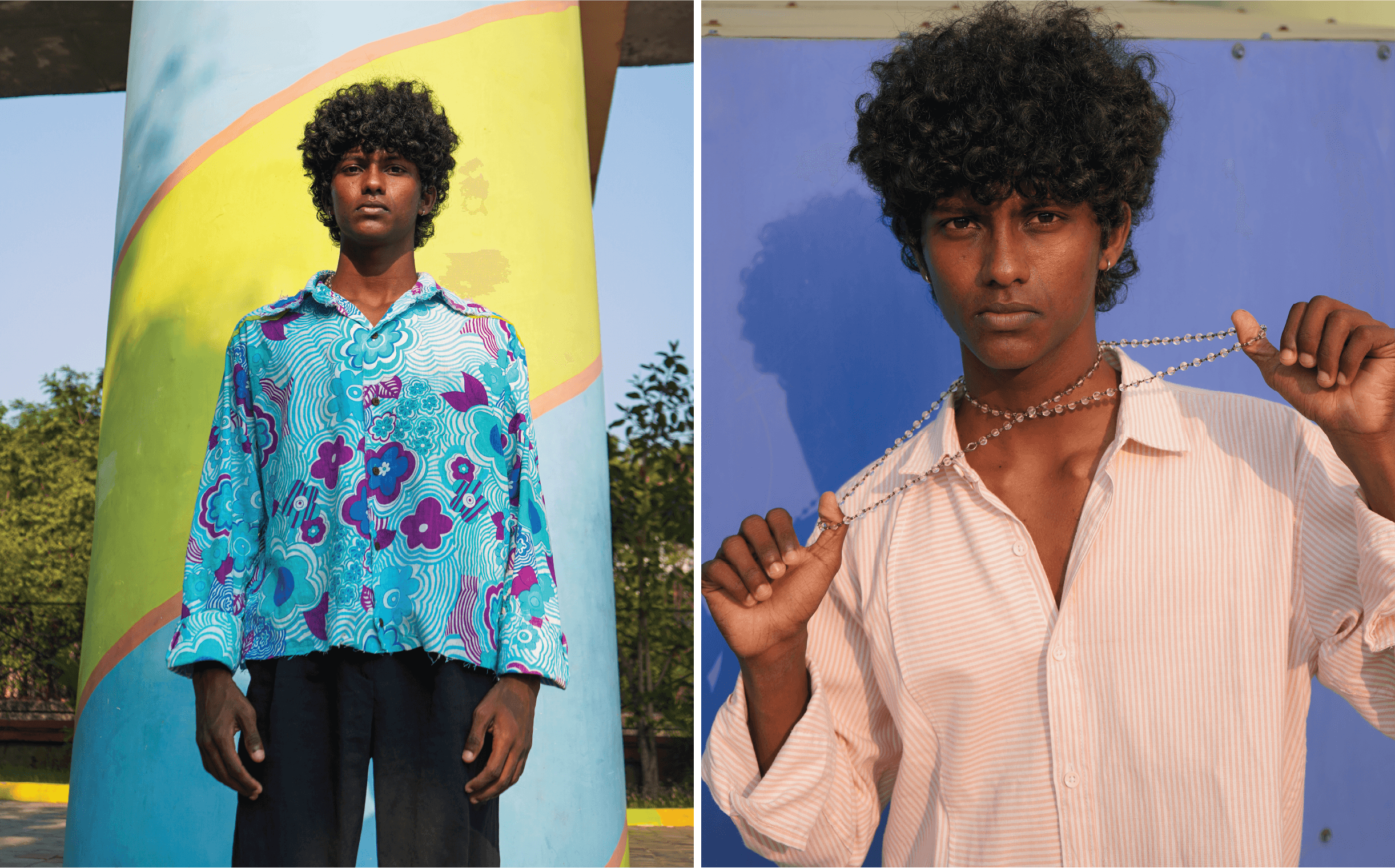
“At that time we didn’t have money to buy many clothes,” Thamizh explains. “So we started thrifting.”
For Dhivakar it became a ritual.
“If I get ₹1000 for clothes,” he smiles, “I will go thrifting. I might buy ten pieces.”
Then comes the DIY stitching and altering.
“My mother knows tailoring. I learnt from watching her,” he says. “I crop my shirts myself. I don’t know how to control the motor pedal on the sewing machine,” he reveals. “It runs very fast. I rotate the handwheel manually and stitch slowly.”
Even the shirt he is wearing today began differently.
“My friend bought it from a local mall. It was too big for him. I cropped it and stitched the leftover fabric as a patch.”
Fashion often imagines the dandy as a man with the luxury of time and money to craft an image of himself. The Blue Dandy complicates that picture. Their wardrobe may come from thrift shops, borrowed shirts, or clothes altered at home, yet the intention behind it is unmistakable. They do not dress to blend into the background. They dress to be seen. In this sense, they represent a different kind of dandy, one whose elegance lies in presence rather than privilege.
Street - A Cultural Ecosystem
No style grows alone.
The aesthetic that some online commentators dismiss as pullingo draws from a wide and shifting ecosystem. Gaana beats. Friends gathering at tea shops, what they call atti in Chennai slang. Instagram reels watched late at night. Skateboarding clips shared among friends.
College campuses also play a role.
For Dharshan, the entry point into fashion was a college cultural festival.
“In school I liked modelling,” he recalls. “But I never did anything about it. After joining college I did my first ramp walk with friends. Then slowly we started doing fashion shows, photoshoots, small concept shoots.”
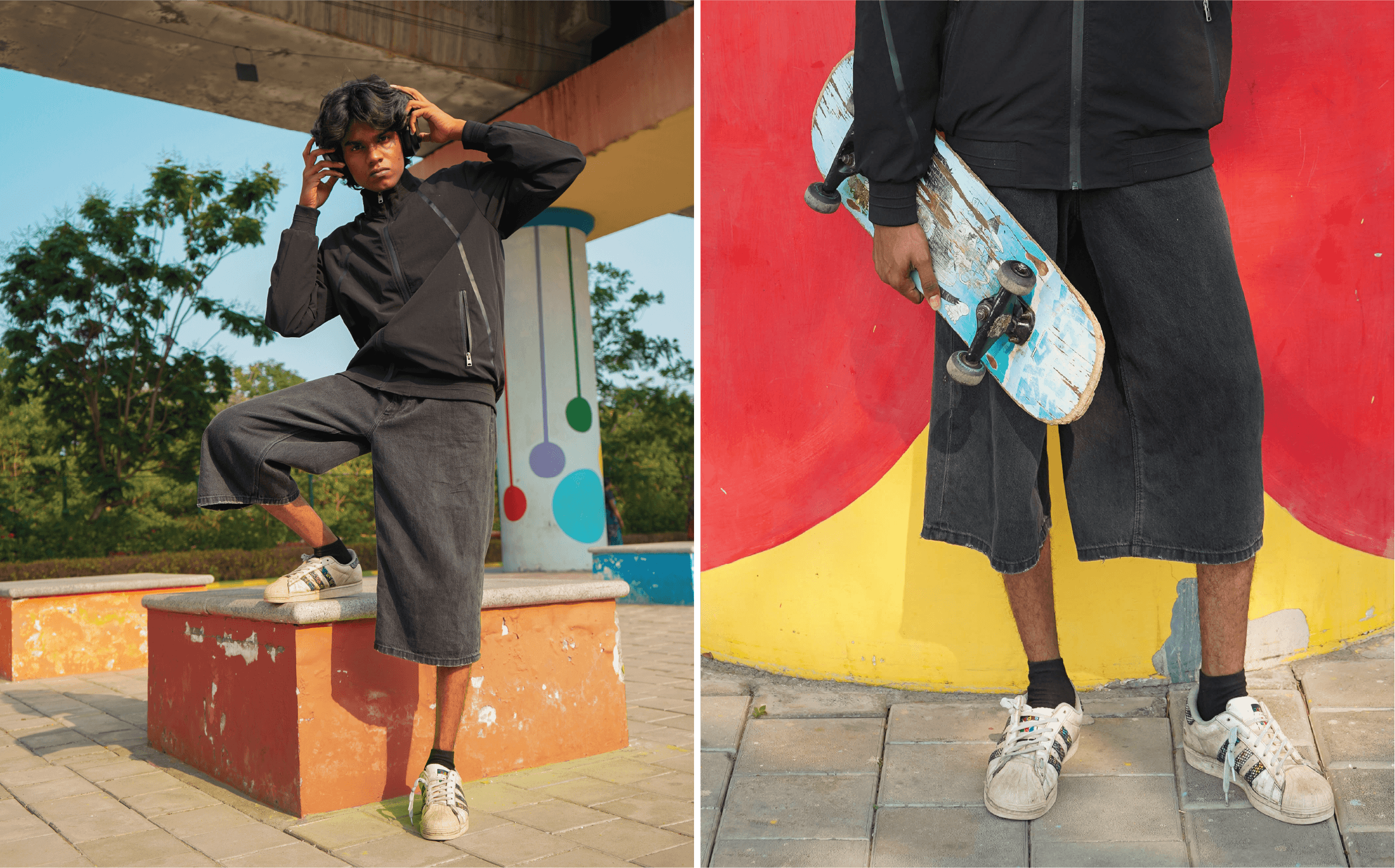
What began as casual experimentation soon became routine. The friends film reels, organise small shoots, and occasionally try approaching clothing brands or makeup artists for collaborations.
“Still learning,” Dharshan concludes.
The motivations behind the style, however, are rarely complicated.
“I don’t like doing things just because others are doing them,” Thamizh says with a shrug. “Better to create something of my own.”
Dressing well also signals belonging to a circle of friends who share the same aesthetic language. None of them describe their style as rebellion. They speak about it simply as enjoyment.
There are also the smaller neighbourhood rituals that quietly shape the look.
Friends who take turns filming reels on their phones after college hours. The barber who knows exactly how sharp the fade should be. The roadside stall where a chain can be bought for the price of an evening snack, the kind of place known quietly through word of mouth.
Dhivakar says he first discovered thrift shops only after Thamizh took him to Parrys market.
Style knowledge travels through these informal circuits.
Mainstream fashion media, shaped largely by advertising and big brand names, rarely looks here. Yet this is where style evolves organically, shaped by the community and fuelled by creativity rather than capital and profit.
Discomfort of the Upper Caste Gaze
What unsettles some observers about the pullingo aesthetic is not only the clothing. It is the way the body carries itself inside the clothing. Upright and unapologetic.
In a society where caste and class have long shaped who is allowed to be seen and who is expected to remain unseen, such presence can feel unsettling. What might appear to one person as youthful style can appear to another as excess.
Sometimes that discomfort slips into something darker.
In moments of crisis, appearance can quickly become an accusation. After the Tiruttani lynching in December 2025, social media filled with posts linking the violence to pullingo identity. The boys involved in the crime were teenagers whose style resembled the very aesthetic the internet often labels as pullingo. Within hours, commentary began circulating online, treating the incident not simply as a crime committed by individuals but as proof to criminalise the entire pullingo subculture.
Such accusations are rarely applied evenly. Across Tamil Nadu, many caste atrocities have historically been carried out by men dressed in crisp white veshtis and shirts, an attire long associated with social power and respectability in the state. Yet their clothing is rarely discussed as cultural markers of violence. The white veshti remains neutral. The crime remains an individual act.
In the case of pullingo aesthetics, the hairstyle, the slang, and the music they listen to are often read as signs of something more threatening. Small details of everyday life become markers in an imagined profile of danger.
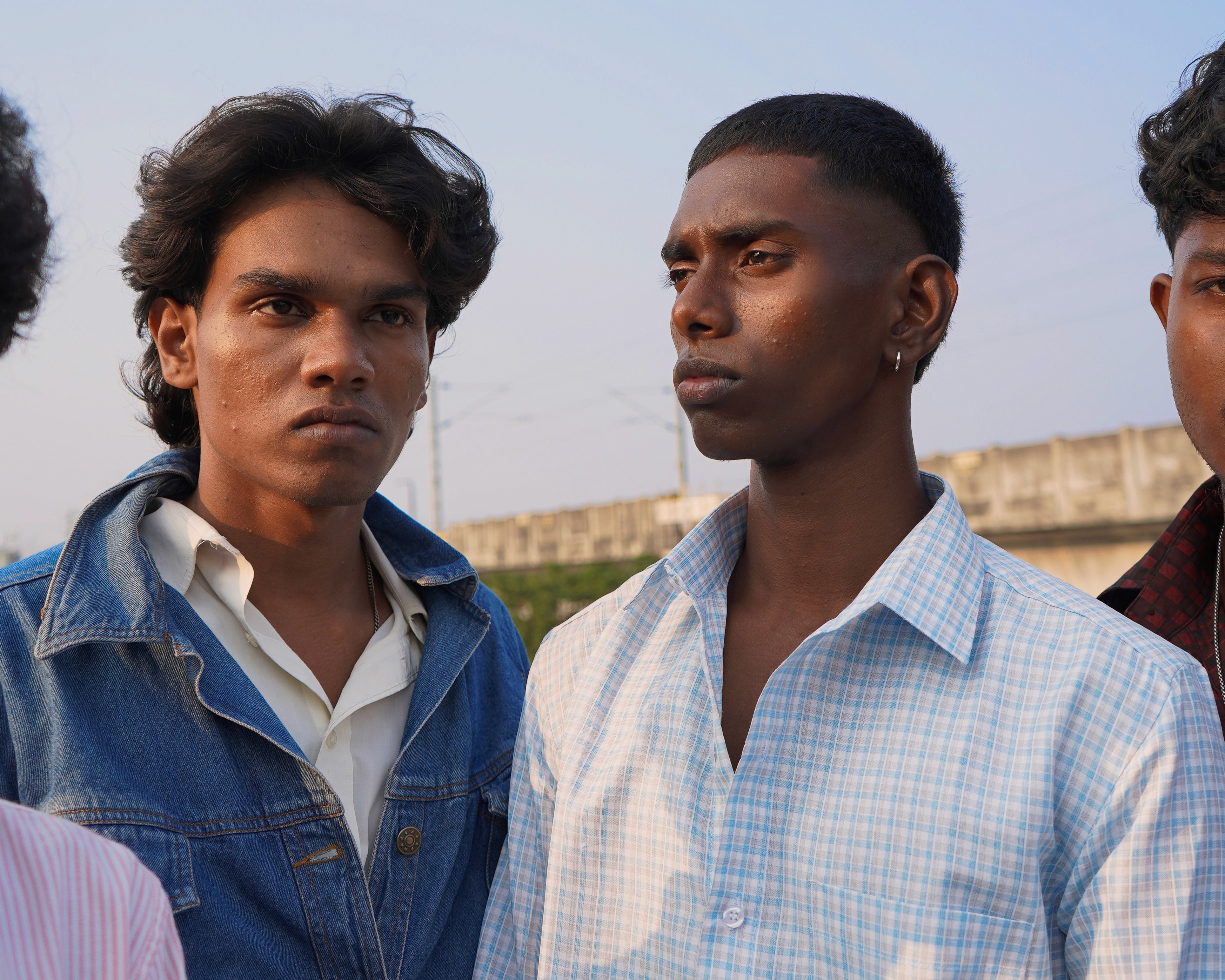
Such narratives collapse individuals into stereotypes. A street subculture becomes shorthand for caste and class based prejudice.
Lakshmi says these judgements rarely remain confined to the internet.
“I come from an OBC community, and I see discrimination at many levels,” they say. During a trip to Rajasthan, they recall, a woman refused to serve them food inside the house. “She let my fair-skinned friend in, but told me to sit outside. They said, ‘This person is dark skinned. I don’t know what caste they are.’”
For queer people, visibility can feel even more precarious.
“Sometimes I am honestly scared for my life,” Lakshmi says. “I’ve heard of people in the queer community who were victims of honour killings.”
For some, simply dressing differently can carry risks that go far beyond online ridicule.
Indian fashion often looks upward towards desi elites or outward towards global capitals for inspiration. Meanwhile the street continues to invent its own aesthetics, quietly and without permission.
One day these homegrown subcultures may be recognised as fashion histories of their own.
Until then, the Blue Dandy endures like a story from an unwritten archive, dressed not for approval, but for the pleasure of being seen.