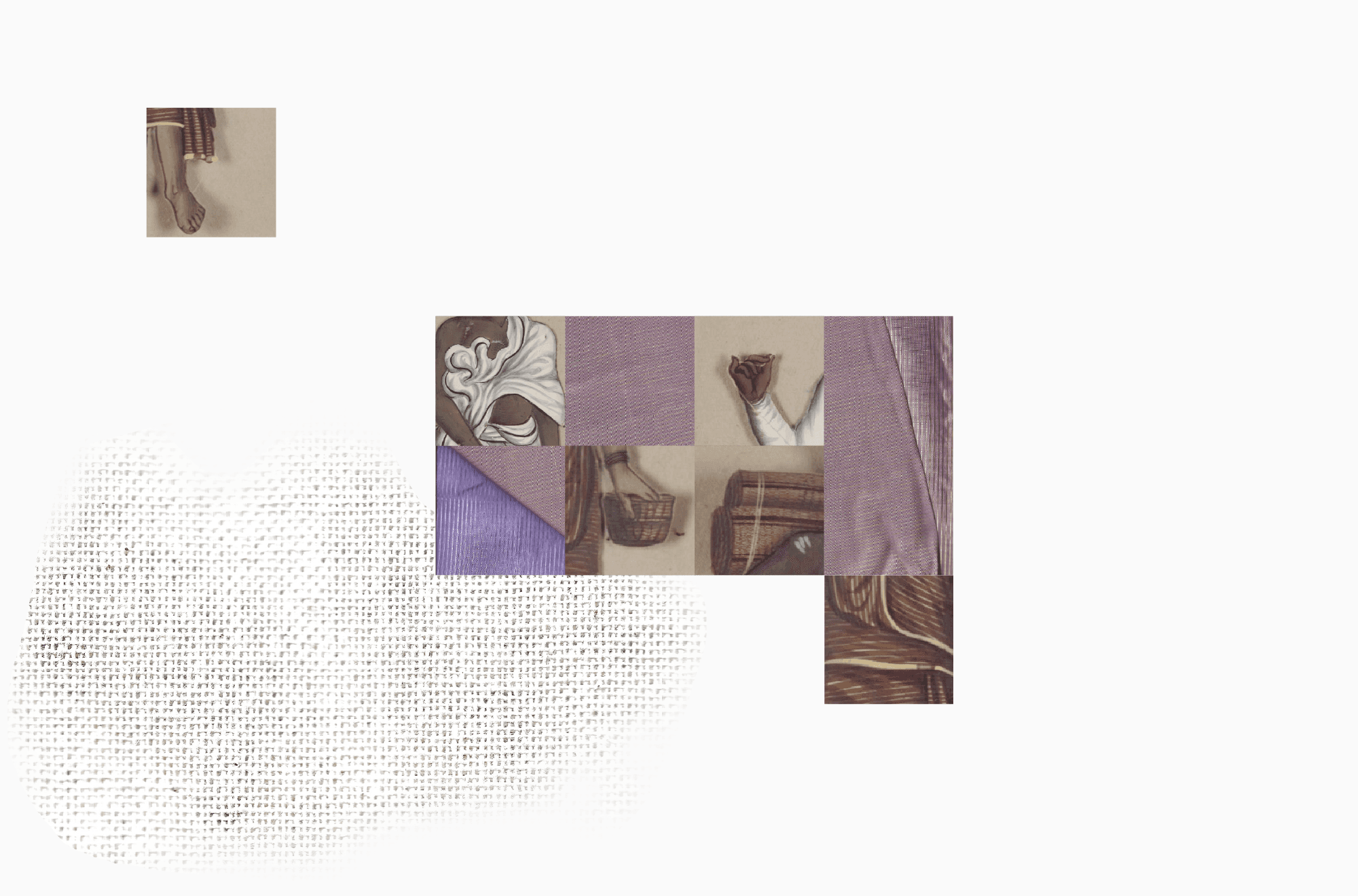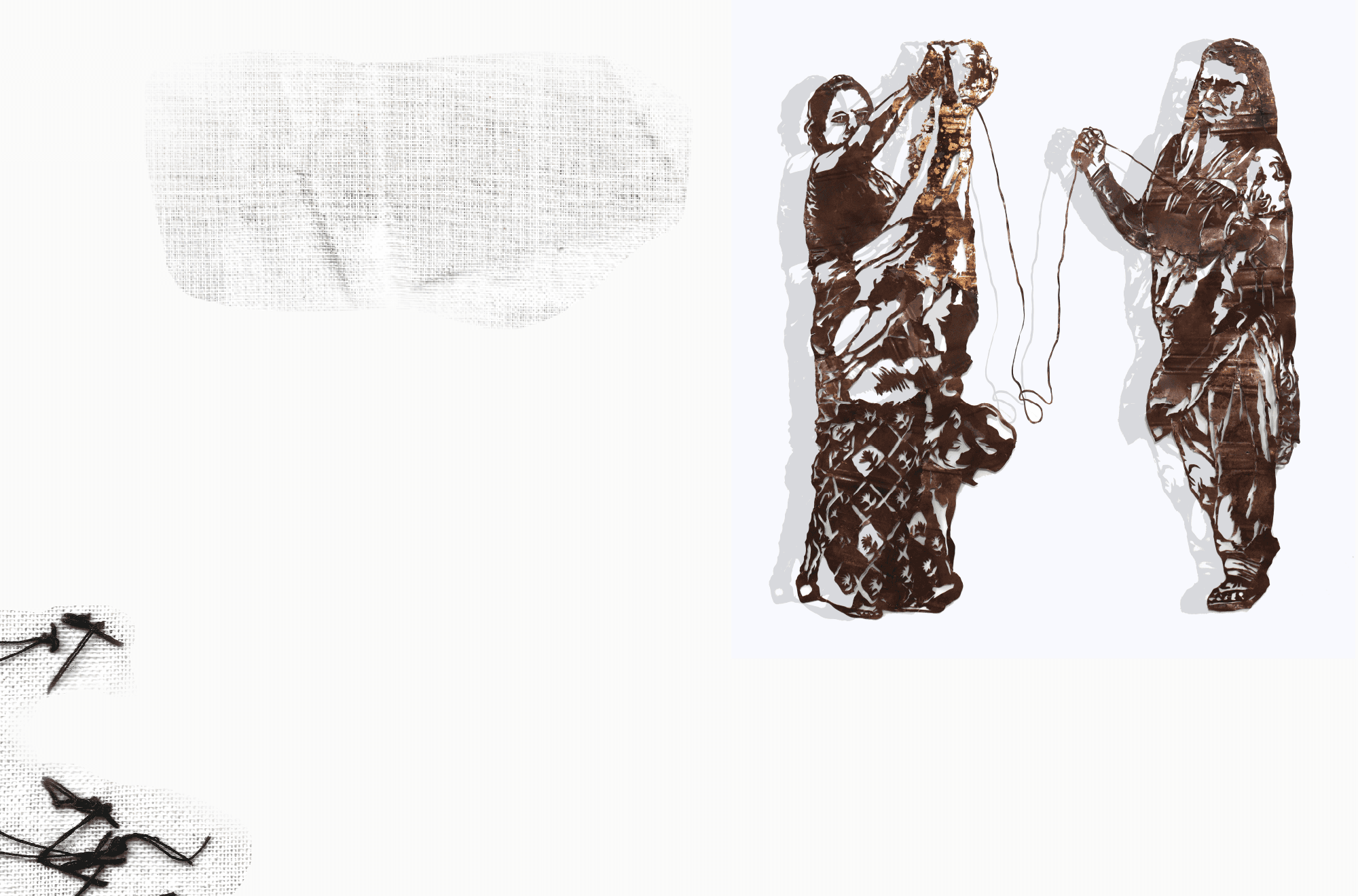
Alyen Foning is a textile artist and storyteller from Kalimpong. Rooted in Lepcha shamanic lineage, her work bridges ancestral memory, nature, and feminine sacredness. A graduate of NID Ahmedabad, she creates installations, crafts, and immersive experiences that honor ecological and cultural continuity through art, ritual, and community collaboration.
Maltongmu Lepcha is a Textile Design graduate from the National Institute of Fashion Technology (NIFT) Chennai, currently working at Love Pero as a textile designer. She is passionate about sustainable textiles, natural dyeing, and traditional crafts.
Lungmying Lepcha is a B.Tech student at NIT Sikkim who believes she can extract literary works from her culture and translate them into English to share them with the world. The Lepchas are an indigenous Himalayan tribe in Sikkim, known as the first original inhabitants. Lungmying's writings are largely ethnographic, revolving around the myths and culture of the Lepchas. She uses mostly poetry and creative nonfiction forms of writing.
Before fashion, there was mist. Before cloth, there was bark, fibre, river water, and the patience of hands.
In the eastern Himalayas, where rain arrives without warning, and the forest floor remains damp long after the clouds clear, the first Lepcha garments emerged from the terrain. From the need to move across slopes without obstruction. From the necessity of warmth without weight. From the intelligence of plants growing within reach. Lepcha clothing begins in the forest.
Early fibres were gathered from the surroundings, extracted from wild plants, beaten, softened, twisted into thread. Knowledge of fibre was ecological knowledge: which plant could withstand the monsoon, which bark yielded strength, and which season allowed harvesting without killing the root. Before weaving became a pattern, it was survival.
The mist moved across the eastern Himalayas, settling briefly on leaves, river surfaces, and skin, before dissolving again into the air. It did not stay, and yet it never left. We begin here not out of poetic inclination, but because this is where our inquiry first shifted from research into something more embodied, more relational.
We came together as three Lepcha women to document clothing: its forms, materials, histories, and meanings. We carried with us notes, references, fragments of oral histories, and visual archives. We intended to trace the evolution of Lepcha dress through ecology, labour, and time.
But very quickly, the process altered. We realised we were not only studying garments. We were entering a field of memory.
This essay is a memory catalogue of Lepcha fashion, through material, land, and its imprints on fibre. In this context, fashion is terrain made wearable.
The Presence
It is difficult to say when she first appeared.
Not as a figure, but as a presence: subtle, insistent. A way of knowing that seemed to arrive before language. During pauses in conversation, in moments when we lingered too long on a detail, there was a sense of being guided not toward answers, but toward deeper attention.
“You are not only documenting,” the presence seemed to suggest.
“You are remembering.”
We do not claim this as mystical certainty. Rather, it became a useful way to understand the process we found ourselves in — one that moved between research, lived experience, and inherited knowledge.
In time, we began to think of this presence as ancestral, and collective, rather than singular. A convergence of women whose lives, labour, and knowledge have shaped what we now recognise as Lepcha material culture.When a Lepcha woman wraps the dumdyam around her body or when a dumpra is draped across the man’s shoulder, the gesture echoes generations of hands that wove, spun, and stitched before us.
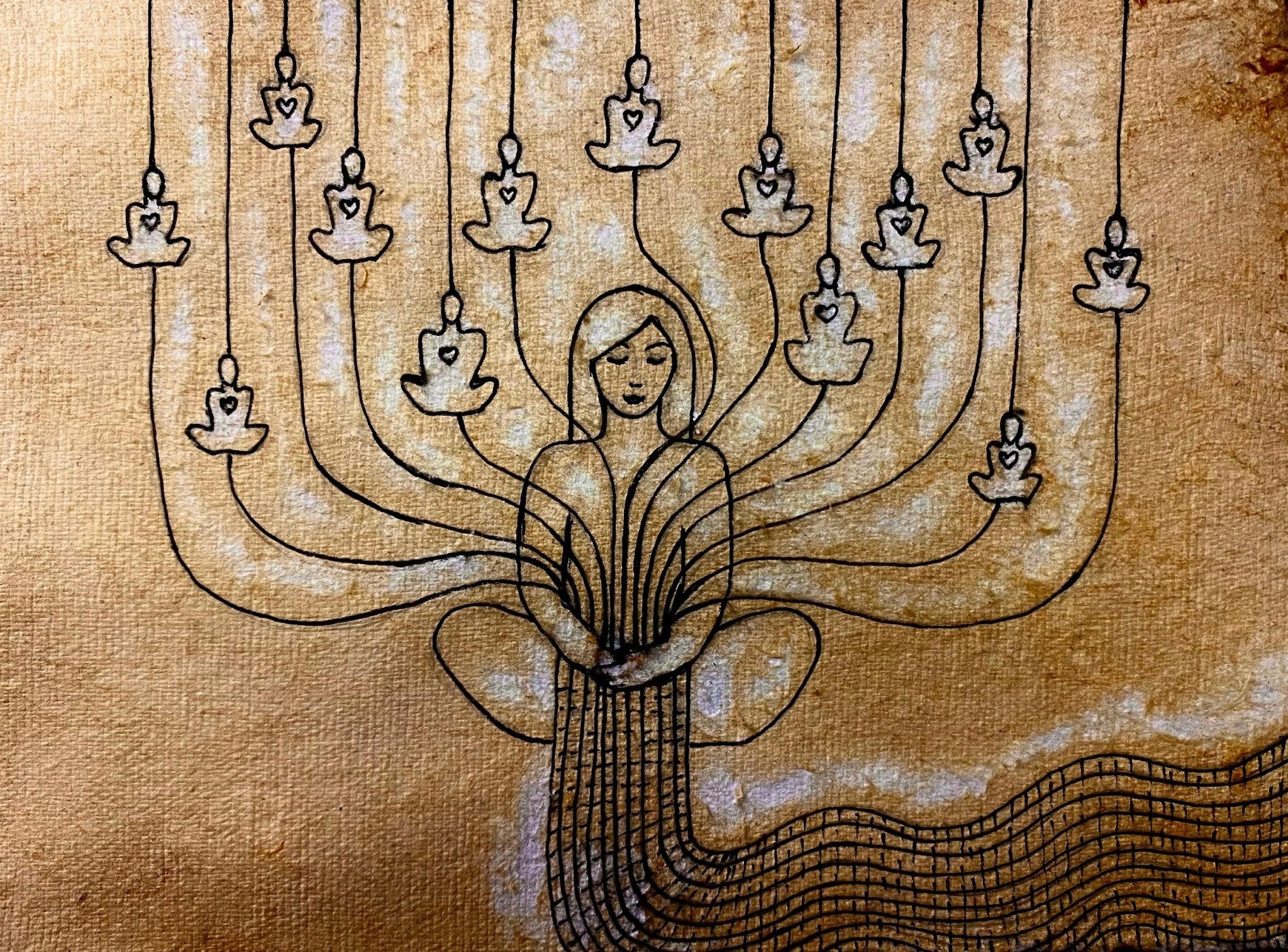
Forest, Fibre, and First Garments
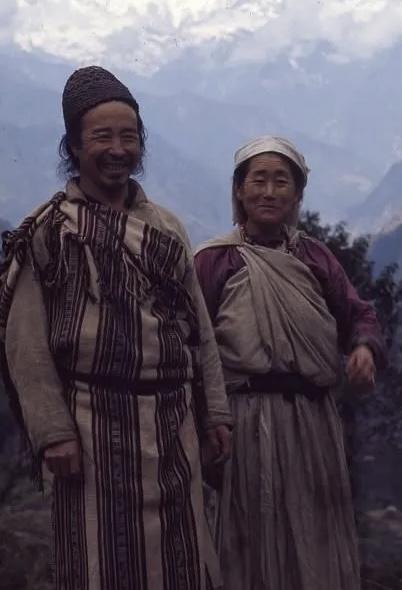
As Lepcha women reflecting on these garments today, it is impossible for us to separate cloth from landscape. Our ancestors lived in close relationship with forests, rivers, mountains, and spirits believed to inhabit them. Clothing was once made from fibres drawn directly from the environment, nettle, plant yarns, cotton, and sometimes silk threads acquired through trade. These fibres were spun and woven on simple back-strap looms, often by women within the home.
Early Lepcha clothing responded to rain, slope, and labour. It was wrapped, adjusted, adapted, never rigidly structured. Functionality did not exclude sensitivity to form; rather, form emerged organically from need. In reflecting on this, we found ourselves less interested in reconstructing exact garments and more attentive to the underlying relationship between body, fibre, and landscape.
The form of Lepcha clothing reflects the environment in which it developed. The dumpra, traditionally worn by men, consists of a woven cloth draped diagonally across the body and secured with a belt. Its structure allows freedom of movement, making it suitable for farming, gathering, and travelling across steep terrain.
Women traditionally wear the dumdyam or dumvum, an ankle-length wrap garment paired with a blouse called the tago. These garments rely on wrapping and draping rather than complex tailoring. Their simplicity reflects a design philosophy rooted in practicality and adaptability.
Trade Routes, Exchange and Adaptation
Although Lepcha communities maintained strong local traditions, they were never isolated from wider regional networks. The eastern Himalayan region has long been part of broader trade networks linking Tibet, Bhutan, Nepal, and the plains of Bengal. Through these exchanges, new materials, including silk, cotton, and dyed yarns entered Lepcha communities, along with new weaving techniques.
Rather than replacing indigenous fibres immediately, these materials were incorporated gradually. Textile practices are adapted, integrating new threads and dyes while maintaining established garment structures. This period illustrates a form of cultural elasticity. Change occurred, but there was also a visible continuity.
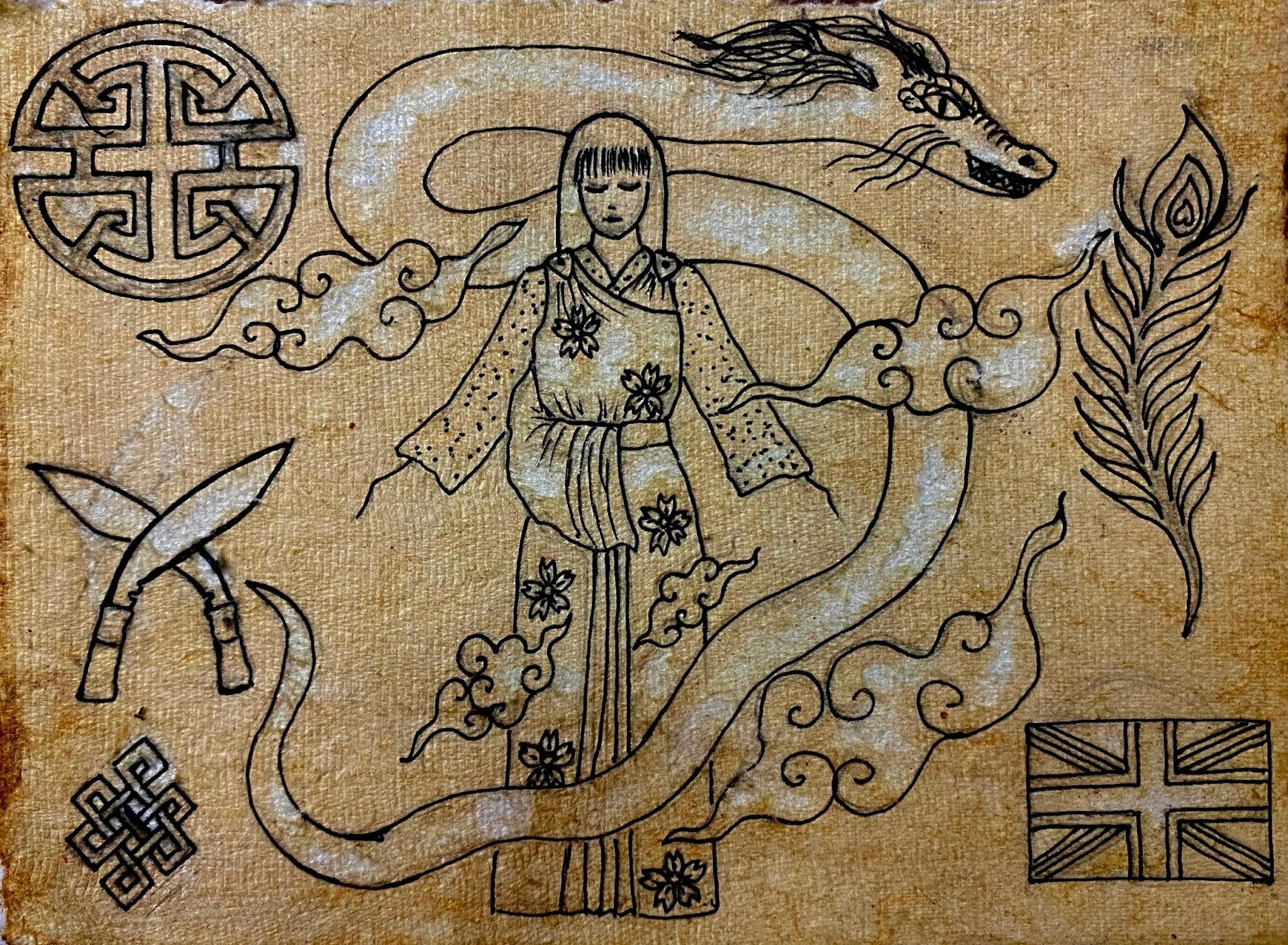
The nineteenth century marked a significant shift.
With the expansion of British colonial administration, the region underwent economic and infrastructural changes. Hill towns such as Darjeeling and Kalimpong developed into centres of trade and migration. Industrially produced textiles became increasingly accessible. During the seventeenth century, the establishment of the Namgyal monarchy in Sikkim and periods of Bhutanese influence fostered new social and cultural interactions among the Lepcha, Bhutia, and Tibetan communities.
As a result, locally woven fabrics began to decline in everyday use. Simultaneously, colonial frameworks categorised indigenous clothing as “traditional costume,” effectively repositioning it outside the realm of contemporary life.
This dual movement, material replacement and conceptual reframing, had lasting effects.
Garments that were once integral to daily existence became associated primarily with ceremony, ritual, or cultural display. Colonisation of Lepcha lands and Dwindling population have prompted Lepchas to prioritise and deploy ‘tradition’ in response to these anxieties
In 1957, the reigning Chogyal established the Technical Institute for Training and Production of Traditional Arts and Crafts to “preserve and revive the languishing ethnic traditional arts and crafts of the State.
The demographic composition of the region also shifted during the nineteenth and twentieth centuries, with increased migration introducing new cultural practices and dress forms. Within this multi-ethnic context, clothing became a visible marker of identity.
For Lepcha communities, garments such as the dumdyam and dumpra began to function as indicators of belonging, distinguishing cultural identity within a shared landscape.
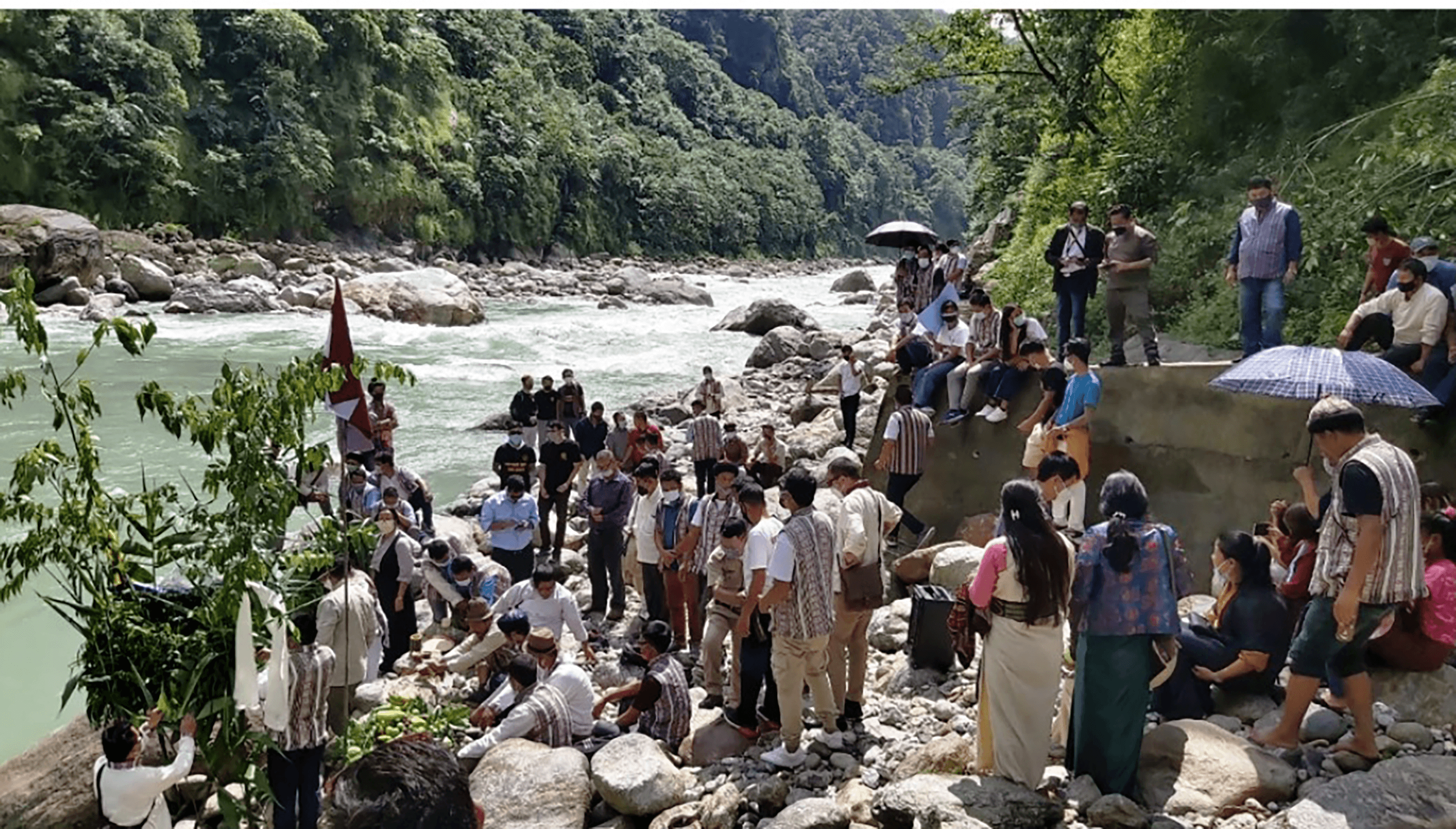
In recent decades, traditional garments have re-emerged within contexts of environmental and political resistance, particularly in movements opposing large hydroelectric projects in Dzongu, a protected Lepcha region in North Sikkim.
During such gatherings, the wearing of traditional dress serves as a visible articulation of indigenous identity and connection to land. Clothing, in these moments, operates as a form of non-verbal expression asserting continuity, presence, and relationship to territory.
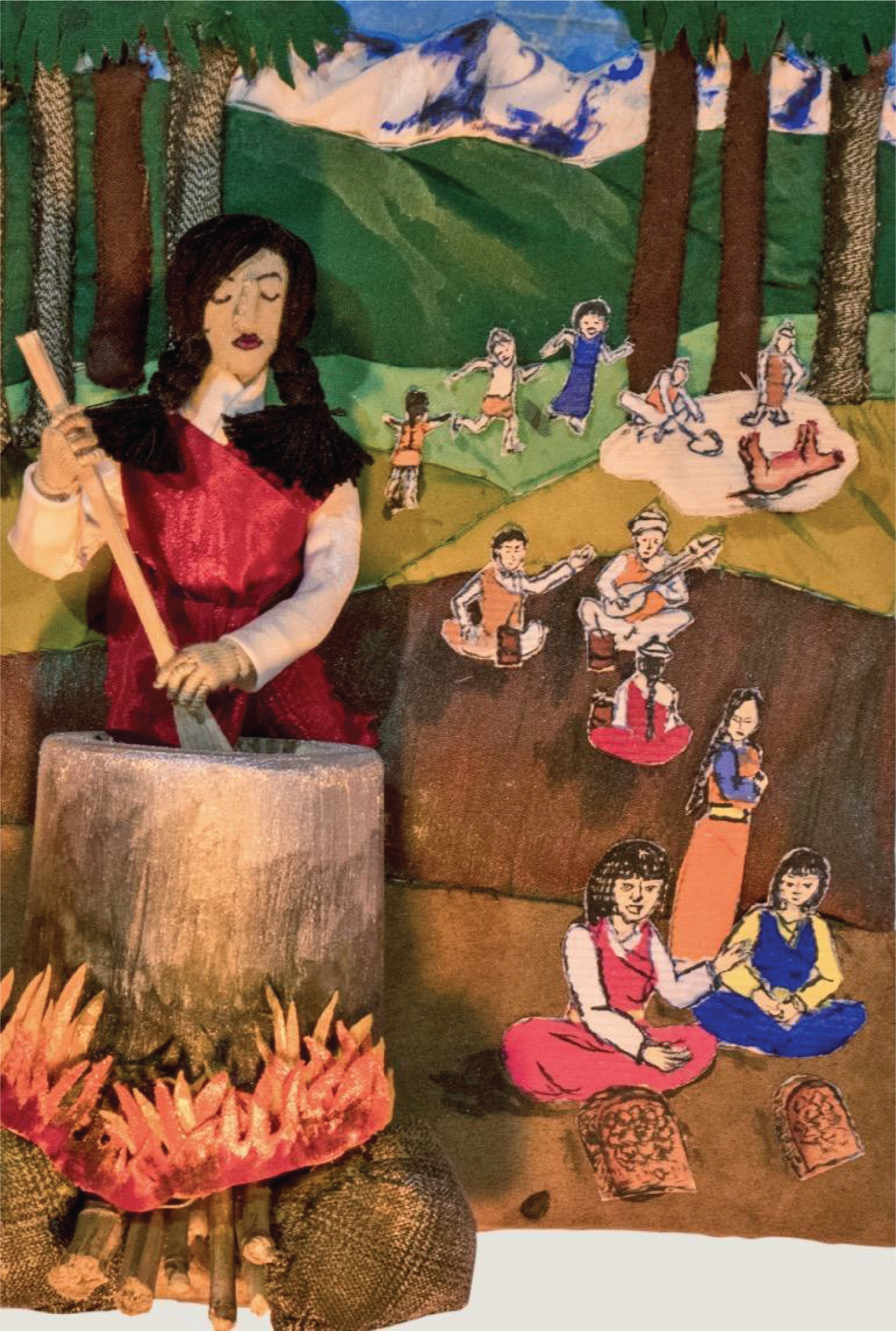
"Lepcha women's dress, cosmology and weaving as transmission"
Within Lepcha cosmology, the Mun female ritual specialists occupy a distinct and significant role. Acting as intermediaries between human and non-human realms, they engage in healing, ritual, and spiritual mediation. Their attire reflects these functions.
Traditionally, the Mun wore a white dumvun, often made from nettle fibre. The choice of white is widely understood to relate to purity and spiritual clarity. However, its significance extends beyond symbolism into practice, facilitating a state of openness required for ritual work. The Dumvun was not only a garment but also functional, as it was used to carry seeds, herbs, and medicinal items during travel and daily activities. Additional elements such as carrying a sickle, wearing cowry shells, or adorning the head with feathers, serve both practical and ritual purposes.
While academic descriptions often categorise these elements as symbolic, within lived contexts, they are better understood as functional components of a larger cosmological system.
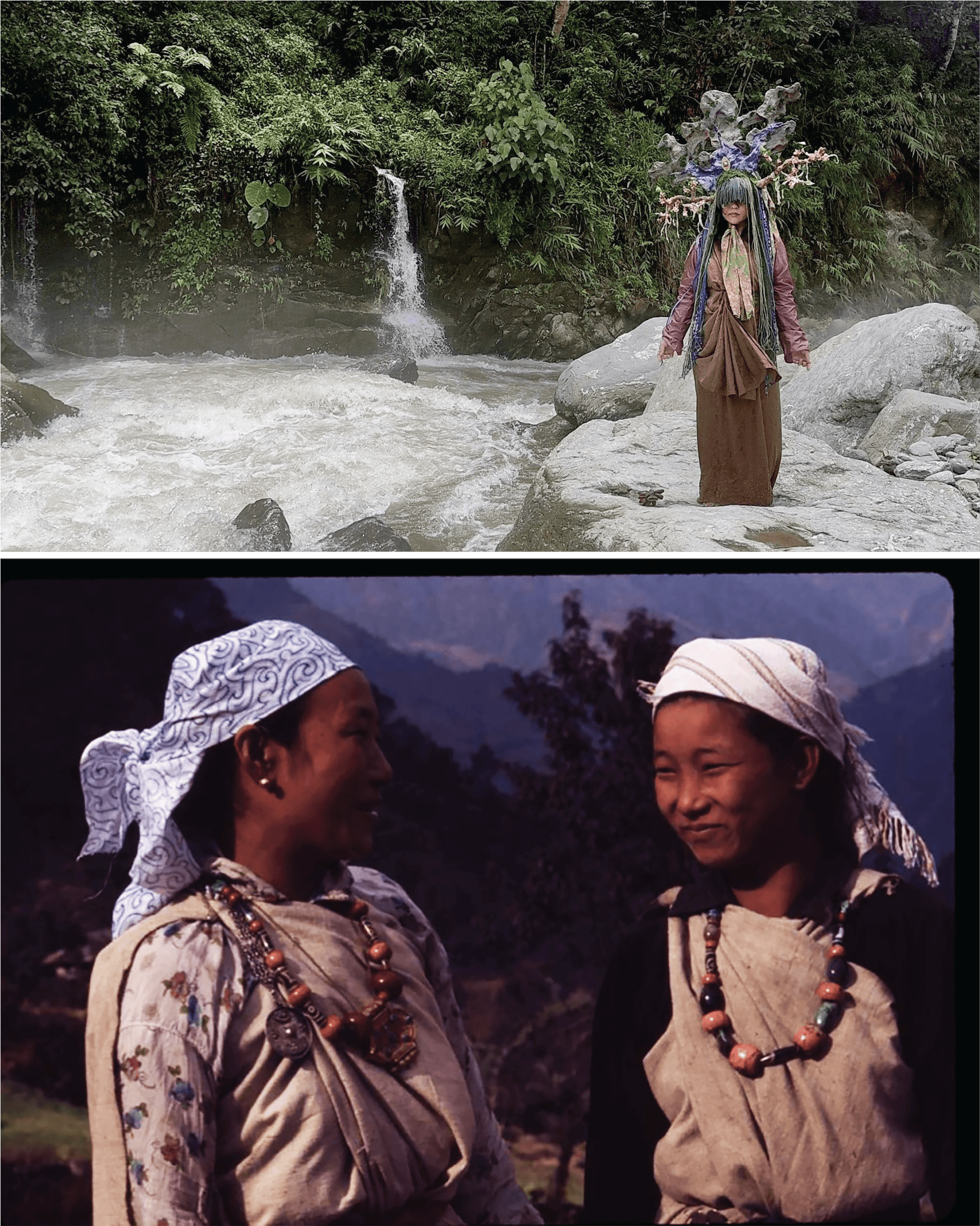
The Lepcha women’s dress, known as ‘Dum-dem’, is worn by covering the body, criss-crossing just below the neck. It is a long dress which covers the whole body up to the feet. Women use long sleeve loose blouses inside the Dum-dem. Both Dum-dem and Tago, the blouse, are plain in colour. Dum-dem is normally light coloured, while Tago is red. Women do not wear multi-coloured dresses like the men. Normally, a small white coloured scarf is used to cover the head. Baan-hoor, a small sickle, is kept at the back to protect them from animals and enemies. Lepcha women are fond of ornaments, including necklaces, rings, bangles, etc.
In the contemporary period, the Lepcha dress has become very ornamental, and people use it only occasionally. Western fashion and culture have influenced the Lepchas so much that it is hard to get a complete Lepcha dress in many villages. Even Banpok, a very essential day-to-day article, is hardly found these days. Some Buddhist Lepchas possess their typical dress (such as Bhakhu) and wear it during rituals and ceremonies.
The Mun and Boongthing are seen as the preservers of Lepcha culture, and on all occasions seen to be wearing their traditional dress, also encouraging others to wear their traditional dress. Within Lepcha cosmology, the Mun female ritual specialists occupy a distinct and significant role. Acting as intermediaries between human and non-human realms, they engage in healing, ritual, and spiritual mediation.
Their attire reflects these functions.
Traditionally, the Mun wore a white dumvun, often made from nettle fibre. The choice of white is widely understood to relate to purity and spiritual clarity. However, its significance extends beyond symbolism into practice, facilitating a state of openness required for ritual work. The Dumvun was not only a garment but also functional, as it was used to carry seeds, herbs, and medicinal items during travel and daily activities.
Additional elements such as carrying a sickle, wearing cowry shells, or adorning the head with feathers, serve both practical and ritual purposes. While academic descriptions often categorise these elements as symbolic, within lived contexts, they are better understood as functional components of a larger cosmological system.
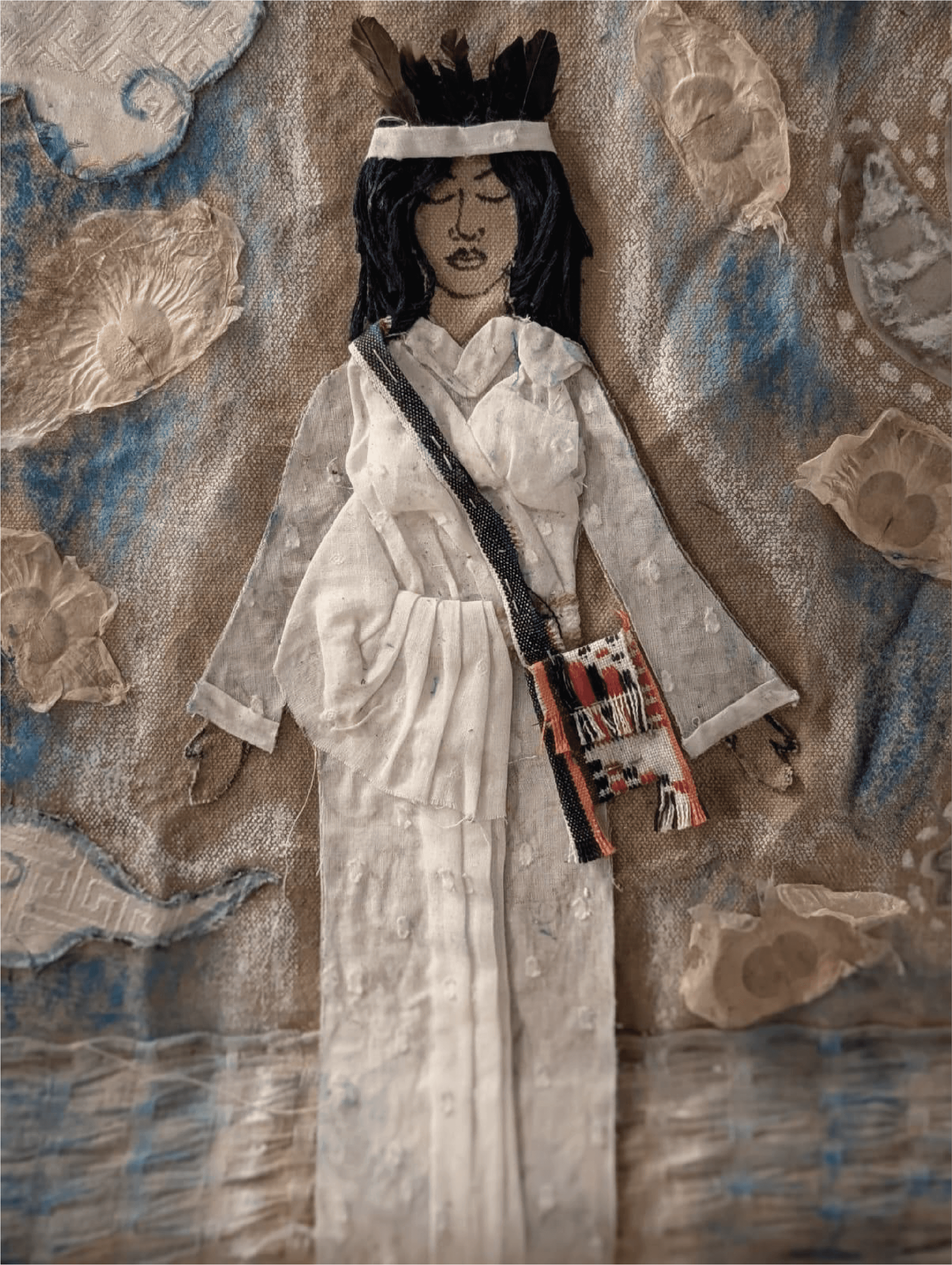
(For the Mun, colour white is used as a symbol of purity, sacredness, ceremony and a symbol of her role/responsibility)
Weaving of fabric was typically carried out within the domestic sphere, most often by women. Knowledge is passed intergenerationally, not through formal instruction but through observation, repetition, and correction over time. In speaking with elders and reviewing existing studies, it becomes clear that weaving functioned as a mode of transmission.
Motifs and Symbolism in Lepcha Clothing
Patterns found in Lepcha textiles, often described in scholarship as geometric or nature-inspired, can also be understood as mnemonic. They echo elements of the surrounding world: mountain formations, flowing water and seed structures. Through repetition, these motifs carried cultural memory without reliance on written systems.
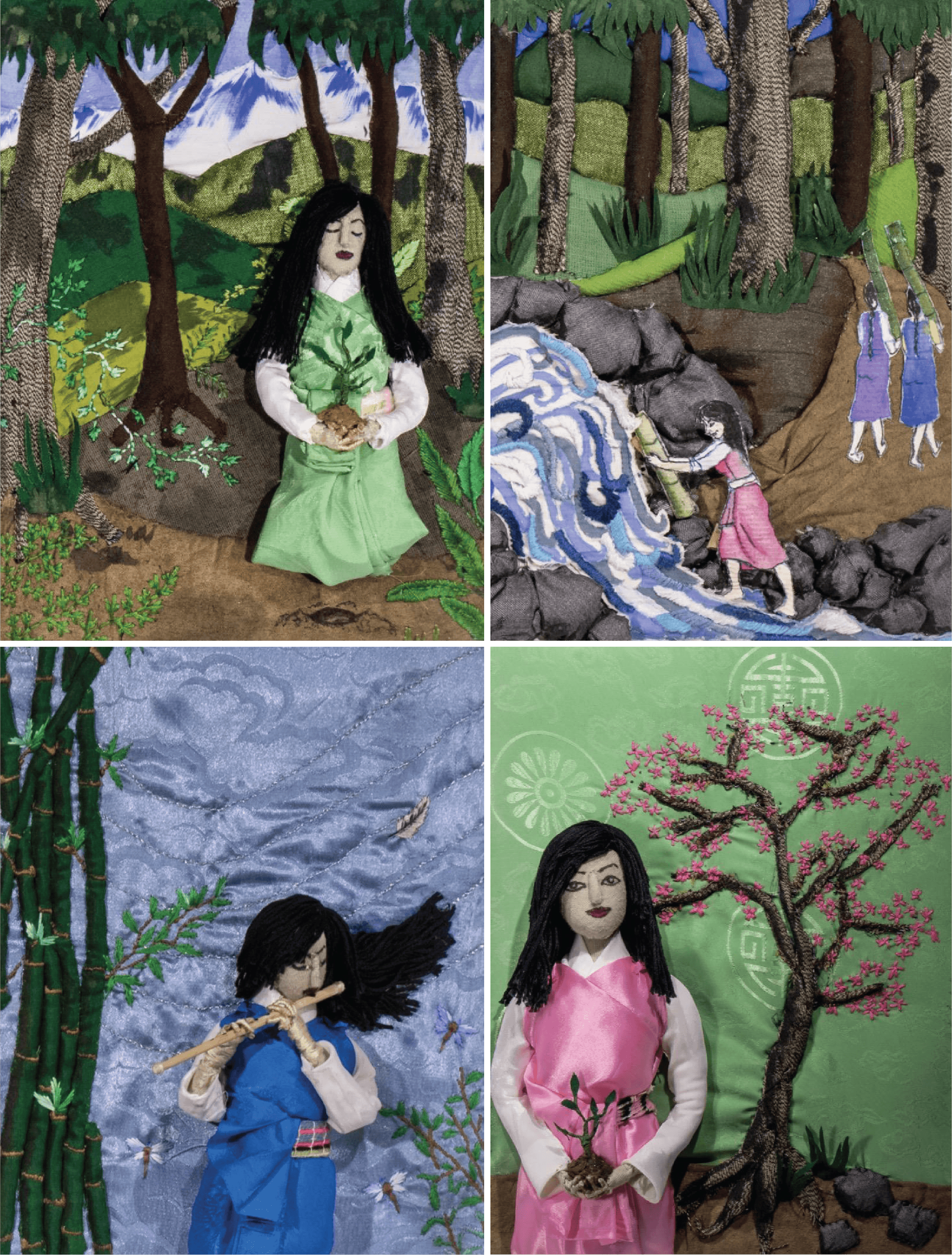
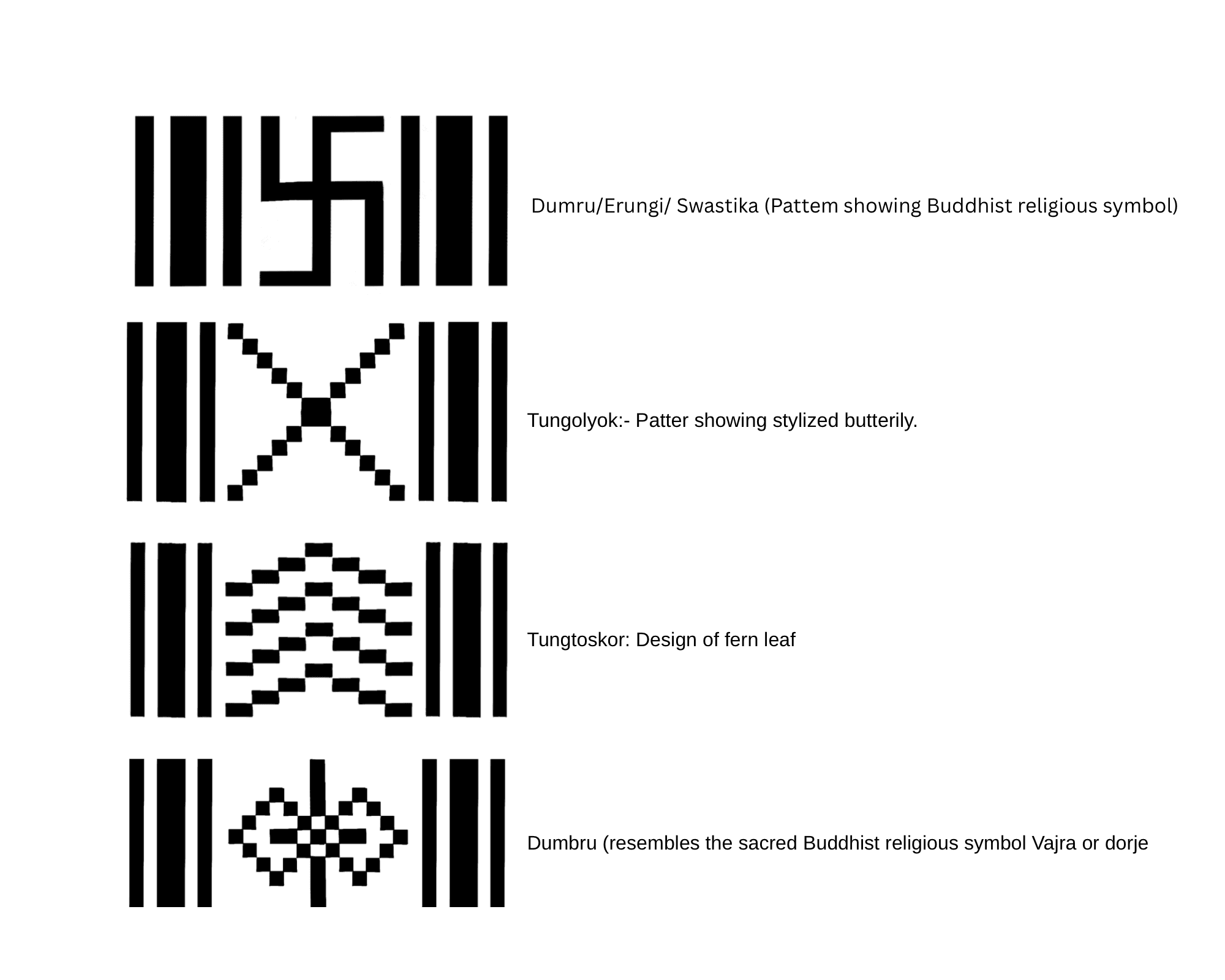
The development of such motifs is believed to have occurred alongside the influence of modernisation. Some of the well-known motifs used in Lepcha textiles include Tungblyok (an X-shaped pattern), Tungbrik (a diamond-shaped design), Sumok (a pattern inspired by the Lepcha hat Sumok Thyaaktuk), Tungtoskor (an arrow-like motif), Vajra, and Erungi, which is associated with Buddhist symbolism. These designs are culturally meaningful and reflect the rich artistic traditions of the Lepcha community.
Mountain motifs are inspired by the sacred mountain Kangchenjunga, which the Lepchas believe is their elder brother, fondly called “Anum Kongchen”. These patterns symbolise protection, strength, and the deep spiritual connection the Lepcha people have with the mountains.
River motifs represent the flowing rivers that sustain life in the Lepcha homeland, especially in regions like Sikkim. These motifs symbolise life, purity, and continuity and are usually expressed through flowing or wavy lines in the fabric.
Forest and leaf motifs reflect the Lepcha people’s strong bond with nature. These patterns symbolise fertility, growth, and harmony with the natural environment, as forests have always been central to Lepcha life and culture.
Geometric motifs such as diamonds and symmetrical patterns are commonly found in Lepcha textiles. These motifs symbolise balance, unity, and the order found in nature.
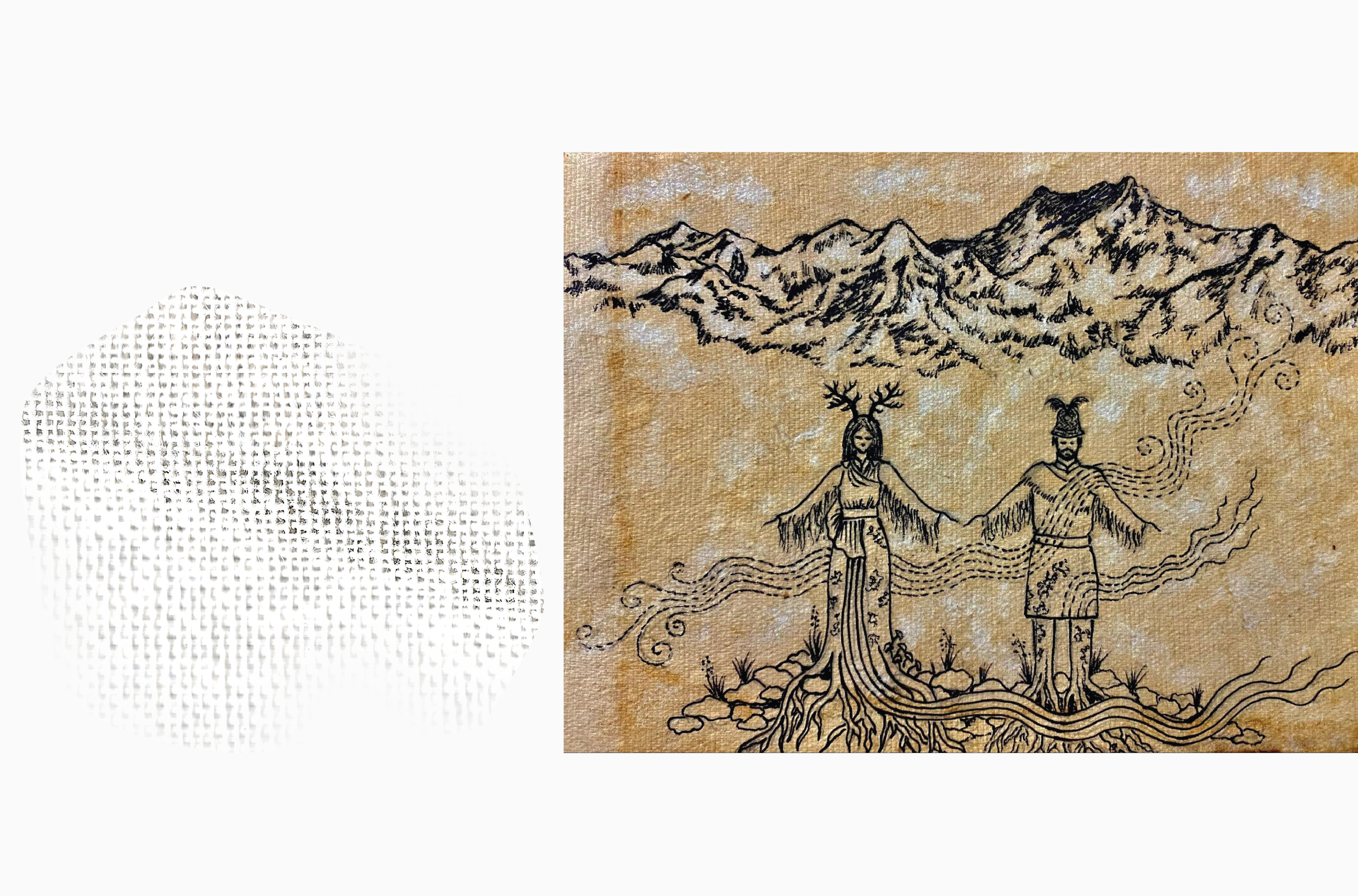
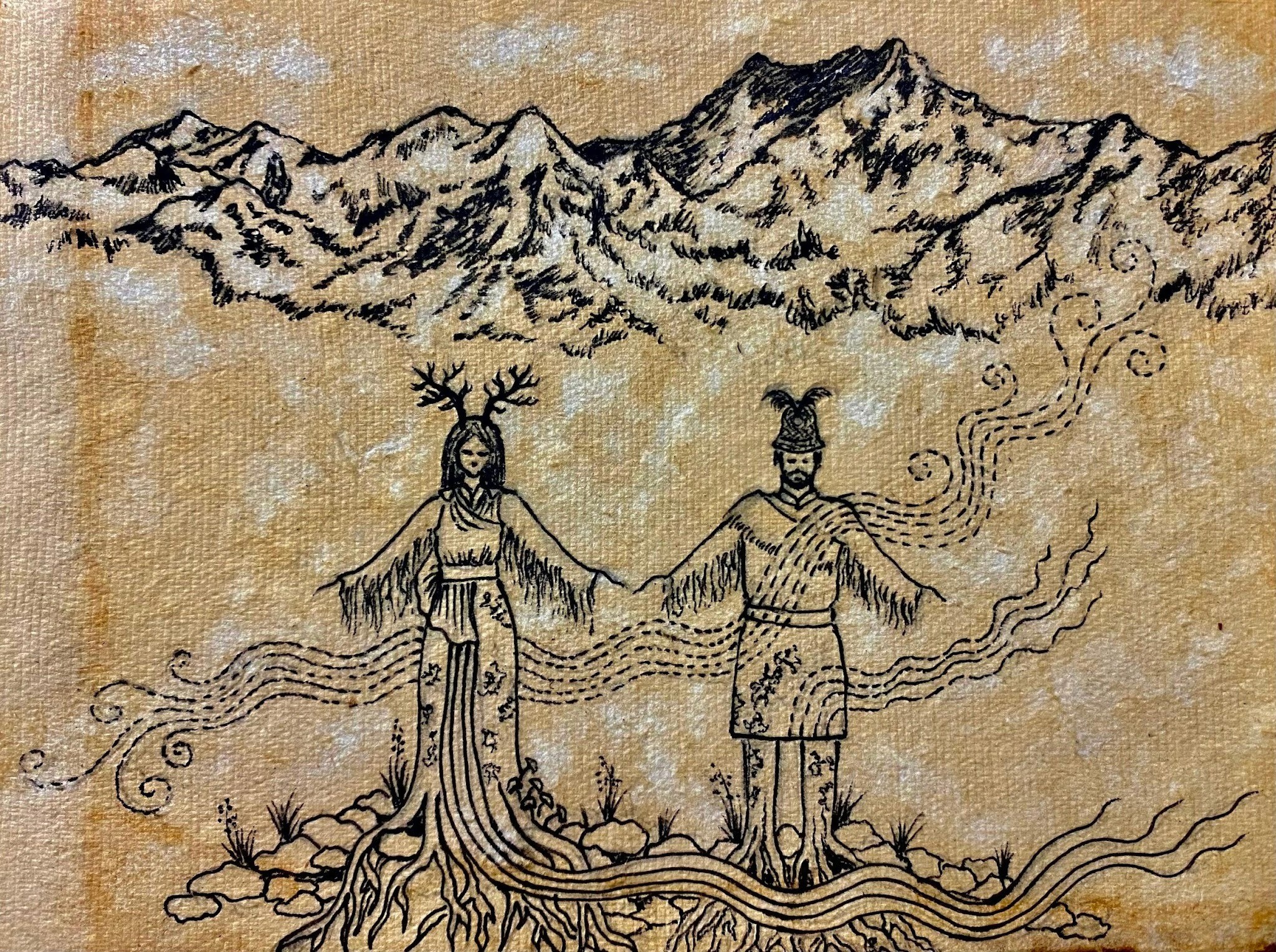
The traditional draping style of the Lepcha women’s attire, known as the Dumbun, carries symbolic meaning rooted in Lepcha oral traditions and cultural narratives. The garment is characteristically pinned from the left shoulder, a practice that is associated with the story of two legendary figures, Rong-nyoo (the female river in Lepcha folktales) and Rong-eet (the male river in Lepcha folktales). According to the lore, the left side of the drape represents Rong-nyoo, who reached the meeting place first. The right side symbolises Rong-eet, who arrived later and exclaimed “Thee satha?”, meaning “When did you arrive?” This expression reflects a moment of greeting and recognition between the two.
This dumdyam (also referred to as dumvum or dumbun) is an ankle-length garment created through wrapping and draping rather than tailoring. It is typically paired with a blouse known as the tago. The dumpra, worn by men, consists of a length of cloth draped diagonally across the torso and secured with a belt. These forms prioritise mobility. They allow for agricultural work, travel across uneven terrain, and everyday activity without restriction. There is minimal cutting, minimal waste, and an emphasis on versatility. The garment adapts to the body, rather than reshaping it.
The method of draping itself carries cultural meaning. The practice of securing the garment from the left shoulder is often linked to oral narratives, most notably the story of Rongnyu and Rongeet, whose meeting is symbolically represented at the point where the cloth converges (the dumpeet). Beyond the narrative symbolism, the left-shoulder drape also serves a practical function, allowing the garment to wrap securely around the body while leaving freedom of movement for daily activities.
Conclusion: Three Women, One Continuum
Our positions within this narrative differ. One of us has lived in proximity to these practices. Another approach through research and translation. The third is still in the process of discovery.
Yet, across these differences, there is continuity. A shared effort to understand how clothing functions not only as material culture, but as a living archive—holding within it relationships to land, labour, belief, and identity.
As women of the Lepcha community living in the present while looking toward the past, these garments feel like living memory. They hold the voices of women who wove before us, the rhythms of forests and rivers, and the histories of survival through change. To wear Lepcha clothing today is to carry forward a thread that connects ancestry, landscape, and future generations.

References :
Asia InCH Encyclopedia of Intangible Cultural Heritage. Lepcha Weaving of Sikkim.
Deep, A. (2020). Material Culture of the Lepcha, Inhabitants of Sikkim. International Journal of Research in Social Science and Humanities.
Sharma, G., & Karolia, A. (2024). Lepchas and Their Languishing Craft-Design Culture. ShodhKosh Journal of Visual and Performing Arts.
Plaisier, H. (2007). A Grammar of Lepcha. Brill Academic Publishers.
Tribal Research Institute, Government of Sikkim. Dress and Ornamentation of the Lepcha Tribe.
(Sarah and KR Rama), 2021. Mayel Lyang Embodied: ‘Tradition’ and Contemporary Lepcha Textiles. HIMALAYA 40(2): 97–107.
Illustration and Photo credits :
Textile artworks by Alyen Foning-
‘Mayellyang’: Textile art narrative published by Zubaan Books as a part of the anthology based on Alyen’s journey back to her roots. (2017)
‘The story of the Muun’: Textile art narrative and research grant essay published by Zubaan Publishers and Sasakawa Peace Foundation Japan. (2018)
‘Remembering Teesta- The Sacred keeper of stories’: A textile art installation panel for Sacred Whispers, at Studio Zeyma, Rangka, Sikkim (Sept 2025)
Photo shoots by Alyen Foning-
‘Sky Dancer- The bridge where the Skies meet the Earth’: Mixed Media Art Installation, Performance Art and Video for “Peripheral Visions: Journeys of Migration and Belonging”, Leh (JULY 2023) in collaboration with ArthShila and Achi Association India
And for “A Desert Meets a Forest: Contemporary Art from the Himalayas” curated by Latika Gupta for Arthshila Goa (December 2024)
Muuns Photograph - Alyen Foning
Performance shoot of ‘The Song of the River Relli’ for Nature in Art event edition-5, Himalayan Institute of Natural History Art, Kalimpong (April 2024)
And for Faint Traces, Gangtok (June 2024)
Illustrations on handmade paper by Alyen Foning (March 2026)
Geometric Motifs Illustration - Maltongmu Lepcha
Photograph of Lepcha couple - Maltongmu Lepcha
Photograph of The Teesta Dam Movement - Maltongmu Lepcha