
Zeeshan Hasan Akhtar is an artist, writer, and theatre practitioner. His work across film, performance, essays, and visual culture engages with memory, violence, caste, class, and Muslim identity.
In a scene from India Untouched (2007), a documentary on caste, Ali Anwar, founder of the Pasmanda Muslim Mahaz, takes out a Reynolds ballpoint pen — white body, blue topi — from his pocket and uses it to make a point. The Ashraf elite in India, he says, is like that blue topi, sitting on the head of the Pasmanda majority much like a topi sits upon a pen. The body of the pen performs the labour of holding ink, carrying the nib, and producing text, while the topi, which performs no such work, occupies a position of visibility and symbolic importance.
I had always known that caps could mark caste, but it became starkly clear to me during my mother’s funeral. I realised that, if one looked closely, the caste differences between my mother’s side and my father’s were easy to discern. While my mother’s family wore white, more traditional topis, such as the do-palli, my father’s side wore round, colourful, heavily embroidered ones. There were other markers as well: access to wealth, education, language, even food habits, but the image of their colourful topis stayed with me.
That memory, and that moment, led me to look more closely at the varied histories of topis — and the Muslim men who wear them.
*****
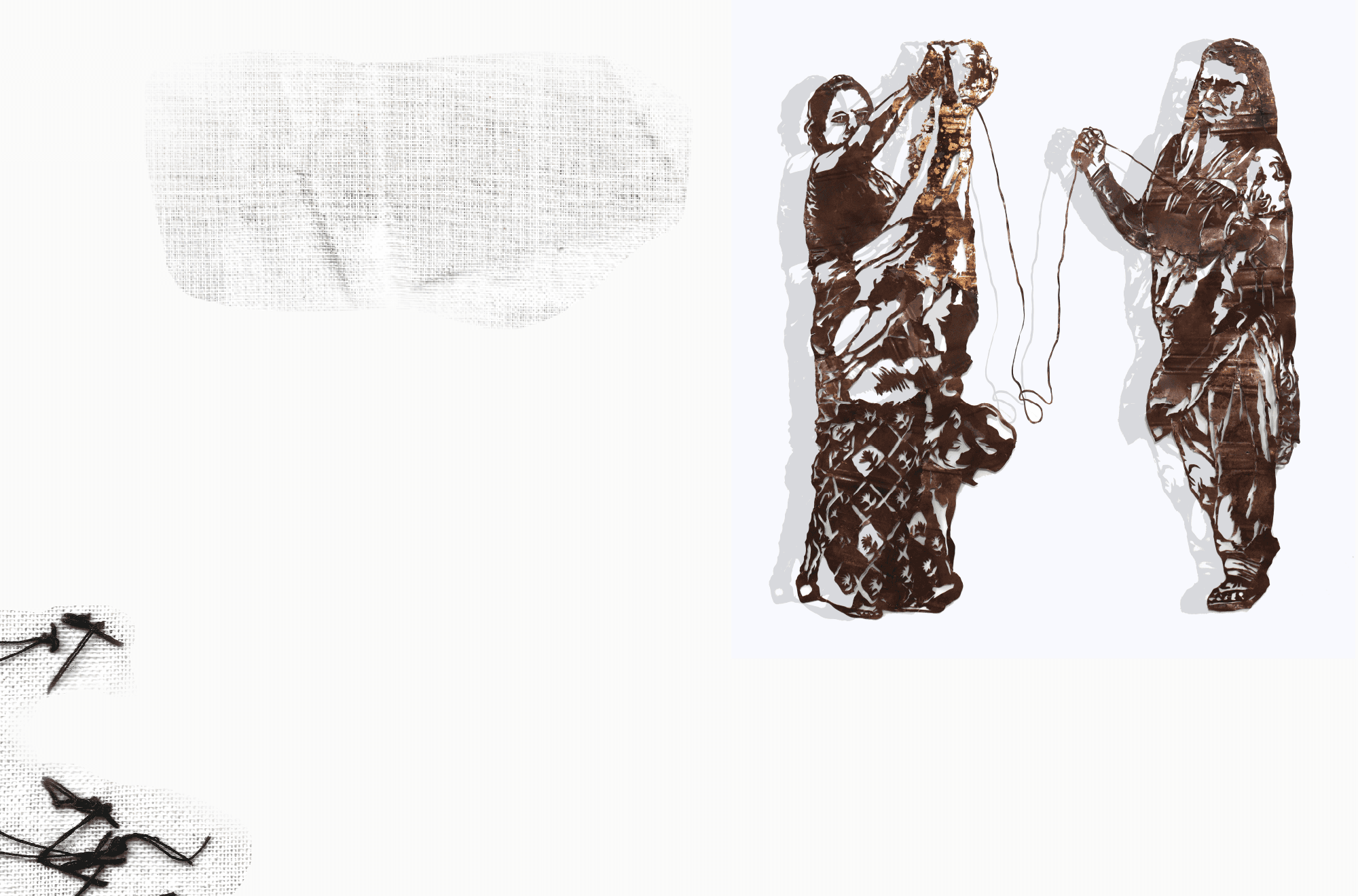
It is from within this world that the name Topibechwa, which I use as a nom de plume, emerges — a casteist slur used to mark my father’s lower-caste, rural origins. It is drawn from the fact that my paternal ancestors were artisans, weavers who also made wooden blocks, embossed warq (silver foil) onto sarees, sold firewood, worked as masons, and even sold topis outside mosques.
Pasmanda Muslims, which literally translates to “those who have fallen behind”, refers to the marginalised, backward, and Dalit Muslim communities in India, who together constitute roughly 80–85% of the Muslim population. These communities broadly fall within the categories of Ajlaf, comprising Muslims from artisan and occupational caste backgrounds, and Arzal, referring to those from historically “untouchable” or Dalit origins. In contrast, Ashraf Muslims claim noble or foreign lineage and are traditionally regarded as socially superior within South Asian Muslim hierarchies.
Caste pervades nearly all other sociopolitical and geographical distinctions. The lack of a clear enunciation of caste in the Muslim canon has often led successive Ashraf scholars and clerics to claim that there is no caste in Islam. More recently, this claim has been revised to suggest that caste is merely an Indian peculiarity, while Islam, in essence, is casteless, egalitarian, and free of hierarchy. Scholars such as Masood Alam Falahi have contested these assertions, most notably in his seminal book Hindustan Mai Zat-Pat Aur Musalman (Casteism Among Muslims in India).
Mapping Muslim Calcutta
For this essay I visited topi sellers, both small and large, and to interview and photograph them in the Muslim neighbourhoods of Metiabruz, Park Circus, Kidderpore, and Zakaria Street in Kolkata.
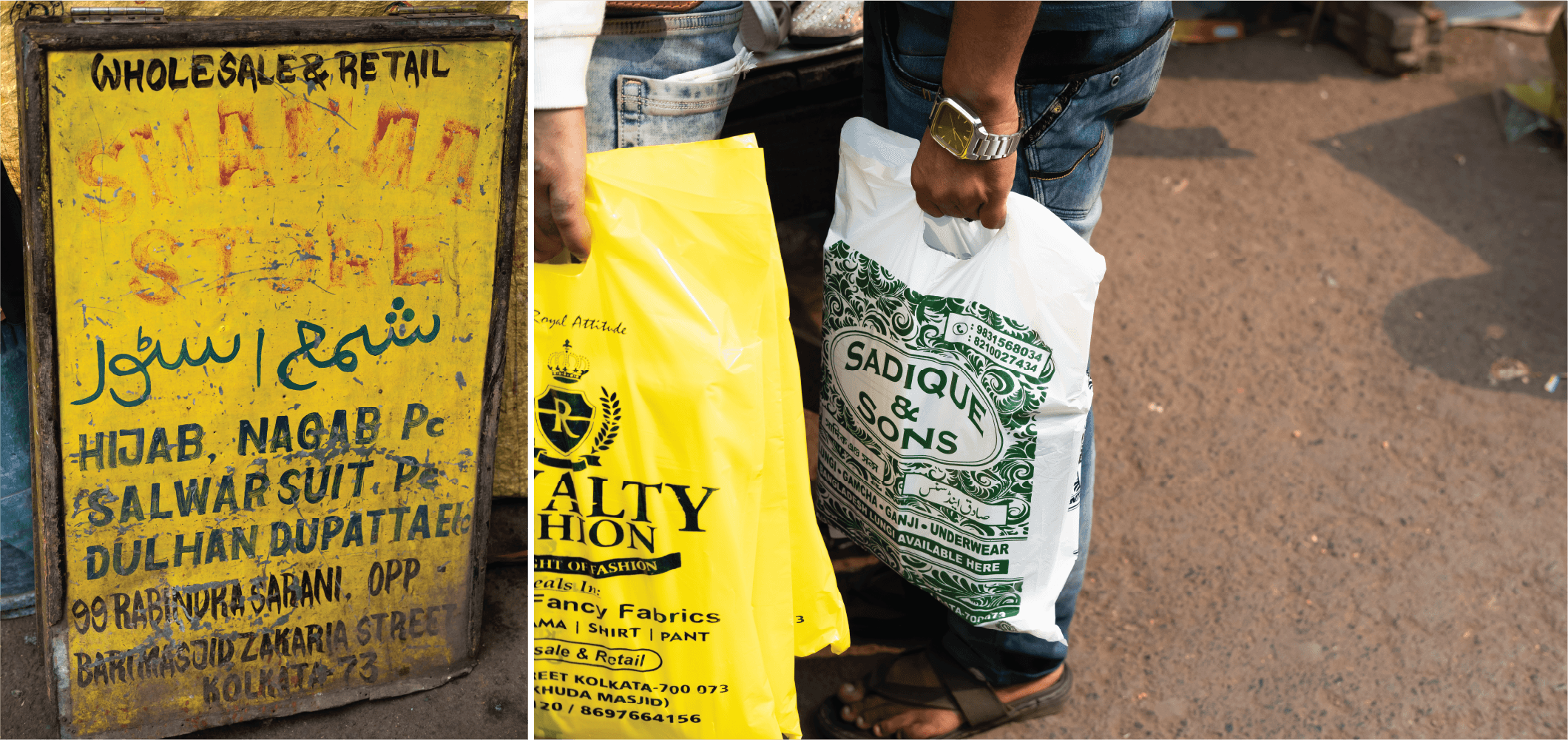
These are older neighbourhoods, dating back to the pre-Independence period, which have, over time, become dense Muslim ghettos. They are often mocked in upper-caste, seemingly cosmopolitan and progressive bhadralok Hindu circles as “Mini Pakistan.”
A significant section of the Muslim population here comprises non-Bengali-speaking communities, many of whom are Hindustani/Urdu speakers and speak a distinctive local dialect often referred to as “Kalkatia.” This population is shaped by histories of migration and labour tied to the port city. Metiabruz and Kidderpore, located close to the dockyards, became key sites of settlement. Wajid Ali Shah, exiled by the British in 1856, settled in Metiabruz, bringing with him many Muslims from Awadh, followed by successive waves of migration.
Bihari Muslims also form a significant part of the population, many of whose forebears arrived as labour under the British Empire—some en route to indentured colonies, others settling in the city. Many Muslims in Kolkata also trace their ancestry to the disbanded armies of Tipu Sultan, whose family and retainers were brought to Calcutta after 1799 and later settled on its fringes.
Bengali Muslims in these areas, whose mother tongue is Bangla, trace their presence in the region to trade and Sufi networks from at least the 9th century—long predating the reductive notion of “Muslim invasion.”
More recently, the “Kalkatia” dialect—once mocked—has gained social currency on platforms like TikTok and Instagram, as working-class creators reclaim it with pride.
The Topi and Its Histories
The wearing of the topi is deeply entangled with structures of labour and sectarian affiliation. Islam in the subcontinent largely took shape through processes of conversion among lower-caste Hindu communities, who often carried existing cultural practices into their new religious lives. The Sufi movement, led by figures such as Moinuddin Chishti and Nizamuddin Auliya, played a central role in this process, producing a pantheistic, localised, and culturally embedded form of Islam. For centuries, the cultural and intellectual North Star for Indian Muslims was not Arabia but Persia, whose influence is evident across languages, literature, and aesthetic practices from Bengali to Marathi.
Muslims traditionally associated with Sufi, dargah-based practices followed a more fluid, localised idea of belief, where local traditions, cultures, and even clothing found space. They form the majority of the Indian Muslim population, particularly among non-Ashraf communities — a reality reflected not only in scholarship on caste among Muslims but also in official findings such as the Sachar Committee Report and the Ranganath Misra Commission Report, which document the widespread social and economic marginalisation of Muslims in India. Historically, this group did not have access to the kinds of caps that now flood the Indian market.
This absence is historically documented. In his survey An Account of the District of Purnea (1809–10), Francis Buchanan describes the clothing of what he calls “low Muhammedans” in the Purnea district (now in Bihar, but then part of the Bengal Presidency) as consisting “entirely of an unbleached Hindu wrapper (dhoti), or of merely a small piece of calico,” with, at most, a coarse cloth or quilt added in colder weather. There is no mention of a turban or cap as a stable marker of identity.
Here, the absence of the topi itself becomes meaningful, pointing to a time when those at the lower end of the social hierarchy did not have access to, or were not required to perform the visible markers of religious identity that are now so central to public life.
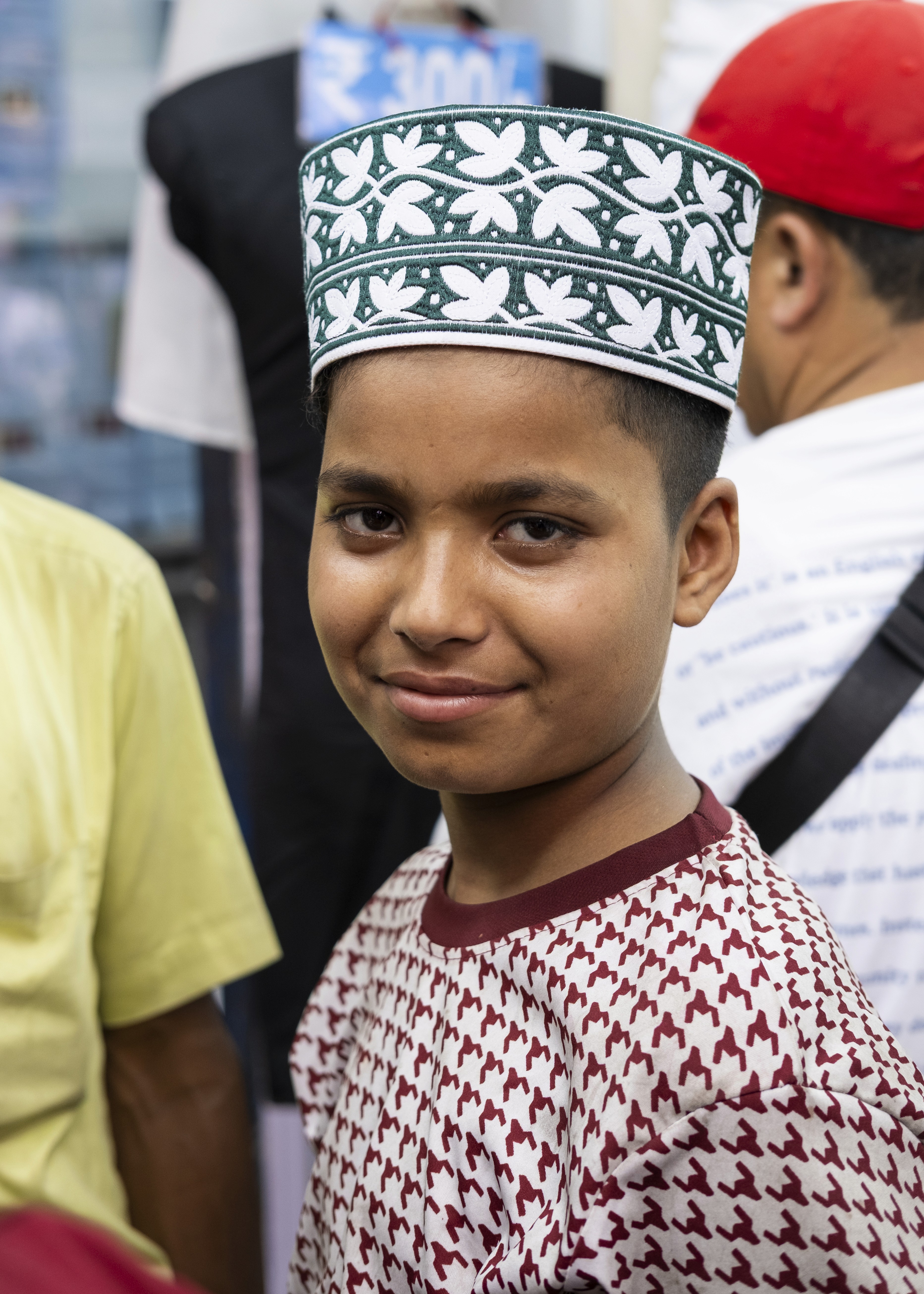
This orientation began to shift in the late twentieth century. With the expansion of oil economies in West Asia and the rise of large-scale labour migration, particularly in a deeply polarised post–Babri India, countries such as Saudi Arabia became major sites of employment for Indian Muslims. Migration brought not only economic mobility but also new religious influences, as workers returned with round, colourful caps — Omani, Barkati, Makki, and other embroidered styles.
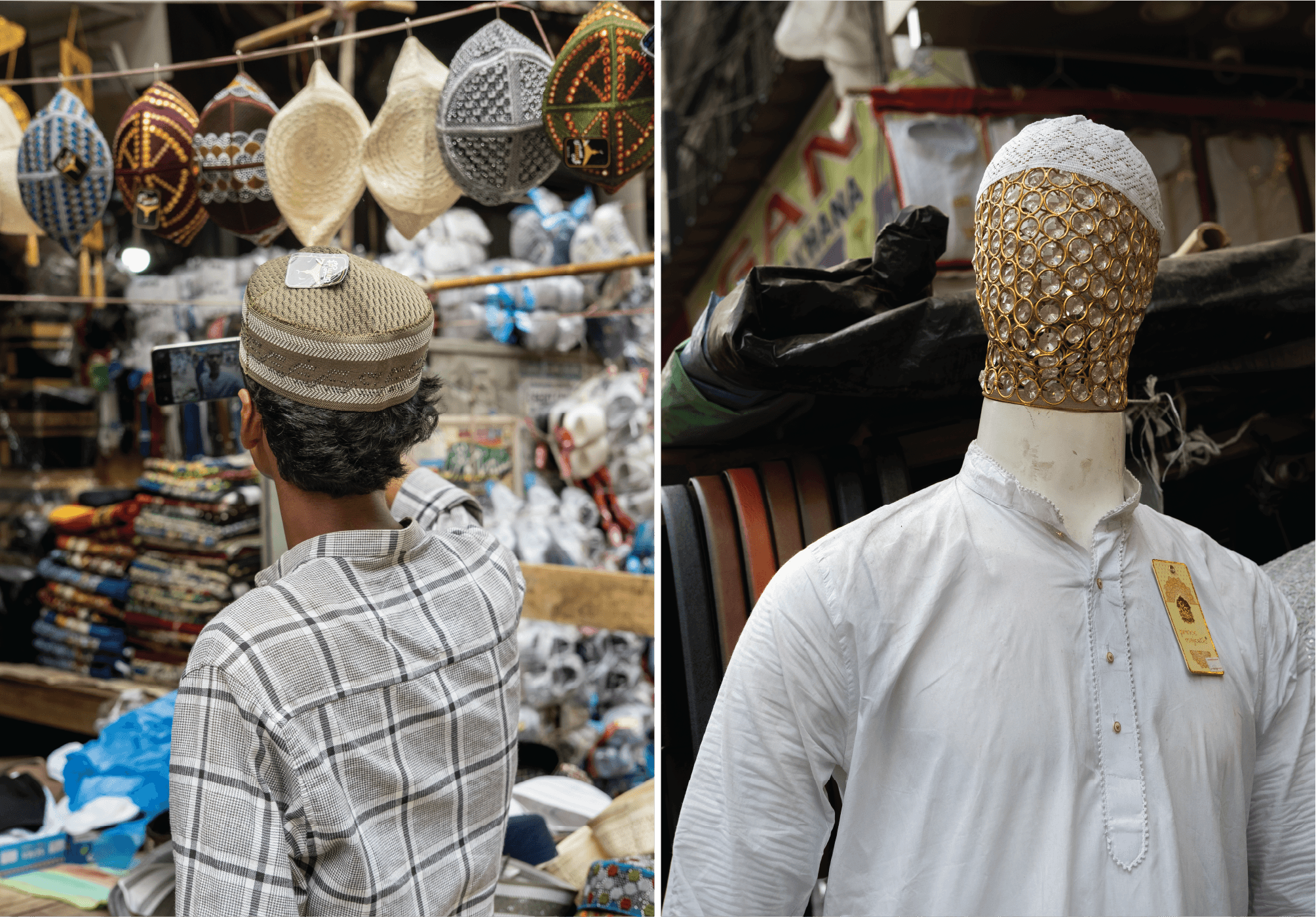
At the same time, this migration exposed many to more austere, reformist practices associated with Wahhabism, particularly in Saudi Arabia. Occupying subordinate positions in West Asian societies, many migrants encountered forms of Islam that were more rigid and hierarchical. Terms such as “Rafiq” were reportedly used by employers in a derogatory sense, marking Indian Muslims as inferior or impure. In response, some adopted the practices of those in positions of power, aligning themselves with a more austere and “purified” religious identity.
Over the past few decades, this has coincided with the growing prominence of reformist movements within India, including the expansion of the Deobandi tradition and organisations such as Jamaat-e-Islami. While positions of religious authority within these movements have often been held by Ashraf Muslims, the everyday workforce that sustains them remains predominantly non-Ashraf.
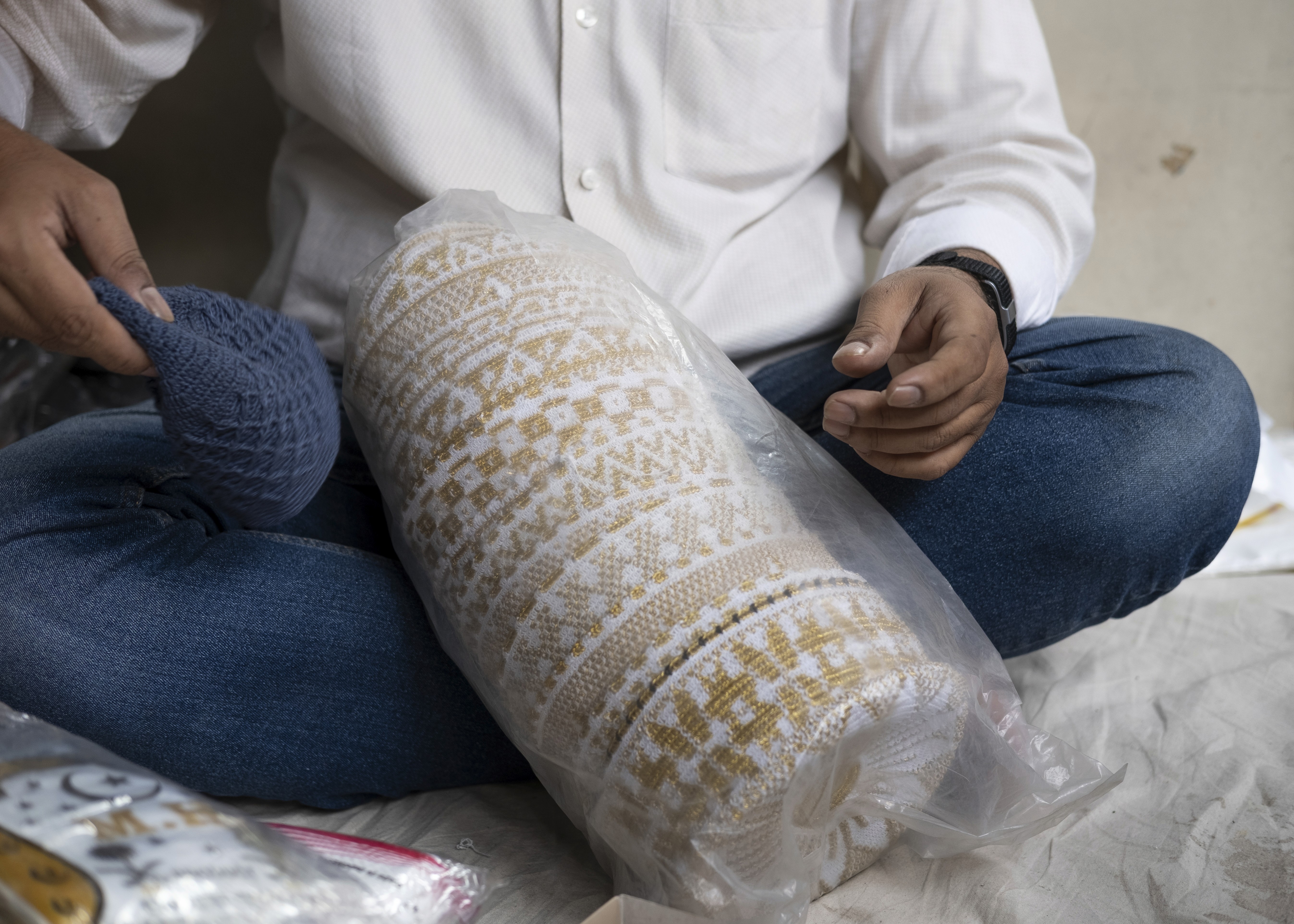
Within this framework, a key distinction between the topis worn by Ashraf Muslims and those worn by the non-Ashraf Muslim majority lies in their make and colour. Ashraf Muslims tend to prefer “simple” white topis — unadorned and restrained, aligned with upper-caste, upper-class sartorial sensibilities. The emphasis is on performed subtlety: commanding public presence while appearing not to, maintaining the fiction of being in the background. This reflects a broader aesthetic logic — how not to appear nouveau riche or overly decorative, how to signal intellect rather than an investment in what are seen as baser cosmetic desires. It becomes a way of performing a subdued religiosity, appearing invested in the core of religion rather than in its overt display.
A Brief Taxonomy of Topis
If one begins to read these objects more closely, a loose taxonomy emerges—of forms, materials, and histories that intersect with social distinctions, even as they continue to circulate across communities and contexts.
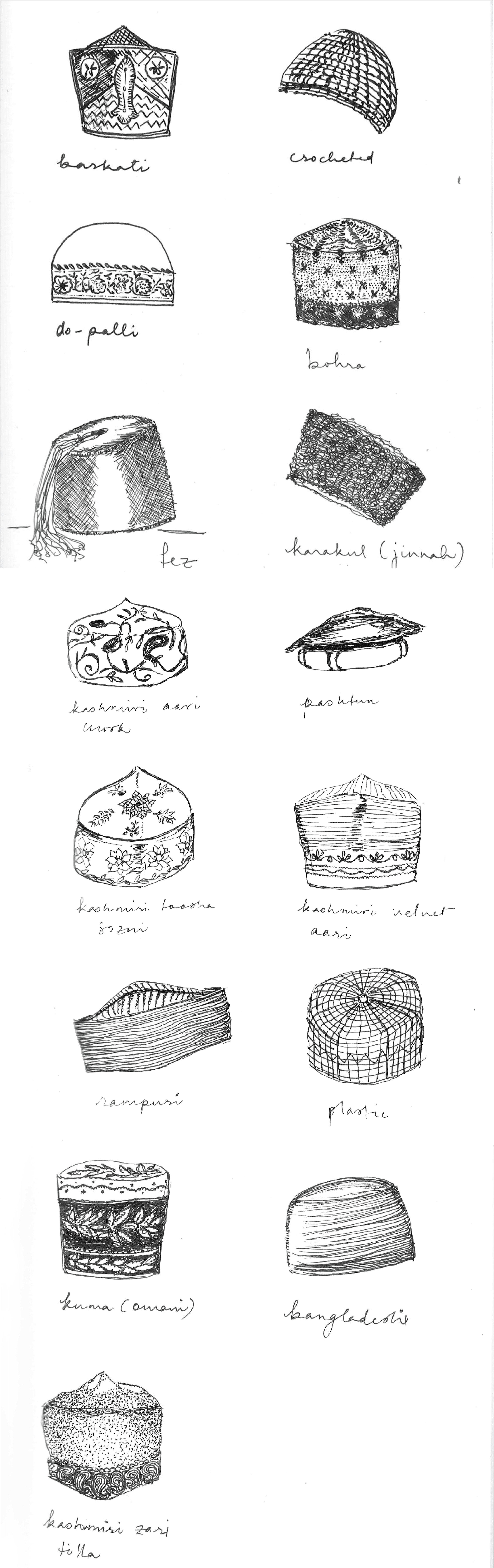
Do-palli topi: Made from two embroidered cloth panels (palla) stitched together. Often associated with respectability, particularly among Syed lineages from Awadh.
Fez: A red, brimless topi with a tassel, originating in the Ottoman Empire. Historically worn by Muslim elites and reformers such as Maulana Abul Kalam Azad, and associated with late 19th- and early 20th-century Muslim modernist identity.
Rampuri topi: Linked to North Indian Muslim elites, especially in Uttar Pradesh, and historically tied to courtly cultures.
Karakul (Jinnah topi): A Karakul wool cap of Central Asian origin, associated with political modernity and elite Muslim leadership, popularised by Muhammad Ali Jinnah.
Ghalib topi: A soft, often rounded cap associated with 19th-century North Indian Muslim intellectual culture, named after Mirza Ghalib, and linked to a more literary, urbane sensibility.
Bohri topi: A distinctive gold-and-white embroidered topi worn by Dawoodi Bohras, now also circulating as a fashion object.
Omani topi (kuma): Imported through labour migration to West Asia, intricately embroidered, often signalling transnational mobility.
Barkati or Sufi topi: Often green or embroidered, associated with shrine-based devotional traditions.
Crocheted white topi: Mass-produced and widely available, associated with everyday piety.
Machine-made topi: Cheap, factory-produced caps, often signalling working-class consumption.
Plastic topi: Inexpensive, almost disposable, often kept in mosques for those who enter without one.
While these categories help map broad distinctions, they are not fixed; in practice, these topis circulate across communities, markets, and contexts, acquiring new meanings along the way.
New Bengal Cap House
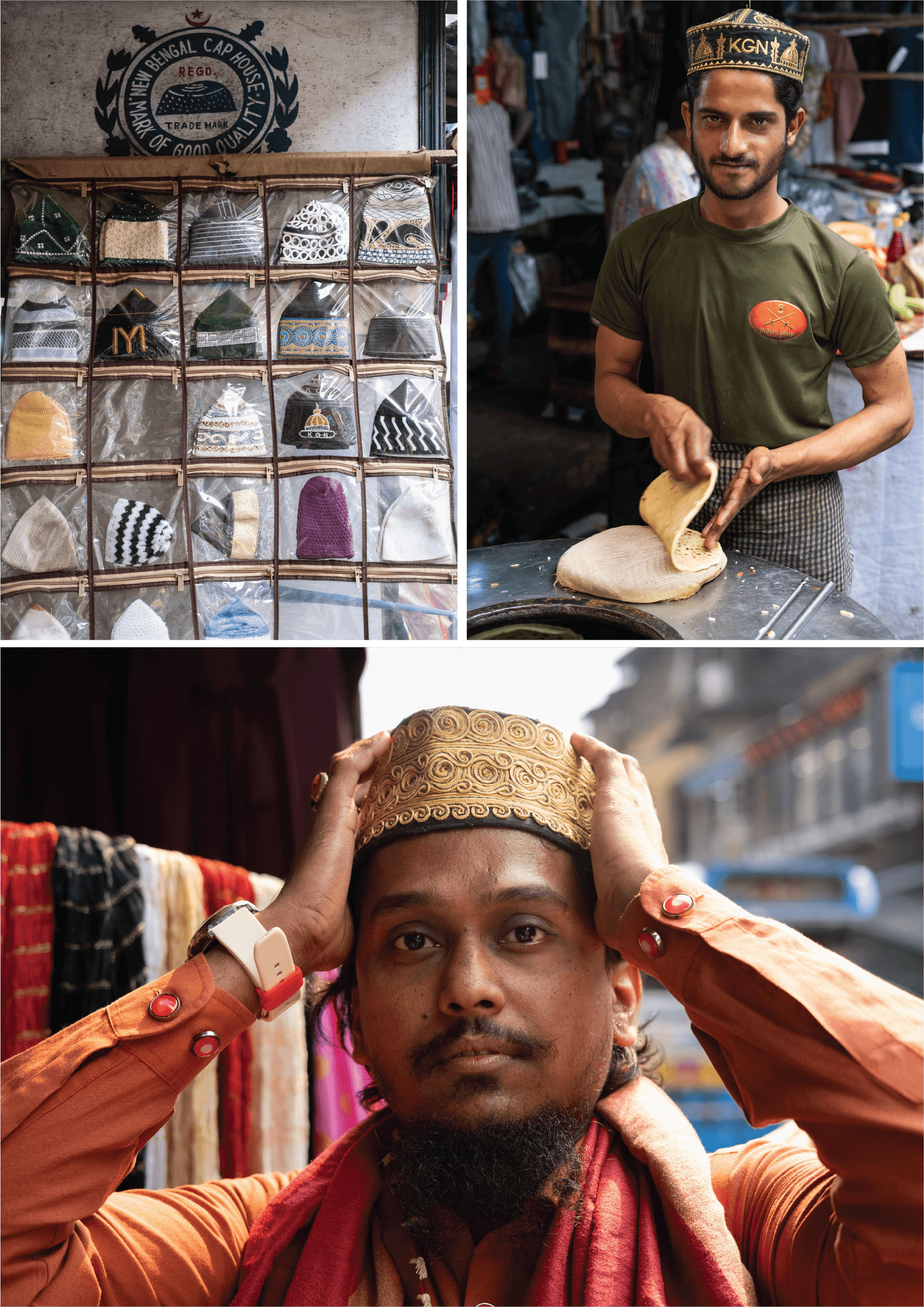
A key site of this inquiry was New Bengal Cap House on Zakaria Street, opposite Nakhoda Masjid, a shop that has existed for over 126 years. It sells all kinds of caps and functions as an informal archive of changing topi cultures. Its owner, Farrukh Shahab, is a Bihari immigrant from the Ansari (weaver/Julaha) community in Bihar Sharif. His ancestors worked in the shop, and his father bought it from its original owners — Bengali Muslims — in the 1960s, when they decided to shift to Dhaka.
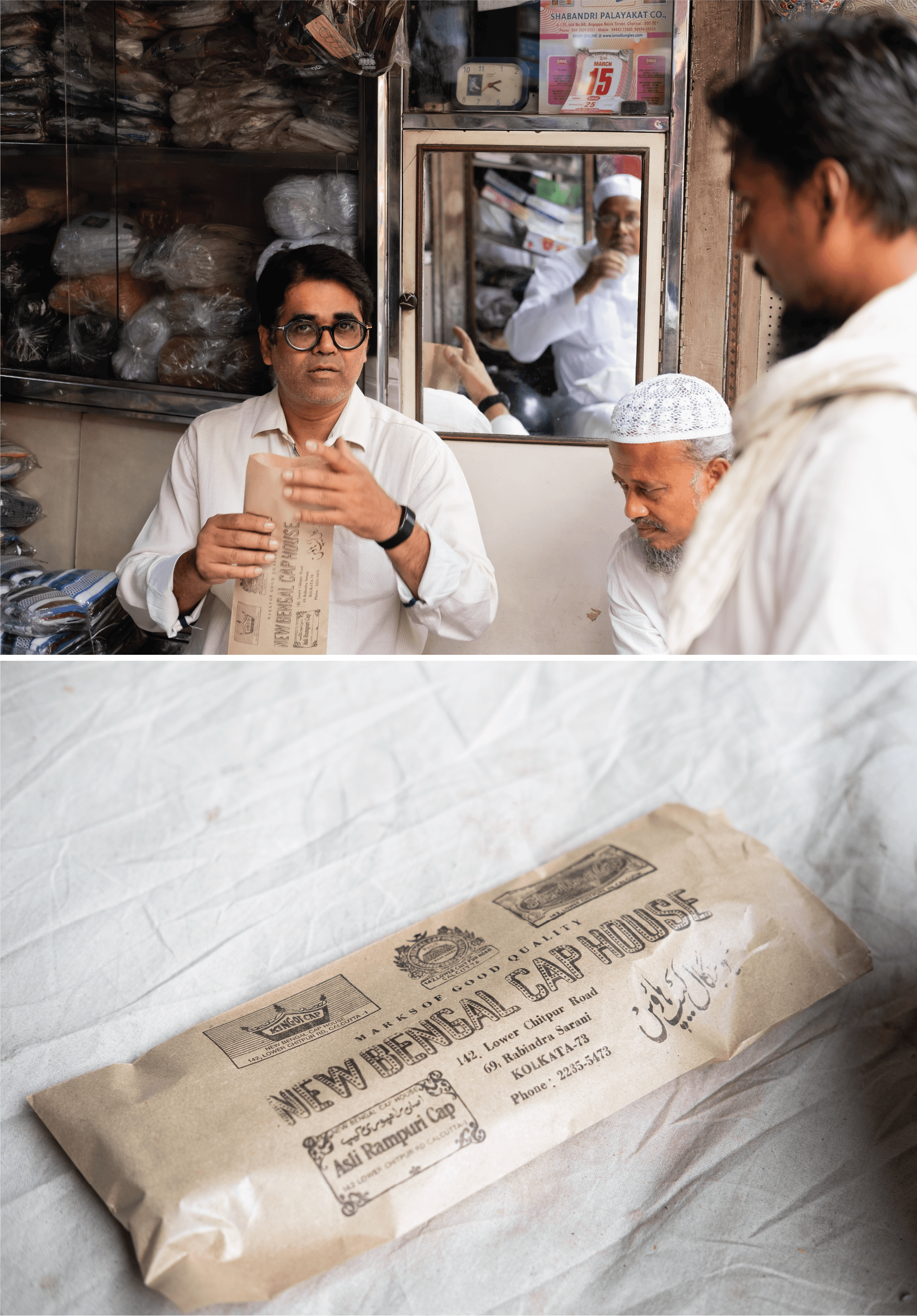
He recalls a time when only a limited number of topis were available, primarily non-round forms such as Gandhi topi, Jinnah topi, and Rampuri topi, or caps made at home from leftover fabric imitating these styles, along with simple cotton handkerchiefs used to cover the head. The now ubiquitous round topi was not common.
According to Shahab, a significant shift occurred after the demolition of the Babri Masjid demolition, after which Muslims began wearing topis with greater frequency and intensity, transforming the topi into a more consistent marker of religious identity. This shift was further amplified by labour migration to West Asian countries, through which new styles entered Indian markets. These styles were initially expensive and largely unaffordable to the wider Indian Muslim population, but over time, cheaper imitations began to be produced in Bangladesh, Indonesia, and China.
He also pointed out that topis were not required in Sufi shrines, which historically emerged from more fluid, devotional traditions open across religions and sects. However, in a more polarised, post–Babri India, these spaces have become more stratified. Today, many Sufi shrines ask male attendants to wear topis and women to cover their heads. This shift is not isolated, but part of a broader reconfiguration of Muslim identity in contemporary India, where, in moments of heightened threat, communities often turn inward, becoming more insular as a means of protection.
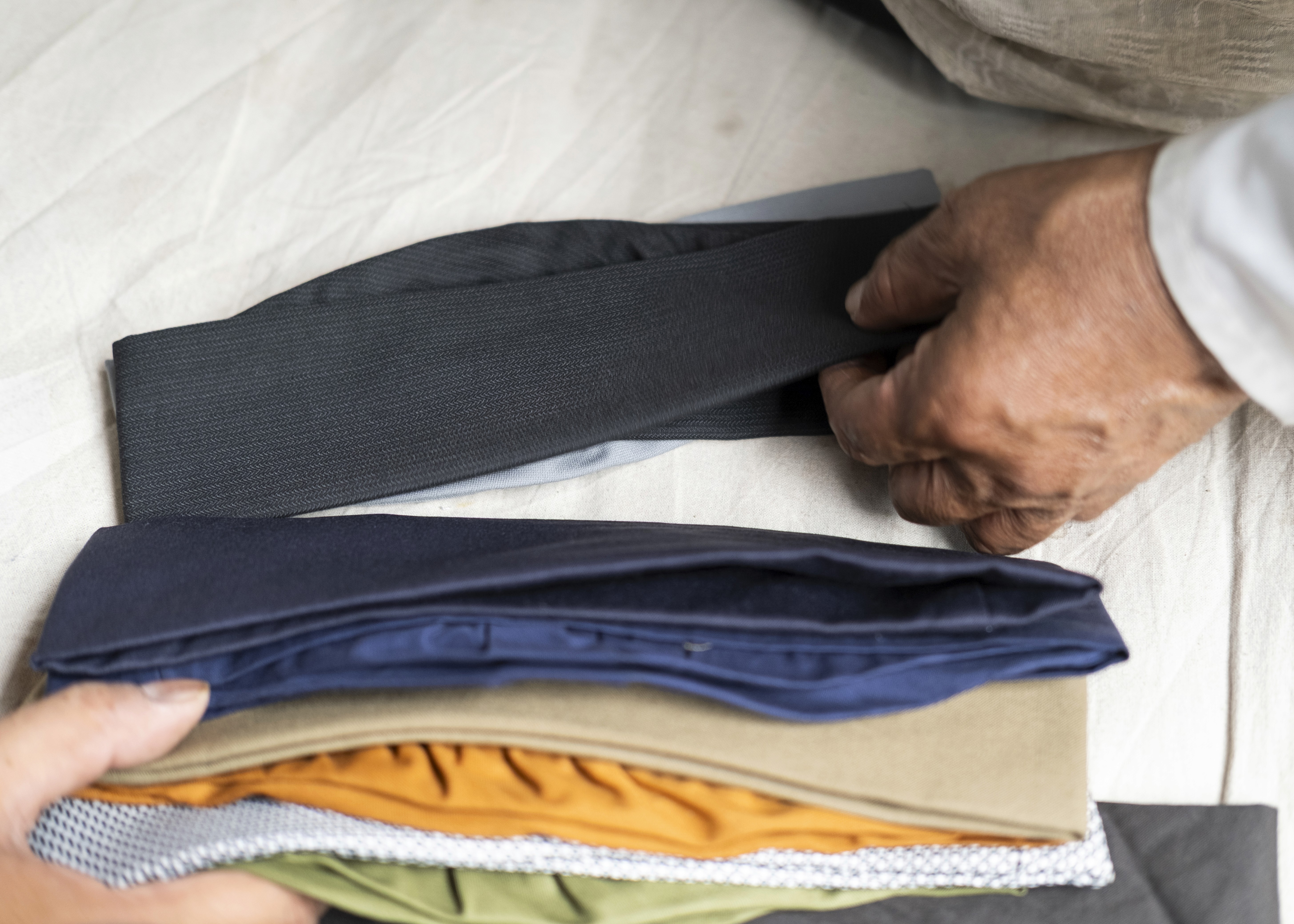
Marked Bodies
The reconstitution of the Muslim as the “Other” can be traced back to the Partition of India, but this project has assumed a more vehement and brutal form in the last decade, particularly after 2014, when the current ruling dispensation came to power. Data compiled by organisations such as Human Rights Watch document a sharp rise in hate crimes, with a majority of victims being Muslims.
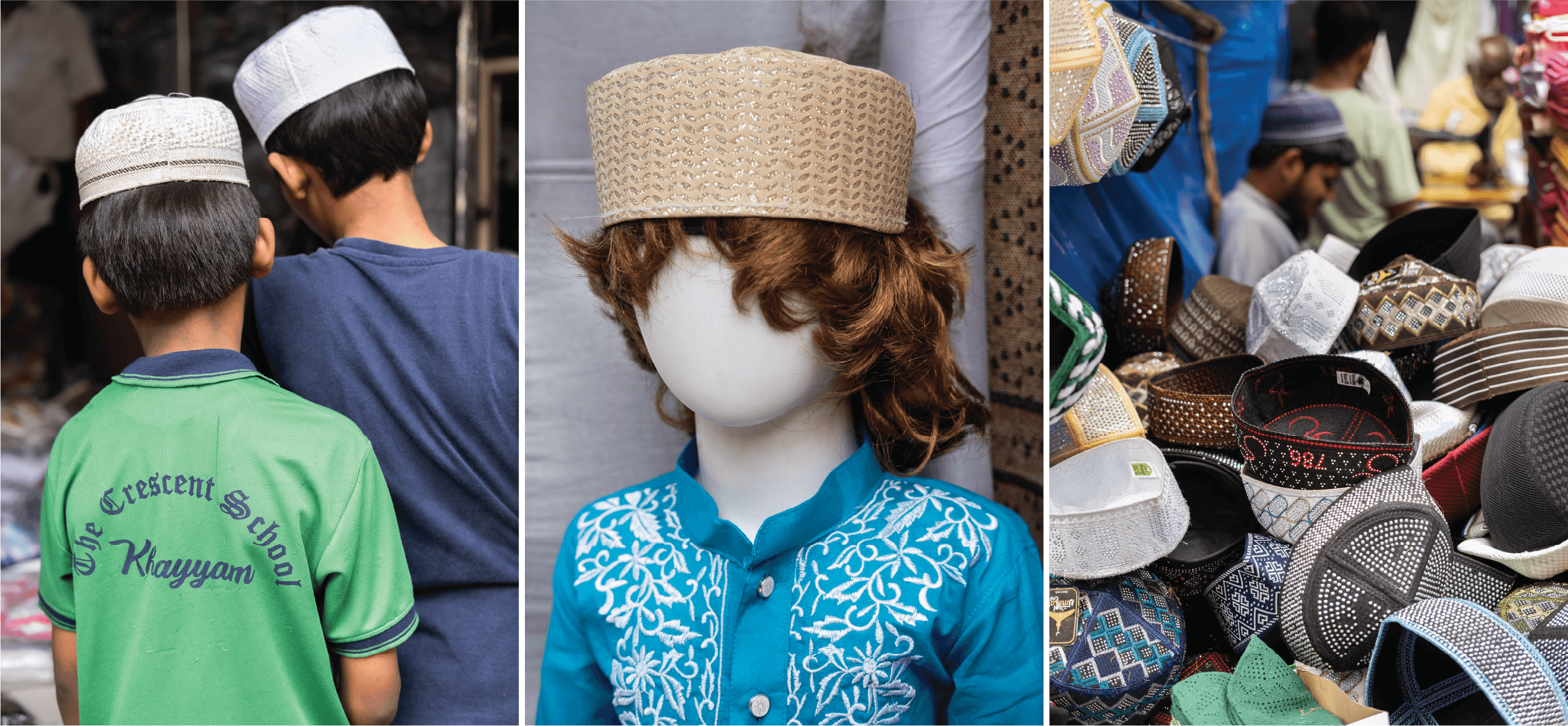
The increasing visibility of the topi must be situated within this climate of suspicion, where markers of Muslim identity, such as the topi, the beard, and the kurta, have become signs through which bodies are identified, surveilled, and targeted. In 2019, Narendra Modi remarked that those engaged in protest could be identified “by their clothes,” a statement widely interpreted as referring to Muslims and reflective of this political moment. The most vulnerable are working-class, labouring, non-Ashraf Muslims, who must put their bodies on the line in public spaces to earn a living. It is on these very bodies that markers of identity, such as the topi, acquire heightened visibility and meaning.
At the same time, the social life of the topi is undergoing transformation through the influence of youth culture and social media. Figures such as MC Stan and Emiway Bantai, often dismissed within Ashraf or Brahminical discourse as “chhapri” and not associated with elite Muslim culture, have popularised the topi as an element of style, offering alternative forms of representation that resonate with non-Ashraf Muslim youth, even as they are seen by Ashraf groups as uncouth.
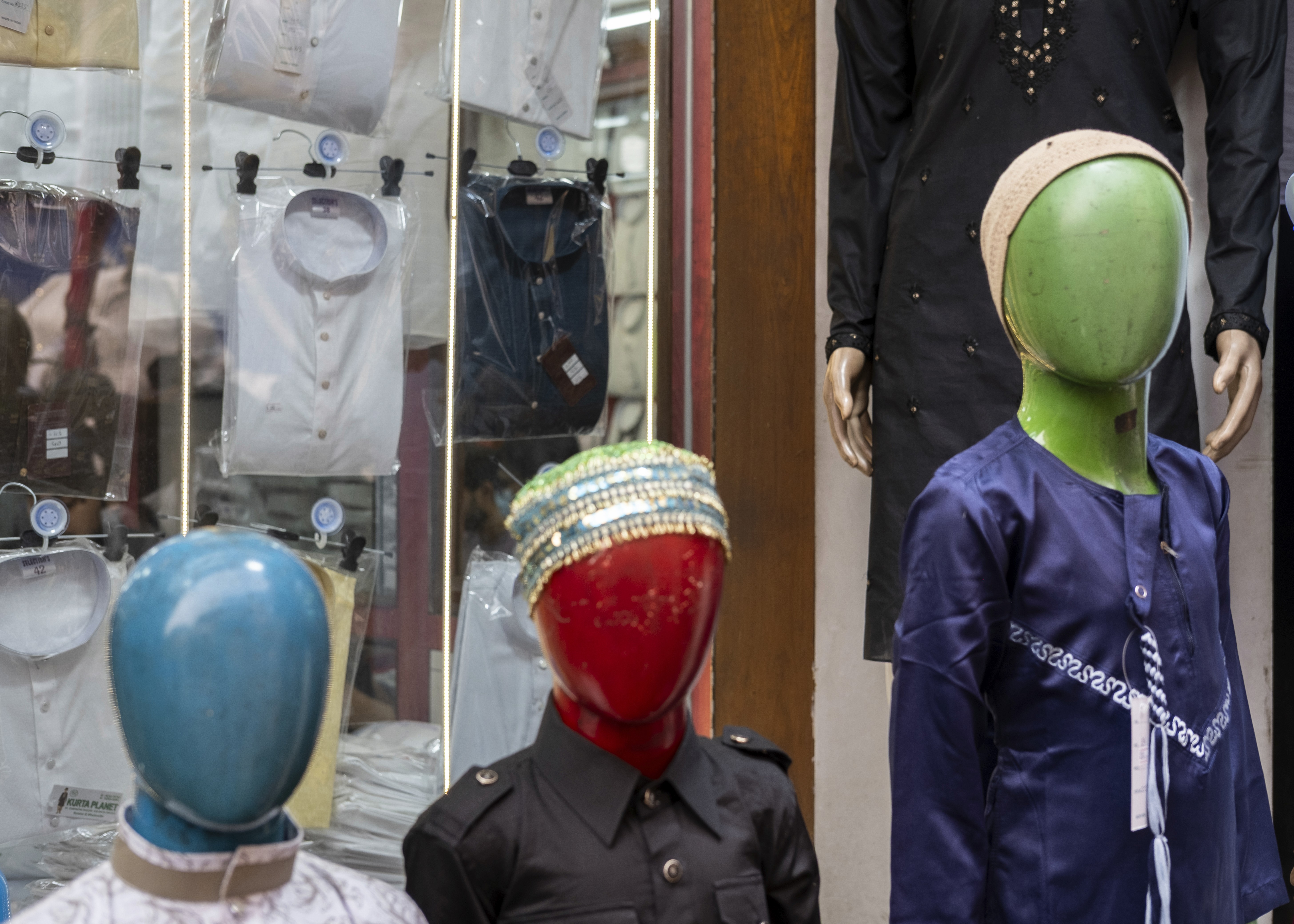
MC Stan’s reels of attending Friday prayers in Mumbai often go viral, particularly among non-Ashraf youth. This suggests that the topi now operates simultaneously as a marker of hierarchy and a tool of self-fashioning. A non-Ashraf youth today may wear different kinds of topis not only as religious objects for prayer, but also to signal aspiration, mobility, and style.
This contradiction is best captured by Farrukh Shahab: “The BJP government has ensured that the business of selling topis is booming. I have never sold as many topis as I have after 2014. But I am not very happy, because I too walk the streets wearing a topi.”
*****
After moving to Kolkata, time seems to move slower. I witness the change in light as the seasons turn, and the tiny mangoes grow fuller with the arrival of summer. All of this has enabled me to sit with my grief and revisit my mother’s funeral from 2023, especially in the mornings, when I listen to Kabir’s nirgun bhajans.
The story of Kabir’s funeral, which I had read as a child, returned to me. It is a magical tale with a fantastical end. Kabir, the weaver-poet saint, is dead, and Hindus and Muslims begin to argue over how his body should be treated; whether it should be buried according to Muslim traditions or cremated according to Hindu rites. Eventually, the men engage in a tug of war over his shrouded corpse. The shroud rips, and what emerges is a burst of flowers. There is no body inside.
I remember being deeply taken by this story for months. A body claimed by competing certainties, pulled in different directions, only to dissolve into something that refuses ownership. The topi, like Kabir’s shroud, does not settle into a single identity.