Anubhuti Rabha is a writer, editor, and multidisciplinary artist. Their work centers Indigenous, anti-caste, feminist and decolonial practices. They have previously been a part of Project Mukti and Mavelinadu Collective. They also work as a freelance communications consultant, mainly for social justice initiatives.
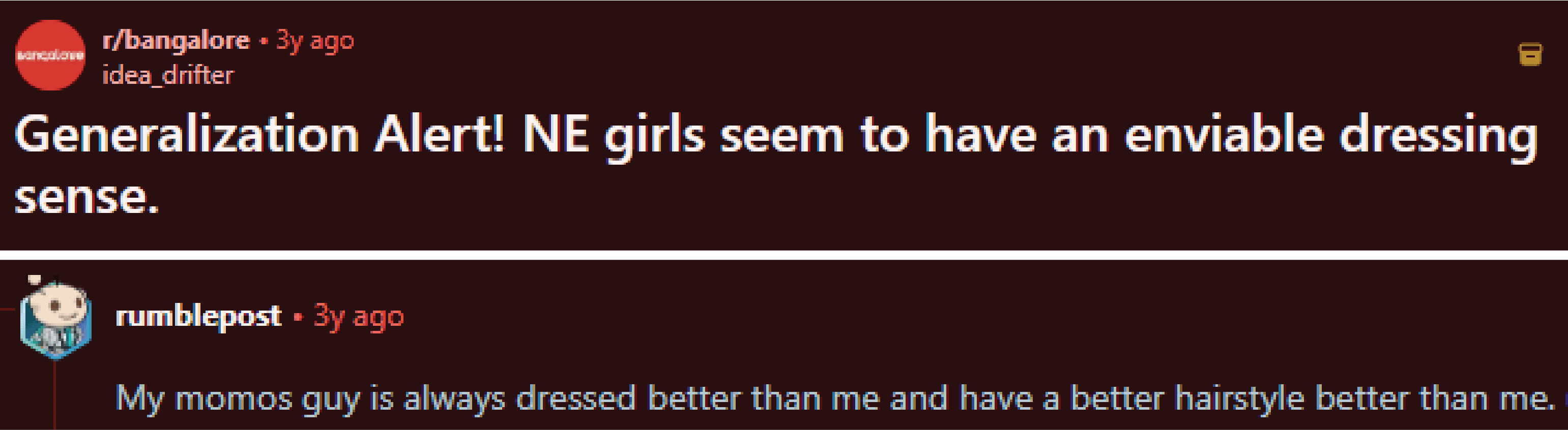
"Chinky," "easy," "dog-eaters," and lately, “fashionable” – people from Northeast India are reduced to many stereotypes. As an Indigenous Northeastern migrant, every day is an experience in navigating the multitude of contradictory stereotypes projected on us. When I saw the following Reddit comment, the almost laughable way in which it combined these stereotypes inspired me to examine the ways in which fashion interacts with the lives of Northeasterners - from being a form of identity, a harmful stereotype, a tool for economic opportunities, to our place in the fashion industry. For the last part, I interviewed a Naga woman working in Delhi.
The transformation of the subjectivity of Northeastern tribal communities from the ‘exotic pre-modern frontier-dweller or the violent separatist bent on destroying India' to the fashionable and urbane is a notable shift (Kikon, 2009). Given the very visible presence of Northeastern men and women employed in clothing and cosmetic stores, salons and spas, the hospitality sector, and aviation across Indian cities, it is clear that we are being seen as “fashionable” vis-à-vis labour (McDuie-Ra, 2012).
Northeast’s Relationship with Fashion
There is a basis to the “fashionable” stereotype, as it is indeed a key component of Northeastern identity. Fashion shows with runways, beauty pageants, designers' contests, and model hunts have become such staples of life in the Northeast that even local agricultural fairs in rural and semi-rural areas have them. Hornbill festival is the biggest one with these events. There are many fashion magazines published in various Northeast languages, such as Lunglen, a Mizo fashion monthly (McDuie-Ra, 2012).
The history of contemporary Northeast fashion is influenced by the clothes worn by missionaries, the style of garments crossing the borders from China and Burma, and directives by insurgent groups threatening violence against those wearing Indian clothing (Akoijam, 2010).
"If you are trying to spot the next hot trend, head to the north-east. Forget the metros, street fashion is born in Shillong, Kohima, and Imphal." This quote opens a feature story on Northeast fashion in Tehelka magazine (Banan, 2010). In an article on Northeast fashion titled ‘Paris, Milan, Dimapur’ in Motherland magazine, a Naga fashion blogger says, “In Delhi, adopted trends are late to catch on and stay long after their expiry date; nothing like that happens in Nagaland.” The author notes how the rejection of Indian fashion, openness to Western, Korean, and Japanese styles, and access to goods made in Southeast Asia have together given Northeastern youth a reputation as ‘fashion obsessed’ and ahead of the rest of India in style (Merelli, 2011).
A Mizo professional quoted in the Tehelka article states, “We resemble people from Korea and China. It’s better to dress like them than to dress like Bollywood stars" (Banan, 2010). A key component of Northeasterners' cosmopolitan identity is Korean pop culture, as it is the cultural reference point of choice for many. In the late 2000s, the Korean wave swept over the Northeast, and the youth started sporting Korean hairstyles, makeup, and fashion. In Delhi, Northeast migrants have started Korean-themed hair salons with Korean writing on shopfronts, staffed by women from Nagaland and Manipur.
Dressing well and having a style distinct from other people in Delhi seems to have become an important part of the Northeastern migrant identity. Many say that if they have spare income, they will spend it on clothes (McDuie-Ra, 2012). The Sarojini Nagar market in South Delhi, known for its global garment industry reject stock, is a popular shopping destination for Northeast migrants who have earned a reputation for being able to create unique outfits from items that others pass over.
Several clothing, shoes, cosmetics, kawaii accessories, anime merch, and thrift stores run by Northeast migrants have opened in trendy shopping areas, such as Khan Market, in areas with large Northeast populations in Delhi, as well as online. The draw for customers to these shops is the image of Northeasterners having East Asian fashion sense and supply chain connections, which mainland Indian and global chain stores lack. This is one of the few forms of capital that is distinctly Northeastern, but one that appears to be growing, especially with the global rise in Korean pop culture.
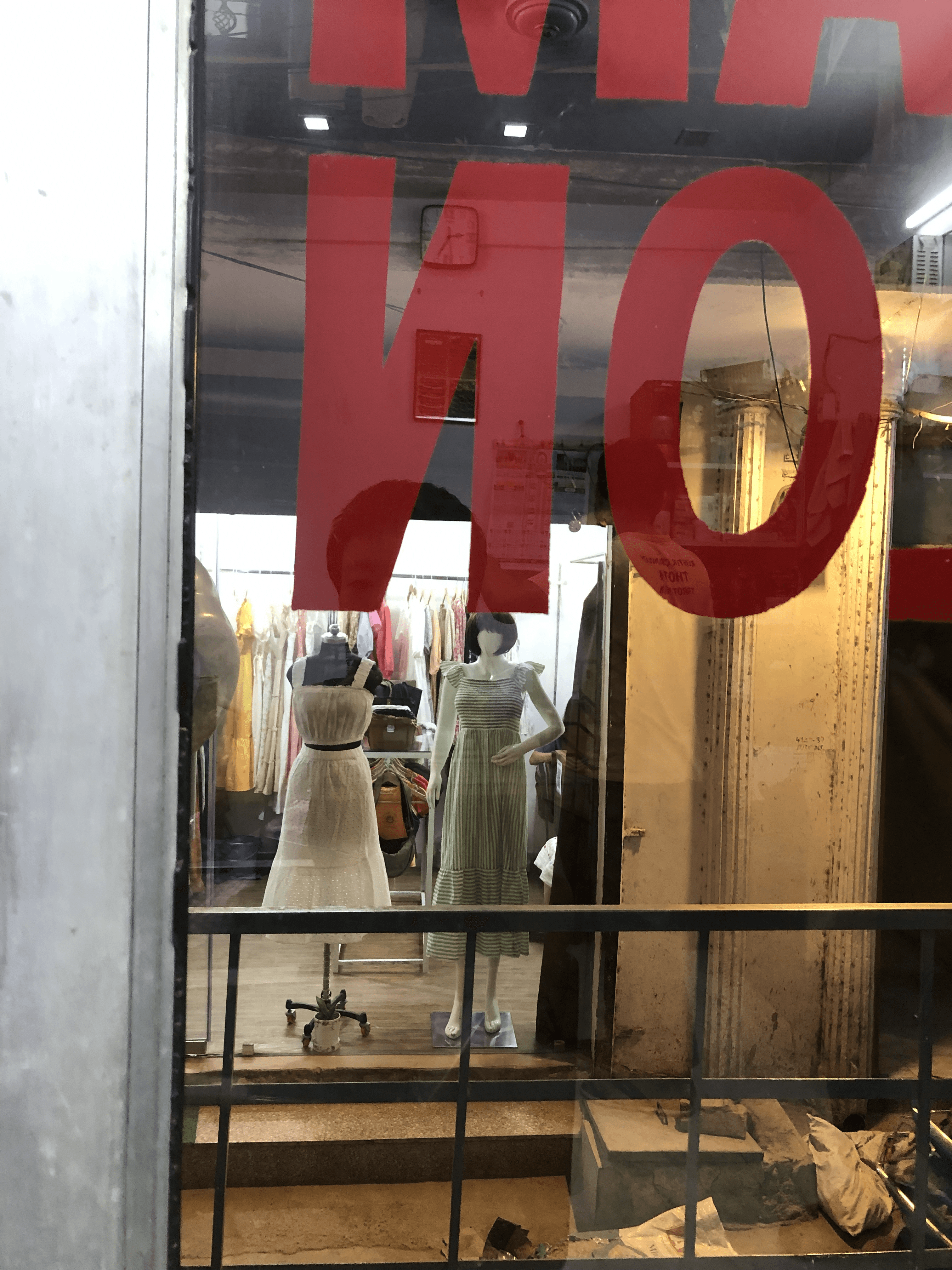
Northeast migrants view dressing in Western and East Asian styles as a form of resistance. It signals non-conformity to the dominant Indian coloniser culture, which marginalizes and invisibilizes them, and ‘it orients social life, aspirations, and desires away from India to East Asia’ (McDuie-Ra, 2012). In the book, ‘Northeast Migrants in Delhi’, many said that when they arrived in Delhi, they did try to wear ‘Indian clothes,' but since they were still discriminated against, they gave up and chose to dress as they would back home.
Fashion Kills
Unlike other stereotypes Northeastern people face, “fashionable” might not seem like an insult; if anything, it is a compliment, as it also leads to mimicry. In an interview with McDuie-Ra, Monpa, a postgraduate student from Arunachal Pradesh, said that when she first came to Delhi, her university classmates would make derogatory comments on her clothes since she never dressed like a North Indian. But now, “They all try to dress like us” (McDuie-Ra, 2012).
But "fashionable," just like any stereotype, still perpetuates a one-dimensional outlook of very diverse people with complicated histories and presents. It invisibilizes the harsh reality of colonialism, racism, casteism, and intergenerational trauma when Northeastern people are flattened into the stereotype of "fashionable."
In fact, this perception actually perpetuates different forms of violence.
The sartorial surveillance of Northeastern migrants is one important facet of the discrimination and marginalization we face. The starting point is obviously that Northeastern “Mongoloid phenotypes…have not found a place in common imaginaries of the ‘Indian Face’” (Wouters & Subba, 2013). Coupled with the notion of having a ‘Western’ or ‘East Asian’ fashion sense, it stamps the Northeastern body as a foreign "Other," separate from the somatic embodiment that represents the Indian nation.
This otherization makes Northeastern migrants a target of assault, often escalating to murder. Nido Taniam, a 20-year-old student from Arunachal Pradesh, was beaten to death by three local men in Lajpat Nagar, Delhi, after he retaliated against the shopkeepers who “mocked him for his longish, stylized, blonde-dyed hair and effeminate clothing" and called him "chinky." While Northeastern people are also subject to casteism, these cases are different from similar caste-based ones, as they go beyond casteist logics. In a caste-based case, the violence is inflicted because of the transgression of caste codes, rules, and hierarchy. Northeastern tribals are seen as savages outside of the caste system and as second-class citizens. This othering due to being seen as ‘ricebag converts,’ enemies of Hinduism and India, along with the racialization rooted in the colonial relationship with the occupier nation-state, together lead to a unique dehumanization.
When Northeastern tribals dress and act in a fashionable, cosmopolitan manner, we neither fit ‘the backward stereotypes nor the sympathetic construction of the Northeast victim' (McDuie-Ra, 2012). For people who make the basis of reservations economic lack and a performance of oppression, Northeastern tribals not “looking” poor or oppressed is invoked as an argument against reservations for Scheduled Tribes (STs) from the Northeast.
Fetishisation and Victim Blaming
The “fashionable” stereotype has added another layer to the existing objectification, sexualization, and fetishization of both Indigenous women and men from the Northeast, especially cis and trans women.
In the opening scene of Chak De! India, two players from the Northeast, one from Manipur, the other from Mizoram, step out of a rickshaw, dressed in “western clothes." They are eve-teased, referring to their lighter skin: “Man! Look at that vanilla ice cream amidst all this chocolate. They must be heading to a disco or nightclub.” He then insinuates that they are prostitutes and challenges his friend to ask them how expensive they are.
This image of ‘being available’ is also shown in the movie Axone, where the non-Northeastern friend Shiv fetishizes by making comments like "Get me a Northeast girlfriend." Northeastern women are cast as loose in morals and sexually promiscuous, a major reason being that we dress differently from other Indian women.
A 19-year-old Mizo girl studying at Kirori Mal College, Delhi University, was gangraped by four men in a moving car after being abducted from a roadside eatery. The next day, the vice-principal of KMC issued a press release saying that Northeast girls should wear salwar-kameez to avoid any such happenings in the future. This sentiment fits a common discourse that blames Northeast women as ‘asking for it’, attributing our “western/non-Indian” clothes and our “loose” lifestyles to the violence inflicted on us (Jyoti, 2006). The Delhi Police legitimized this in the infamous pamphlet ‘Security tips for North East students/visitors in Delhi,' issued in 2005, where Northeast women were advised to act and dress more conservatively. The pamphlet reads:
“Revealing dress to be avoided. Avoid lonely road/bylane when dressed scantily. Dress according to sensitivity of the local populace.”
This is not the usual sexist moral policing and victim shaming, as at the core of this discourse of blame is a deeper association between the loose ‘exotic’ women and their origins in the separatist frontier. The ‘loose’ Northeastern women deserve harassment and violence, as they are inseparable from the ‘separatist anti-national frontier dweller' (McDuie-Ra, 2012). This view is encapsulated in the same press release by the KMC vice-principal:
“All the NE (Northeast) girls are sent by the militants of the region in order to seduce the mainland people, so they are molested and raped. In this way, they are trying to culminate anti-Indian sentiment.”
How the Invisible Hand of the Market Shapes Northeastern’s Fashion
It is in spaces like the DLF malls, marketed as Delhi’s ‘most exclusive’ malls, along with ‘exotic’ Northeastern ghettos, that many Northeastern migrants find work. They likely work for low wages while catering to their clientele’s fantasies. Their clothes and race play a crucial part in creating these fantasies. Yet, many Northeastern migrants believe their high concentration in jobs like clothing stores is not solely because of race, but because of their reputation for being fashionable (McDuie-Ra, 2013). The reputation of being considered as ‘experts’ in grooming themselves has enabled employment in aesthetic labour industries where high value is attached to workers’ physical appearance and disposition.
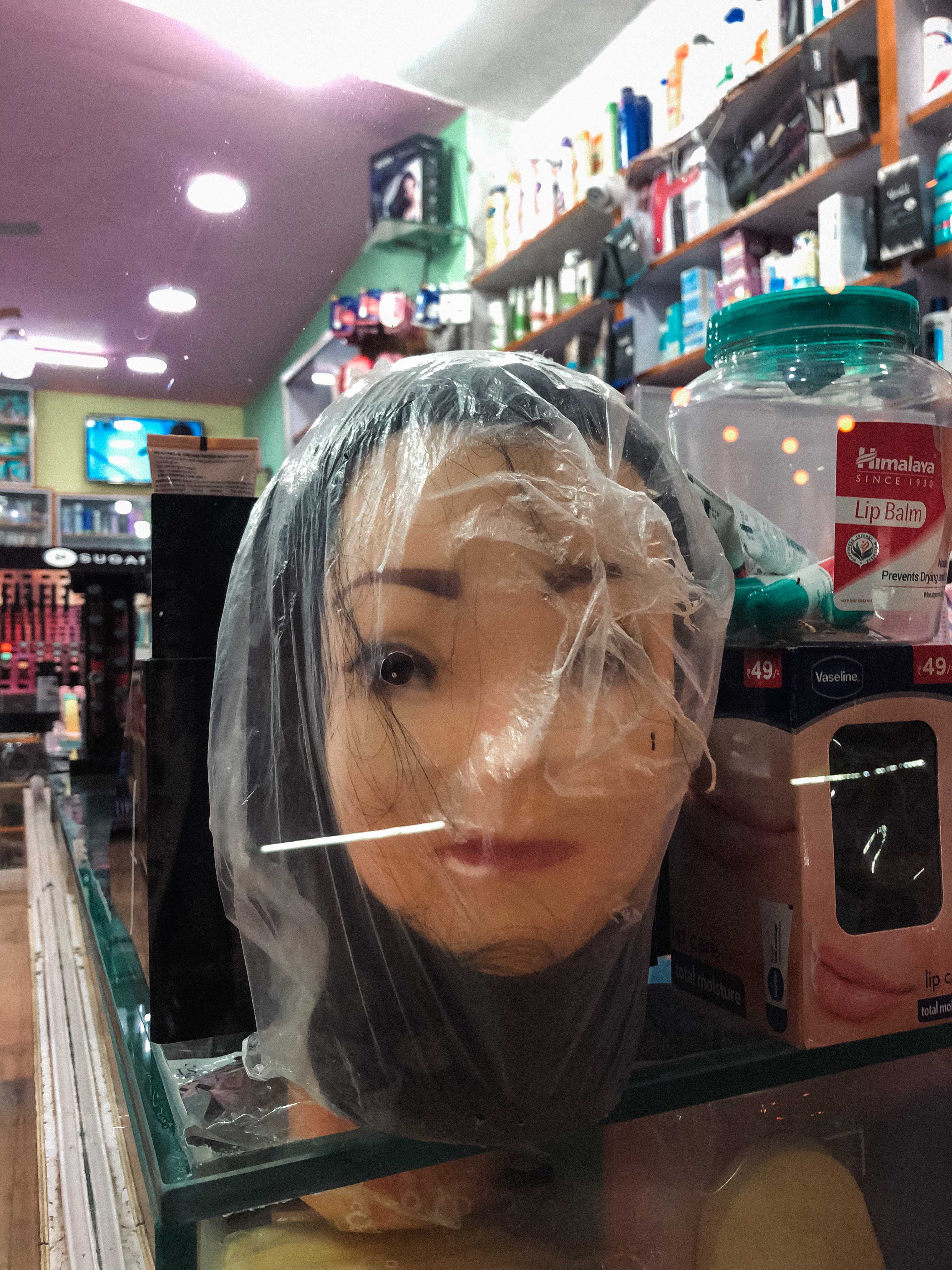
There is a historic and economic context to why tribal migrants from the Northeast to metro cities have had to adopt a “fashionable” look. Youth escaping armed conflict were asked to look pretty and presentable by recruiting agencies to join the service and hospitality sector. Serving and working in the high-end hospitality sector was packaged as a respectable form of employment with self-respect and dignity (Kikon & Karlsson, 2020). Many suffer from PTSD because of militarization and everyday discrimination; Fashion, hence, is a way of survival, of livelihood and self-expression.
Grooming and aesthetics are integral to employment in these aesthetic labour industries. Northeastern government bodies and grooming agencies were providing the tribal youth with the prerequisite soft skills to reinvent their looks, postures, and hygiene. These soft skills that were being pushed on them have a gendered, sexual, and racial aspect (Kikon, 2021).
In a recruitment centre in Dimapur, Nagaland, tribal youth are trained for employment as service personnel in luxury hotels, restaurants, and airlines. Before students are registered, the trainers carry out the height/weight/skin assessments during the admission process to customise the grooming sessions (Kikon & Karlsson, 2020).
The dress code for all students, both male and female, was formal or business attire, and jeans were not allowed. They would bring their grooming, make-up kits, and clothes, and change into pants and suits, pencil skirts and blouses, or dresses. Learning to dress up in the morning was part of the training. These demands were highly gendered, and many companies were primarily looking for female employees. However, male students also received tips on how to become attractive servers through styling advice like wearing pastel colours or coordinating their belts and shoes (Kikon & Karlsson, 2020).
Entering the hospitality industry imposes other forms of control and power, exercised through the refashioning of their bodies. In a study, when Northeastern migrant hospitality workers were asked what kind of changes they experienced in themselves as an outcome of training and activities involved in the job, they unanimously answered, ‘I have better dressing sense now' (Kikon & Karlsson, 2020).
“It can be seen that by working in the retail and service industry, through a performance of aesthetic labour, indigenous subjectivities are socialised into a Western and class-coded pattern of behaviour.”- Priyakshi Baruah
The ‘Bamboo Ceiling’ in the Fashion Industry
I met Alino for the first time when I went for a haircut in her namesake salon, in the narrow alleys of Humayunpur – a cramped Northeastern ghetto, crammed within the posh South Delhi locality of Safdarjung Enclave. It was the first time in almost twenty years that I felt satisfied, happy even with the final result I saw in the mirror. Alino was very hospitable the whole time, starting from asking if I wanted some tea or coffee, to more casual banter about men’s weaponised incompetence. Having grown up outside the Northeast, I often suspect that natives can sniff the diaspora off me, and hence treat me not entirely as one of their own. So Alino’s affable nature caught me by surprise. I finally had a place I could trust my tresses with, and I became a regular. Soon, on subsequent visits, we would be talking about our dating lives, travel plans, and more.
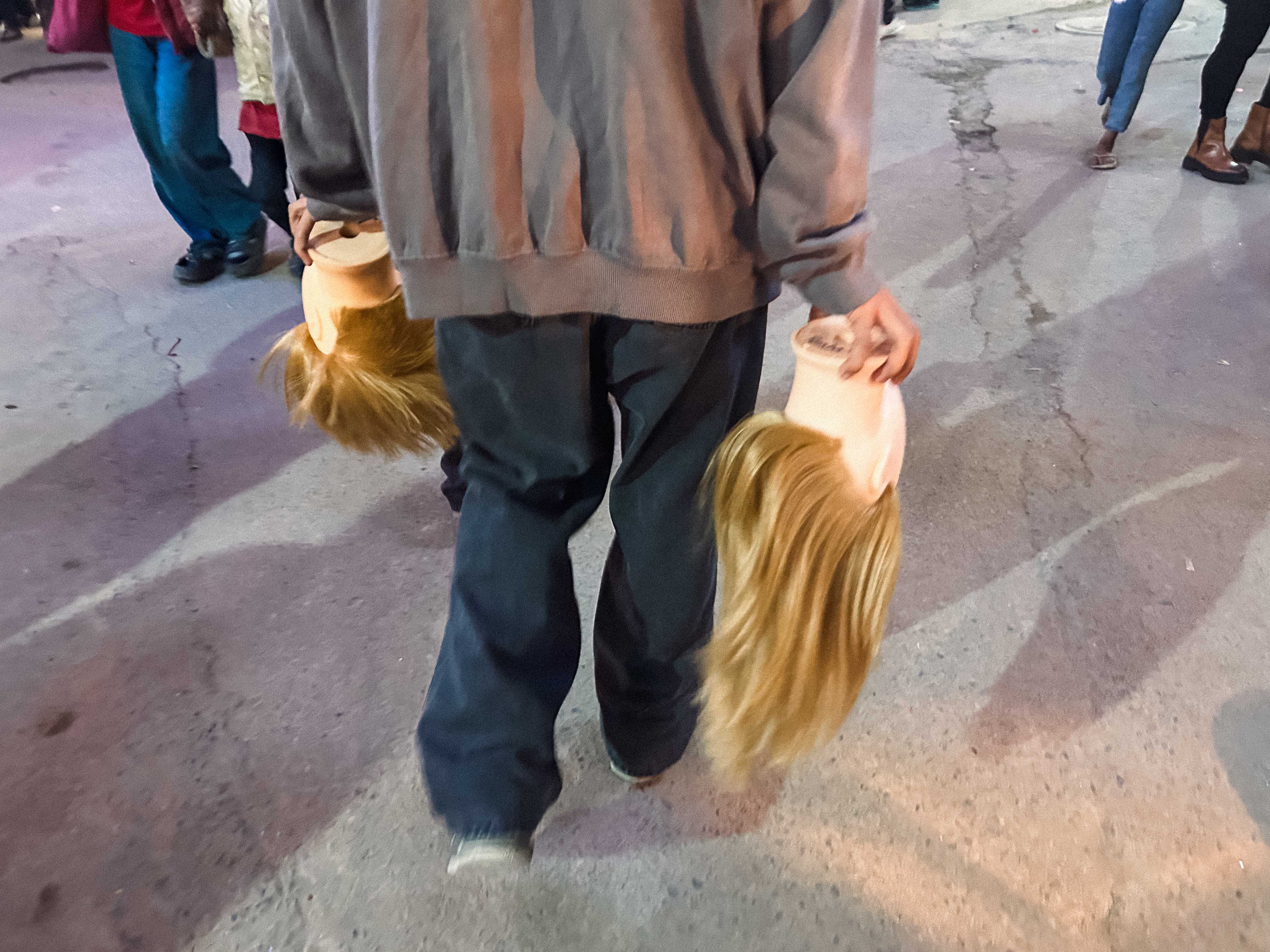
At first glance, Alino’s story is one of hundreds of thousands of Indigenous migrants from the Northeast who end up in metro cities, working in salons or restaurants. Upon peeling back the layers, I learned that growing up in Chumukedima, Nagaland, her childhood dream was to become a fashion designer. The idea sparked in her after she won Miss Fresher's in high school and Miss Tenyimi, her tribe’s beauty pageant. She wanted to pursue fashion design right after school, but other parents told her mother that it was a very expensive degree, who then concluded that if the better-off ones couldn’t afford it, how could they? So she settled on pursuing her Bachelor’s from Guwahati, which wasn’t too far and dangerous like Delhi, but still cosmopolitan enough to get exposure in the fashion industry. While in Guwahati, she modeled part-time and even got recruited as a cabin crew for Indigo and Spice Jet. But she finally decided to pursue her fashion dreams, and went on to rank 14th, becoming one of two Scheduled Tribe (ST) students in her Master’s batch at NIFT Kolkata.
I was intrigued about how, after graduating from one of the most prestigious fashion institutes in the country, she ended up running a salon; instead of working in fashion like her batchmates, some of whom work in famous designer houses like Sabyasachi. She shared that she did try to work in the fashion industry, but unlike her peers, she didn’t have any connections or generational wealth. When she went to interview for H&M, she was hired as a floor salesperson for the very first H&M store in Delhi. She was interested in working in visual merchandising, so after a few months, she asked to be transferred to a more creative, design-centric role. But they said that since she was so good with customers, they could promote her to sales manager. She ended up quitting not long after. This was literally an instance of the ‘sticky floor’, which refers to “low-paying, low-prestige, and, most importantly, low-mobility jobs typically held by women” (Berheide, 2013). Systemic racial and gender bias keep Northeastern women like Alino stuck with limited opportunities, because sticky floor occupations lack job ladders that would allow employees to rise above the ground (sales) floor.
From there on, she went into the restaurant industry. Over the next decade, she opened two restaurants that struggled during COVID. She closed them and started afresh in the salon business, and that is how her journey led to her opening the ‘Alino Salon’. While she says she’s happy with her line of work, entrepreneurial challenges and all, one can’t help but wonder if it’s a coincidence that the two industries she ended up in have a high concentration of Northeastern migrants. In both instances, she went into business because of her community contacts. It does seem like a case of occupational segregation. Specifically, a case of racial and gendered occupational segregation. It is a modern-day neoliberal form of the caste system, driven by race, caste, gender, and coloniality.
The "Bamboo Ceiling" is the glass ceiling for East Asians in the United States (Lu, 2024). I believe the term has crossover potential for Northeast Indians, as to us, bamboo is more than a material; it is a way of life. It is in our landscape, our food, our homes, furniture, in the irrigation system, rafts, paddy workers’ hats, tea-picking baskets, musical instruments, dance, ceremonies, folktales, vessels for cooking and drinking… the list is endless.
In the fashion industry, “discrimination is systemic, structural, and personal,” said designer Purushu Arie. To get anywhere in the fashion industry, you need to have highly placed connections, such as with film stars, which lead to sponsorship, investments, and corporate acquisitions (Vasudev, 2025). And the ones rubbing shoulders with these elite are those with privileged surnames. Hence, it is extremely hard to get a foot in the door for Indigenous people from the Northeast, which is geographically, socially, and culturally farthest from Bollywood. There is undeniably a bamboo ceiling in the fashion industry.
Conclusion
The scrutiny Northeastern migrants face for our fashion is a double-edged sword. Our style is coveted, commodified, and also used against us. On one hand, we are susceptible to violence and subject to stereotypes about our lifestyles, sexuality, and decency based on the way we dress. It is increasing hypersexualized tropes, particularly for women. On the other hand, it gets us jobs and challenges stereotypes of backwardness and isolation. We are not seen as half-naked primitives but as innovators of contemporary style.
While un-Indian looks, grooming, and soft skills make Northeastern migrants preferable for aesthetic labour, their occupational segregation in the hospitality and personal care sector is based on the racist, sexist, colonial stereotypes of being docile and servile. Young Northeastern women waiting on the elite of the mainland, couched in an air of the exotic Orient, bordering on erotica, is nothing but racialized and sexualized servitude.
Hence, we must have reservations in private universities and jobs to break free from these shackles, and have our rightful opportunities and representation in all sectors, particularly gatekept ones like the fashion industry. I saw myself in Alino, as someone who also wanted to become a fashion designer as a child, but never got to even give the NIFT entrance exam because of the high financial investment, with very unlikely returns. I have barely seen the bamboo ceiling shift in the fashion industry in my life so far, but hopefully, starting conversations like this will change our pigeonholed and ghettoized fates.
One thing is clear: we, the mish-mash of diverse people called the “Northeast”, have an intrinsic relationship with fashion, perhaps as much as we do with bamboo.
Bibliography
Akoijam, Sunita. “Home Before Dark.” Himal Southasian 23, no. 7 (2010): 56–57.
Arambam, Kapil. “Prejudice, Ignorance and Intolerance: Racial Discrimination of North-East People in Delhi.” In Pursuit of Freedom. https://kapilarambam.blogspot.com/2008/02/prejudice-ignorance-and-intolerance.html.
Banan, Aastha A. “The Only Fashionistas.” Tehelka Magazine, 2010. http://www.tehelka. com/story_main47.asp?filename=hub161010The_only_Fashionistas.asp.
Baruah, Priyakshi. “A Short-Spanned Career and a Blurry Future: Migrants from North-East India in Hospitality and Retail.” Artha Journal of Social Sciences 21, no. 4 (2022).
Berheide, Catherine White. “Sticky Floor.” In Sociology of Work: An Encyclopedia, vol. 2. SAGE Publications, Inc., 2013. https://doi.org/10.4135/9781452276199.n292.
Ghosh, Palash. Nido Tania: Was Killing Of Student In Delhi A Hate Crime? n.d. https://www.ibtimes.com/nido-tania-was-killing-student-delhi-hate-crime-1555203.
Kikon, Dolly. “From Loincloth, Suits, to Battle Greens: Politics of Clothing the ‘naked Nagas.” In Beyond Counter-Insurgency: Breaking the Impasse in Northeast India, edited by Sanjib. Baruah. Oxford University Press, 2009.
Kikon, Dolly, and Bengt G. Karlsson. “Light Skin and Soft Skills: Training Indigenous Migrants for the Hospitality Sector in India.” Ethnos 85, no. 2 (2020): 258-275,. https://doi.org/10.1080/00141844.2018.1543717.
Kikon, Dolly, and Saumya Pandey. “Migration, Labour and Violence in Northeast India: An Interview with Dr. Dolly Kikon.” Public Anthropologist, n.d. https://publicanthropologist.cmi.no/2021/02/04/migration-labour-and-violence-in-northeast-india-an-interview-with-dr-dolly-kikon.
Learn & Work Ecosystem Library. “Occupational Segregation.” 2024. https://learnworkecosystemlibrary.com/glossary/occupational-segregation/.
Lu, Jackson G. “A Creativity Stereotype Perspective on the Bamboo Ceiling: Low Perceived Creativity Explains the Underrepresentation of East Asian Leaders in the United States.” The Journal of Applied Psychology (United States) 109, no. 2 (2024): 238–56. https://doi.org/10.1037/apl0001135.
McDuie-Ra, Duncan. “Beyond the ‘Exclusionary City’: North-East Migrants in Neo-Liberal Delhi.” Urban Studies 50, no. 8 (2013): 1625–40.
McDuie-Ra, Duncan. Northeast Migrants in Delhi: Race, Refuge and Retail. Amsterdam University Press, 2012.
McDuie-Ra, Duncan. “The ‘North-East’ Map of Delhi.” Economic and Political Weekly 47, no. 30 (2012): 69–77.
Merelli, A. “Paris, Milan, Dimapur.” Motherland 02, no. 04 (2011): 14–23.
Puri, Jyoti. “Stakes and States: Sexual Discourses from New Delhi.” Feminist Review 83 (2006): 139–48.
Vasudev, Shefalee. Chamar Studio Founder Wants Attention beyond His Caste. ‘Find out What I Make, What I Think.’ February 14, 2025. https://theprint.in/feature/chamar-studio-founder-sudheer-rajbhar-caste-fashion/2493433/
Wouters, Jelle J. P., and Tanka B. Subba. “The ‘Indian Face,’ India’s Northeast, and ‘The Idea of India.’” In Asian Anthropology. 2013. https://doi.org/10.1080/1683478X.2013.849484.
*****
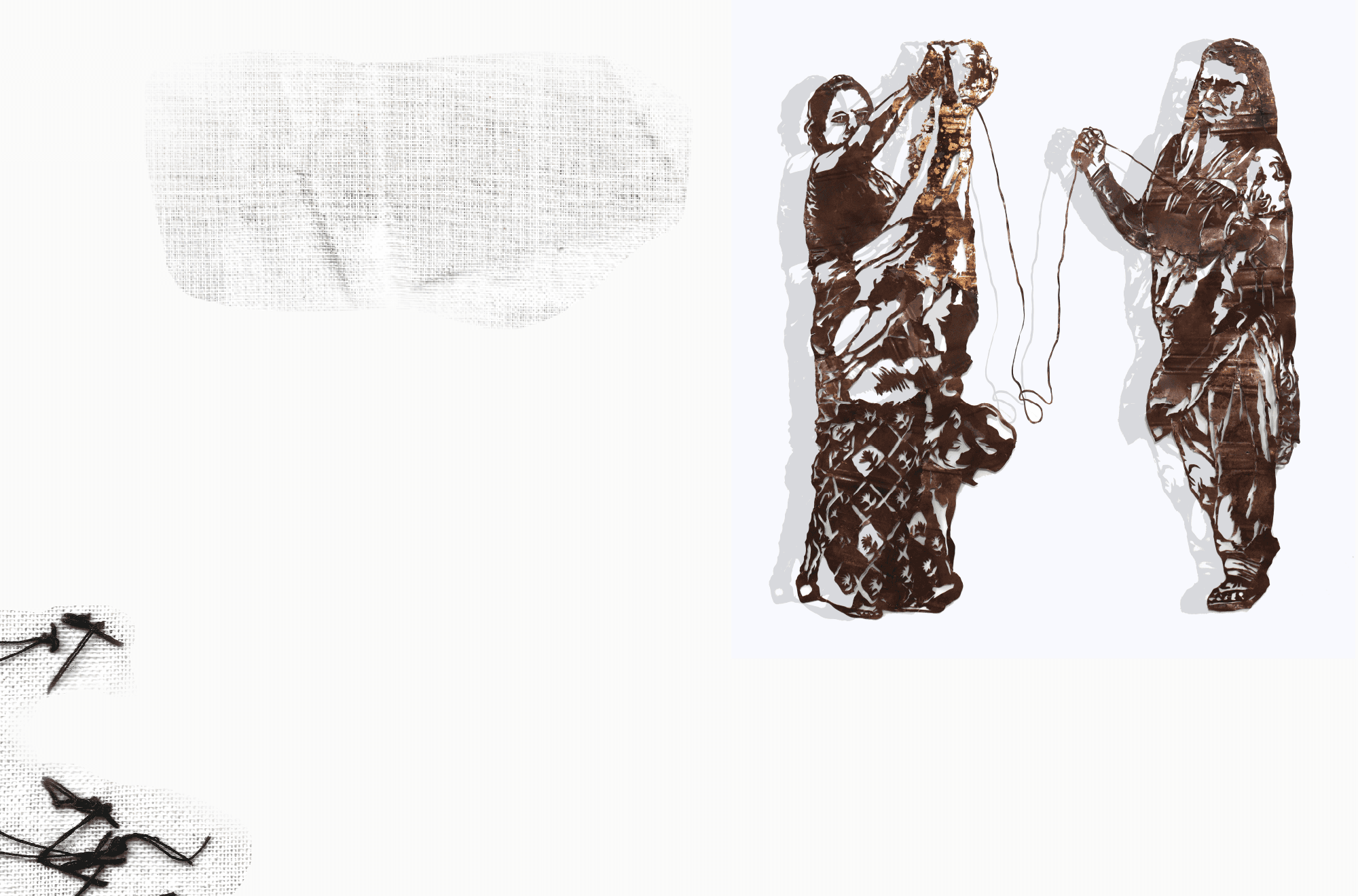
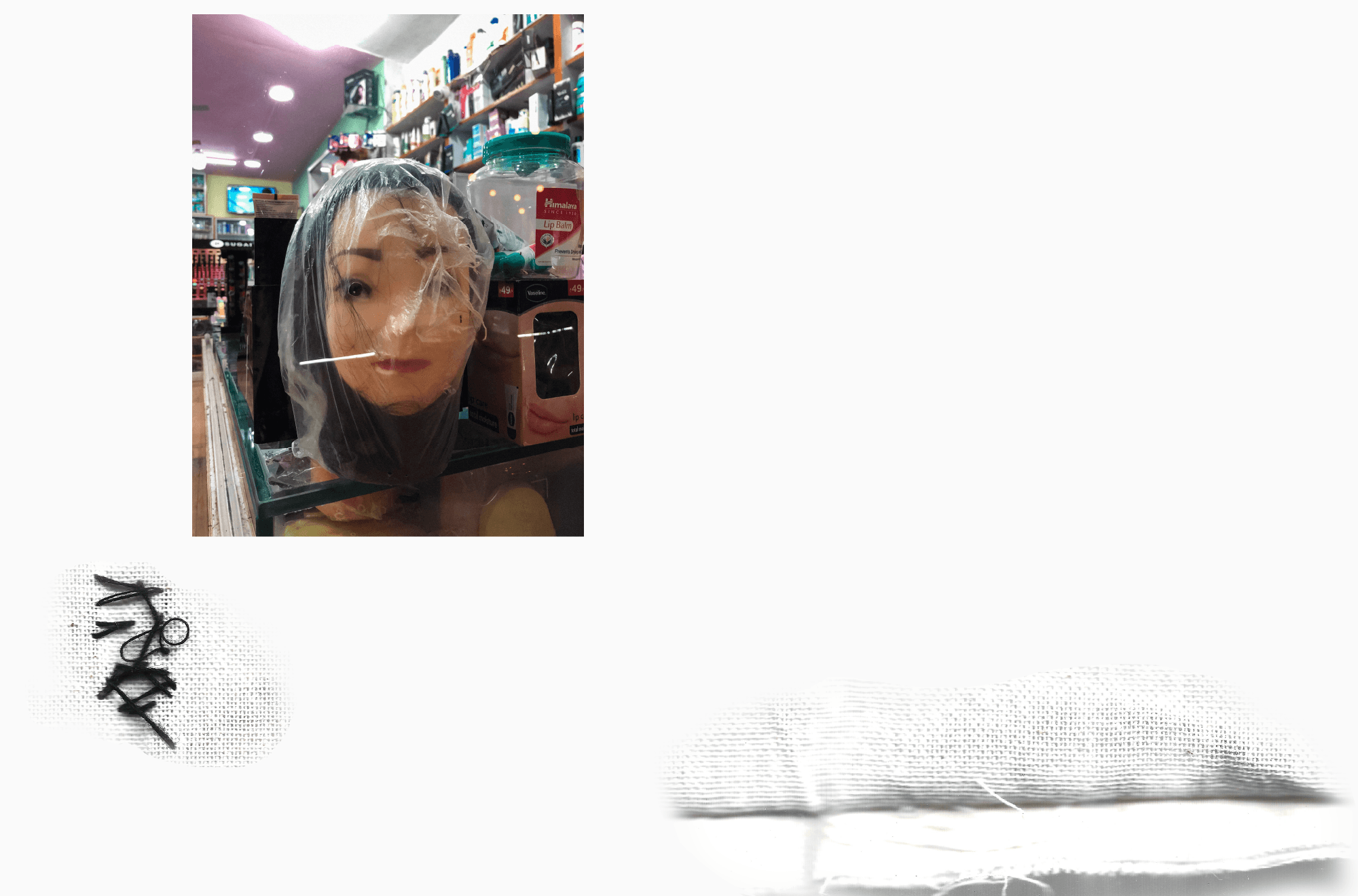
¹ A note about the artwork
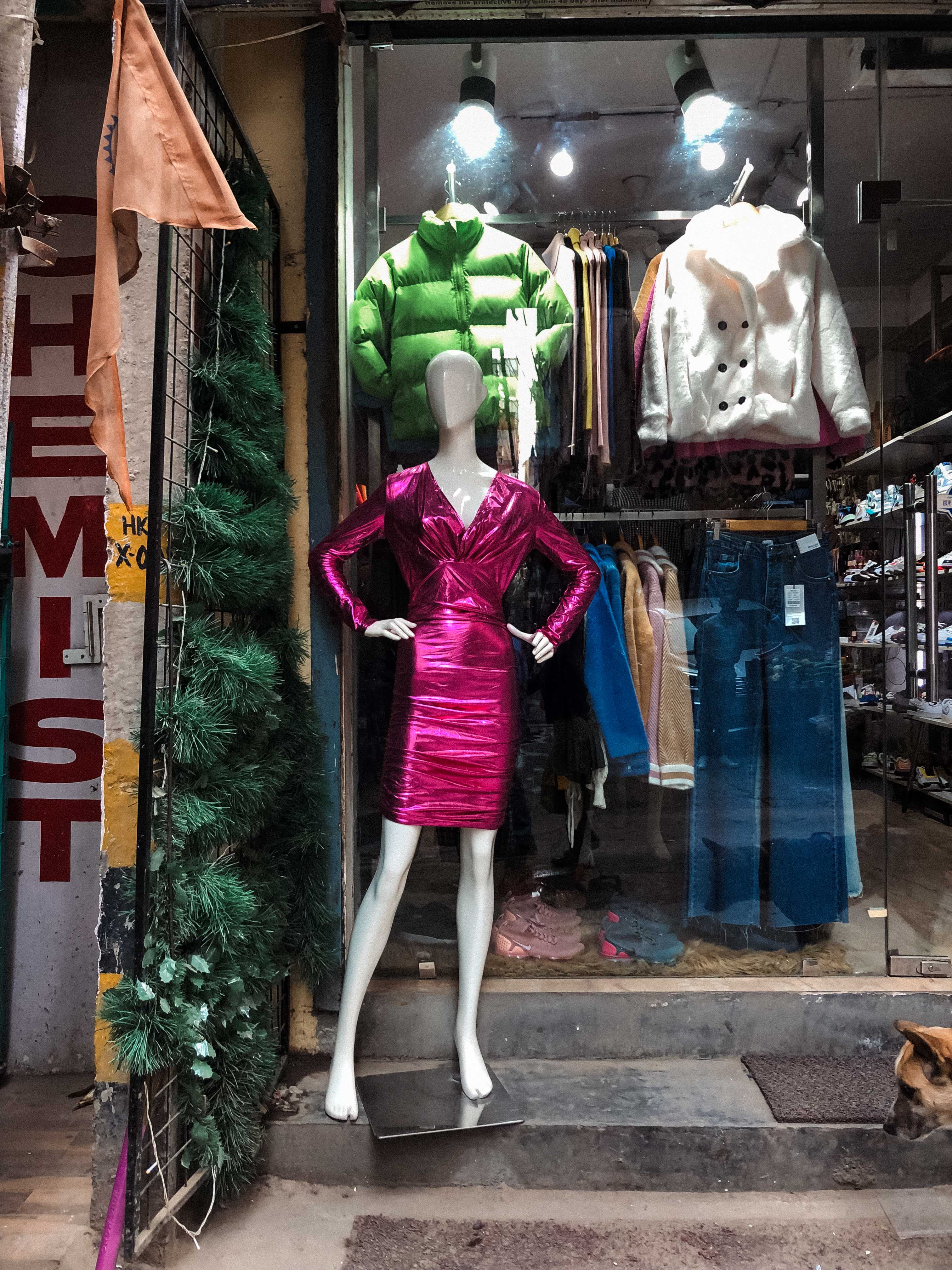
The photographs are part of a series titled “Enjoying Like Anything!” by Menty Jamir. They were first exhibited publicly as part of the exhibition, A Place is Made but Do We Get It? curated by Anna Sireiliu Charenamei as part of the Curatorial Intensive South Asia, ‘25 supported by Khoj International Artists’ Association and Goethe Institut, New Delhi.