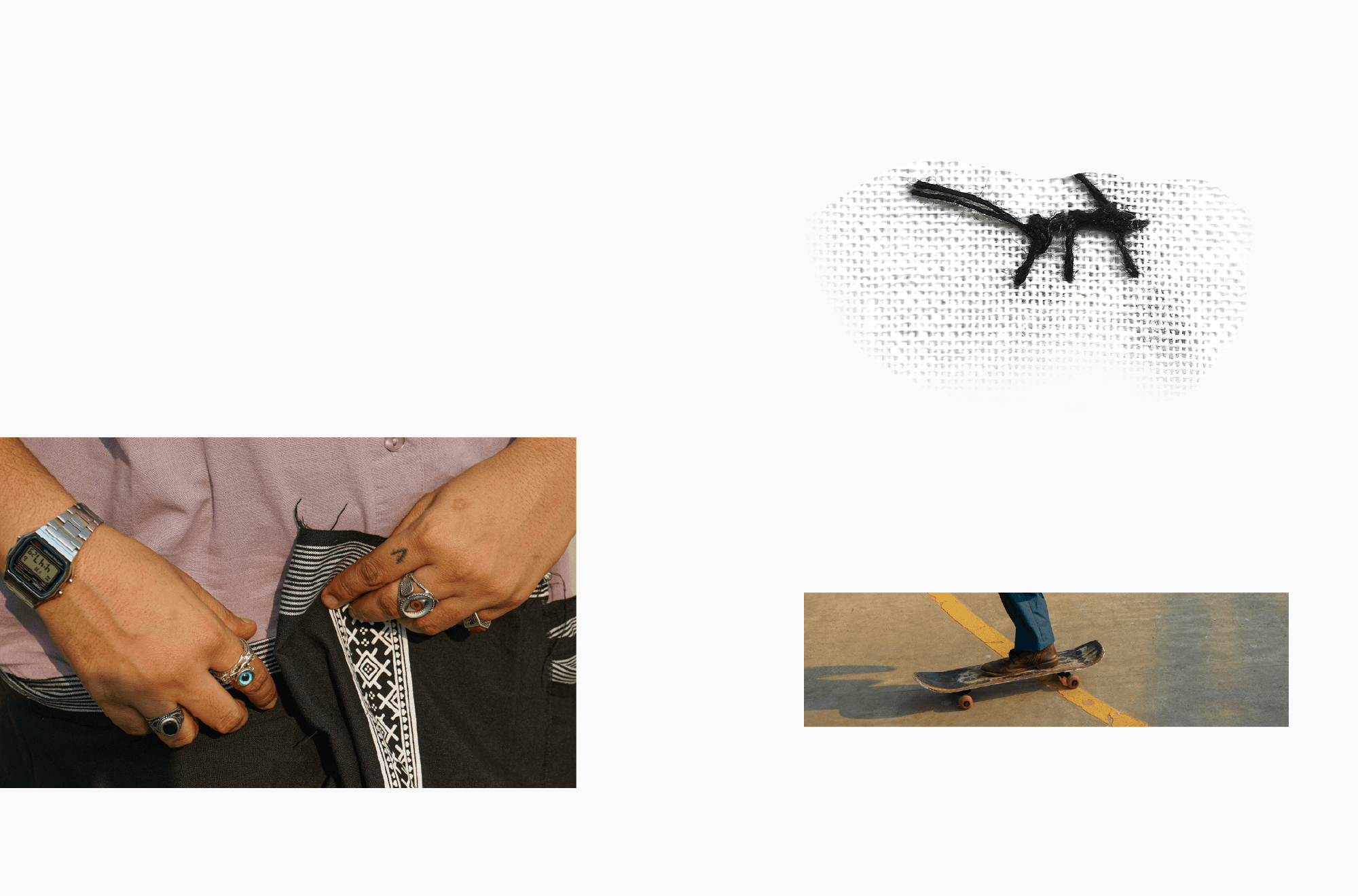

Kallol Datta is an artist and independent researcher based in Kolkata, Eastern India. A cornerstone of their practice is extensive creative research in clothing practices of the Korean Peninsula, Japan, South West Asia and North Africa.
The earliest written legal socio-mandate in Ancient Greece was drafted by Zaleucus in the 7th century BCE, known as the Locrian code. It stated that a freeborn woman could not be chaperoned by more than one female slave unless she was under the influence of alcohol. Nor could she leave the city gates during the night unless she was an adulteress. Only courtesans would be permitted to wear gold jewellery and garments with purple borders. Married men were not to wear gold, studded rings or a Milesian cloak unless they solicited prostitution or committed adultery.
*****
Since its inception, clothing has been used by the dominant majority as a tool to subjugate, intimidate and oppress minorities. I have been researching clothing practices native to the South-West Asia and North Africa (SWANA) region, the Korean Peninsula and Japan for more than a decade through multiple mediums spanning literature, art, photography, textile archives, historical records and more. In this essay, I write about class and caste based laws and social codes which have existed since ancient times across the Korean Peninsula to isolate and discriminate against oppressed folks; weaponising clothing and one’s appearance to maintain unchecked power structures as documented in Sin Yun-Bok’s paintings Yaguemmohaeng and Yeondang and the Veritable Records of the Joseon Dynasty.
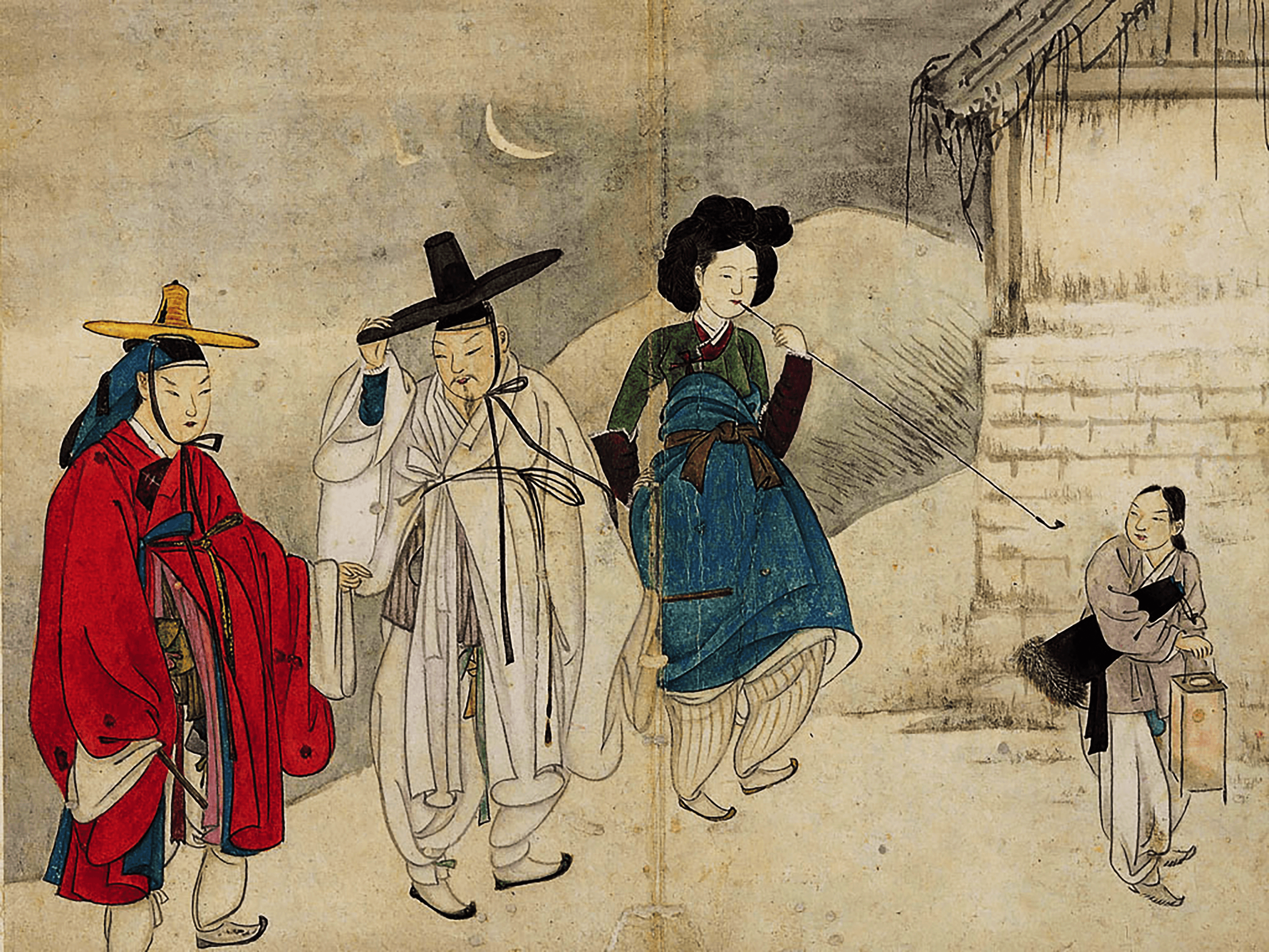
Yageummohaeng by Sin Yun-Bok, Korea Open Government License (KOGL)
*****
The Four Books for Women was an assortment of writings to instruct young Chinese women specifically those belonging to aristocratic families and aid in their education. The four books were titled as Lessons for Women, Women’s Analects, Domestic Lessons, and Sketch of a Model for Women. The publishing house Duowen Tang brought these four books together in a single publication during the 17th century, and it quickly became the standard in educational books for young girls and women of the late Ming dynasty. Lessons for Women, an ancient text by Ban Zhao, regarded as China’s first female historian, enjoyed a wide circulation from the 16th century. She had originally written the book as instructions for her daughters around the first century CE.
“Exhibit tranquillity, unhurried composure, chastity, and quietude. Safeguard the integrity of regulations. Keep things in an orderly manner. Guard one’s action with a sense of shame. In movement and rest, it is always done in proper measure. This is what is meant by woman’s virtue. Choose words [carefully] when speaking. Never utter slanderous words. Speak only when the time is right; then, others will not dislike one’s utterances. This is what is meant by woman’s speech. Wash clothes that are dusty and soiled, and keep one’s clothing and accessories always fresh and clean. Bathe regularly, and keep one’s body free from filth and disgrace. This is what is meant by woman’s bearing. Concentrate on one’s weaving and spinning. Love no silly play nor laughter. Prepare wine and food neatly and orderly to offer to the guests. This is what is meant by woman’s work.” - excerpt from Lessons for Women, Ban Zhao
When I first came across Ban Zhao’s texts, they felt both ancient and recognisable. Ban Zhao’s writings were seen as radical during the Han dynasty and even during the 16th and 17th centuries, education reformers often referenced her work to push for women’s education. The Four Books for Women was positioned as a parallel to the Four Books of Neo Confucianism, which was a book used by boys and men studying for Imperial Examinations. In addition to Lessons for Women, Ban Zhao also authored the guide Precepts for Women, the four precepts being virtue, speech, manner and merit. Religious edicts and imperial proclamations of the past influenced by Eastern Confucian principles still bear influence in contemporary global societies.
Confucianism was used as a tool, a soft power by China to extend influence in the Korean Peninsula around the 9th century CE. Confucian teachings had amalgamated with Taoist and Buddhist beliefs leading to the development of the Korean writing system to combat the high illiteracy levels in Korea. Neo-Confucianism in the newly minted, late 14th century Joseon dynasty was the foundation for all branches of learning.
*****
Joseon women’s hanbok, consisting of the jeogori, chima, baji and more layers also demonstrated a Confucian ideal - that of modesty. Since the inception of clothing, dominant forces have generally believed that ‘modesty’ could be achieved by cloaking the female form. It was the duty of a woman to maintain that acquired modesty. To foreigners visiting or working in the Korean Peninsula, the hanbok was intriguing, since it concealed and revealed at the same time.
The jeogori or the Korean wrap upper garment worn as part of the hanbok, in its earlier form was ungendered. The garment roughly maintained similar proportions for both men and women until the 16th century. From the eighteenth century onwards, the differences between the jeogori for men and women were clearly visible. On the basis of codes drafted by Late Joseon period Confucian scholars, the jeogori for women became shorter and tighter towards the 19th century, so much so that the garment did not cover the chest region anymore; hence, women started wearing heorittis. For men, the jeogori transitioned to an undergarment, worn under a robe or coat. The evolution of the men’s jeogori was attributed to their participation in more public, social activities. Women were not afforded a public life and were mostly confined indoors to do the housework, with the jeogori still worn as their outer garment. Their jeogori was so short that it exposed the waistband of the chima underneath as well as the goreum sticking out under the wearer’s arm. The same Joseon Confucian scholars who drafted the clothing codes found this salacious and termed it as ‘wicked’.
Korean men and women in the Joseon era wore clothes not prescribed by unwritten usage, but by binding statutes. Changes in clothing were possible, but the limits were extremely narrow; clothes had to change to suit their age, their station in life, and their occupation of the moment.
Built upon Neo-Confucianist ideals, Joseon society had four classes :
Yangban - Nobility
Jungin - ‘Middle Class' - scholars, heads of Guilds, illegitimate children of the yangban
Sangmin - Commoners - peasants, artisans, merchants
Cheonmin - Outcastes
Enslaved people who were of the lowest standing were not included in the four classes. Clan structures became more strict and maintaining the purity of the ‘bloodline’ was paramount. Men belonging to the nobility could have only one wife, but several concubines. Children born from commoner wives or enslaved concubines were considered illegitimate and were denied any yangban rights. Yangban or noble women were completely hidden from the outside and were sequestered indoors, forced to conform to Confucian ideals of purity, obedience, chastity and faithfulness.
The term baekjeong was used to refer to a member of the untouchable caste in the Goryeo period of the 10th century. Folks who were referred to as baekjeong belong to communities who traditionally were butchers, basket weavers, executioners, and tanners. During the Joseon period, the term was used as a pejorative to address the lowest, oppressed class of society, who were not seen as human. In South Korea today, butchers are still associated with the word baekjeong. The Kabo Reform of 1894 abolished the Korean caste system but discrimination and oppression continued in Korean society. Family registers of the baekjeong were different and isolated to those of the general population. The names and professions in their registers were marked with a red dot.
The baekjeong were coerced into wearing the paeraengi, a straw hat instead of the traditional gat to visually identify their caste. They were not allowed to tile their roofs in their dwellings and were not permitted to use silk and leather for their clothes and shoes. A member of the baekjeong caste had to lower themselves in the presence of a yangban and could not drink or smoke in front of them. In the event of a marriage, they were unable to ride a horse, and married baekjeong women were forbidden from wearing any hair ornaments or even a hair pin. They were not allowed surnames and were forbidden from using certain characters in their personal names; characters which translated to terms such as benevolence, righteousness, rites or wisdom. They were seen as inhuman, impure and even in death their bodies were placed in isolated graveyards so that there was no intermingling with the sangmin.
*****
Veiling historically and currently is seen as an Islamic preoccupation. However the first known reference to veiling predates the 7th century BCE Locrian code. In an Assyrian legal text of the 13th century BCE, veiling was restricted to respectable women and prohibited for those involved in sex work. The veil is also mentioned in the Middle Assyrian Laws, more than 1200 years before the advent of Islam. Only nobility and upper class families could afford to sequester their women. The veil was considered a sign of respectability and also of a lifestyle that did not require the performance of manual labour. Enslaved women and women belonging to outcaste communities, who laboured in the fields were not expected to wear the veil, which would have hampered their every movement.
During the Joseon era, women belonging to the yangban and jungin classes were expected to veil themselves in public spaces. The sseugaechima was a veil whose basic shape was made similar to the chima. It was around twelve inches in length and its width narrower than the chima. It was worn over the head so it covered the forehead, with the ends of the bands strapped under the wearer’s chin. The jango, a cloak shaped veil, was made of silk, consisting of an outer layer and white lining, white cuffs, and a purple collar. Two chest straps were attached below the collar. It also had a wide dongjeong, or a white band attached to the neckline that prevented oil stains from the hair. The making of the jango continued without any changes from the early and mid-Joseon period when women often wore it as an outer dress. Green was an oft prescribed and preferred colour for the jango. Green was a contentious colour in Joseon history. At times it was ascribed to cuckolded men and was also the dominant colour used to cloak women.
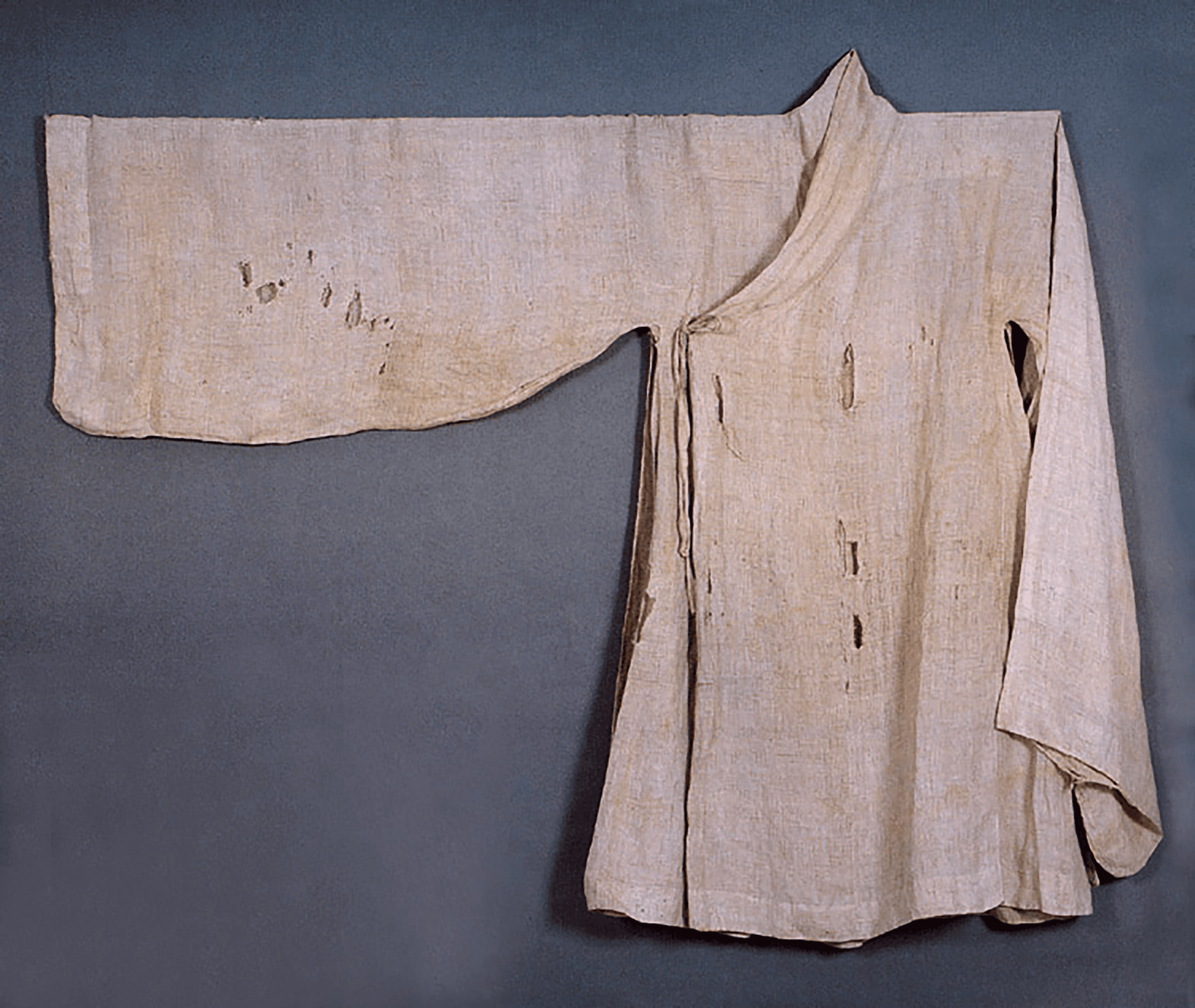
Dopo, men's coat with a centre-back seam and panel, excavated from the tomb of Hong Geuk-ga, Andong University
The caste and class system defined by Confucian scholars in the Joseon era saw their influence infiltrating even inner wear for women. The dansokgot was a pair of women’s inner wear with wide legs and a close crotch. They were usually made of relatively high quality materials, such as silk and hangra because they were worn under the chima by yangban and jungin women. They were always made in off-white or unbleached fabrics and the side seams of these drawers were stitched with additional strips of cloth from the inside to provide strength. Although hard to distinguish from the dansokgot, the soksokgot was inner wear made out of cotton or hemp; coarser materials, and worn under the chima by commoners. Since sangmin women were expected to work out in the fields and toil, the soksokgot was more streamlined than the dansokgot.
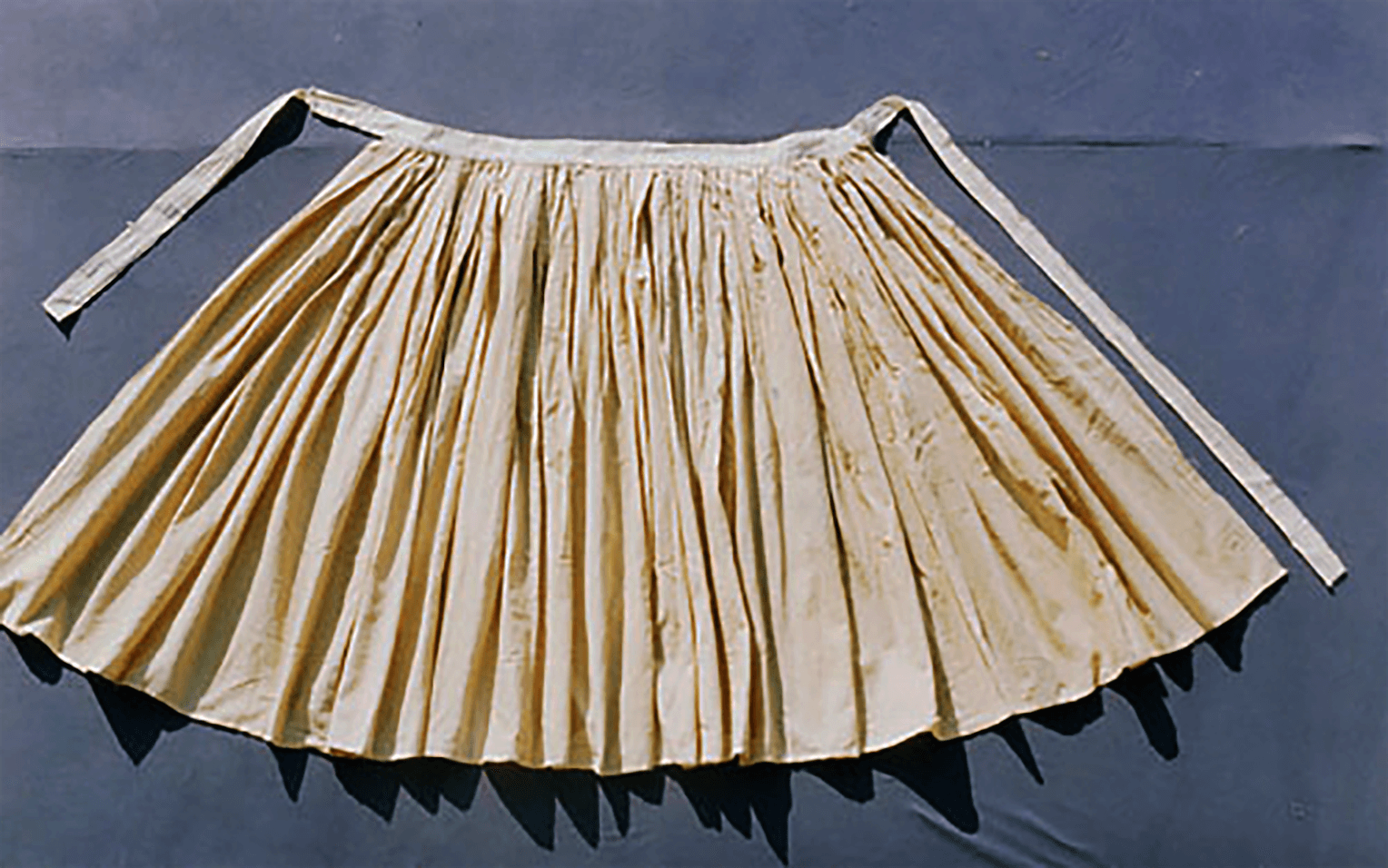
Myeonpohotchima, an unlined skirt (chima), excavated from the tombs of Yi Cheon-gi family, Ulsan Museum Collection
Towards the late Joseon period, men’s outerwear flourished, with various styles of overlays such as the cheollik, jungchimak, dopo, and durumagi among others. The durumagi was worn all year round with an elevated version in starched ramie also known as the hotdurumagi constructed in a single layer of the textile. Each seam was finished with a one millimetre seam finish since the durumagi was often sheer. Towards the end of the nineteenth century the durumagi became every man’s typical coat style, as social hierarchies seemingly broke down during the Japanese occupation of the Korean Peninsula. The working classes could not afford ramie and hence wore the durumagi in coarser cottons and reclaimed fabrics.
Misogyny also intersected with the rigid class system in Joseon wardrobes. The finely woven mituri were sophisticated shoes made of braided hemp. The edges were made of boiled arrowroot vines. Worn by Confucian scholars and upper-class women, these shoes were called ‘flower hemp’ shoes since this style became popular during the early 19th century Enlightenment Period. Pairs with a set of red and green lines inserted into the insole were indicative of women’s mituri. Jingsin were waterproof shoes made of leather preserved in perilla oil. Owing to the jing or hobnail set in the sole, it was called jingsin. The toe caps for men’s jingsin offered more coverage and were crafted better with more hobnails set along the edges of the front and back sole. Men’s shoes generally used seven layers of leather for the sole, whereas women’s jingsin used three layers.
*****
In late Joseon society, all men and women were prohibited from cutting their hair, as it was seen as a gift from their parents. Children and unmarried adults would part their hair down the centre and braid it into a single plait. Generally boys and men would add a black ribbon, and girls and women a red ribbon to the bottom of their braids. Married men would tie a topknot called sangtu. Married women would tie a bun at the nape of their neck. Binyeo or hairpins would be used to fix the buns in place. The ornamentation of these hairpins would denote the socio-economic status of the woman. The hair ornaments grew more decorative in the late Joseon period as women lived their lives indoors.
As Korean men attempted to westernise in the late 19th century, efforts to ban the sangtu or the topknot were resisted. In 1895, the Short Hair Ordinance prohibited topknots. King Gojong's topknot was removed on December 30, 1895, two days before the reform took effect. A Japanese barber removed the king's top-knot in front of a small audience of Korean and Japanese officials as no Korean barber could be found available to perform such a repulsive deed. Despite being told that any outburst of dissent would result in severe consequences amounting to death, many upper-class people within the city gates protested, but their efforts were in vain. Cutting the top knot was considered as a method of emasculating Korean men. Koreans in Mexico in the early 20th century, who were forced into functional indentured slavery to Mexican owners, also had their sangtu forcefully removed.
Residents of Seoul were forced to shave their topknots. But men kept theirs beyond the city walls. Porters and merchants refused to enter the city as a result. Winter temperatures soon intensified, rice and wood supplies decreased and prices skyrocketed. Therefore, a second decree was issued after around two weeks, declaring that haircutting was no longer required due to fears of citizens freezing and starving. For individuals without topknots, this caused issues because they were unable to leave the city for fear of being attacked by the rural residents.
“…men…in wearing their hair in one long loose braid down the back…is the common practice in boyhood, and simply denotes that the boy is unmarried. For their want of stature and their pretty faces their youth, not their sex, is responsible; and for their being mistaken for their sisters, the entire absence of femininity the cause. As for real women, it is no easy matter to see any. Those of the better class are strictly secluded from their seventh year onward, and the poorer fly at one’s approach like startled deer. To the foreigner the first step in the discrimination of sex in Korea is that all that is seen is male.” - excerpt from Chosön, The Land of The Morning Calm by Percival Lowell
*****
In the Korean Peninsula the Bone Rank system during the Silla period led to more caste systems which were just as restrictive. The Songbun was an ascribed status used in the Korean Peninsula and is still adhered to in the Democratic People’s Republic of Korea. The songbun was divided into three classes - the Core Class consisting of twelve categories, the Wavering Class comprising of eighteen categories and the Hostile Class which contains twenty-one categories.
*****
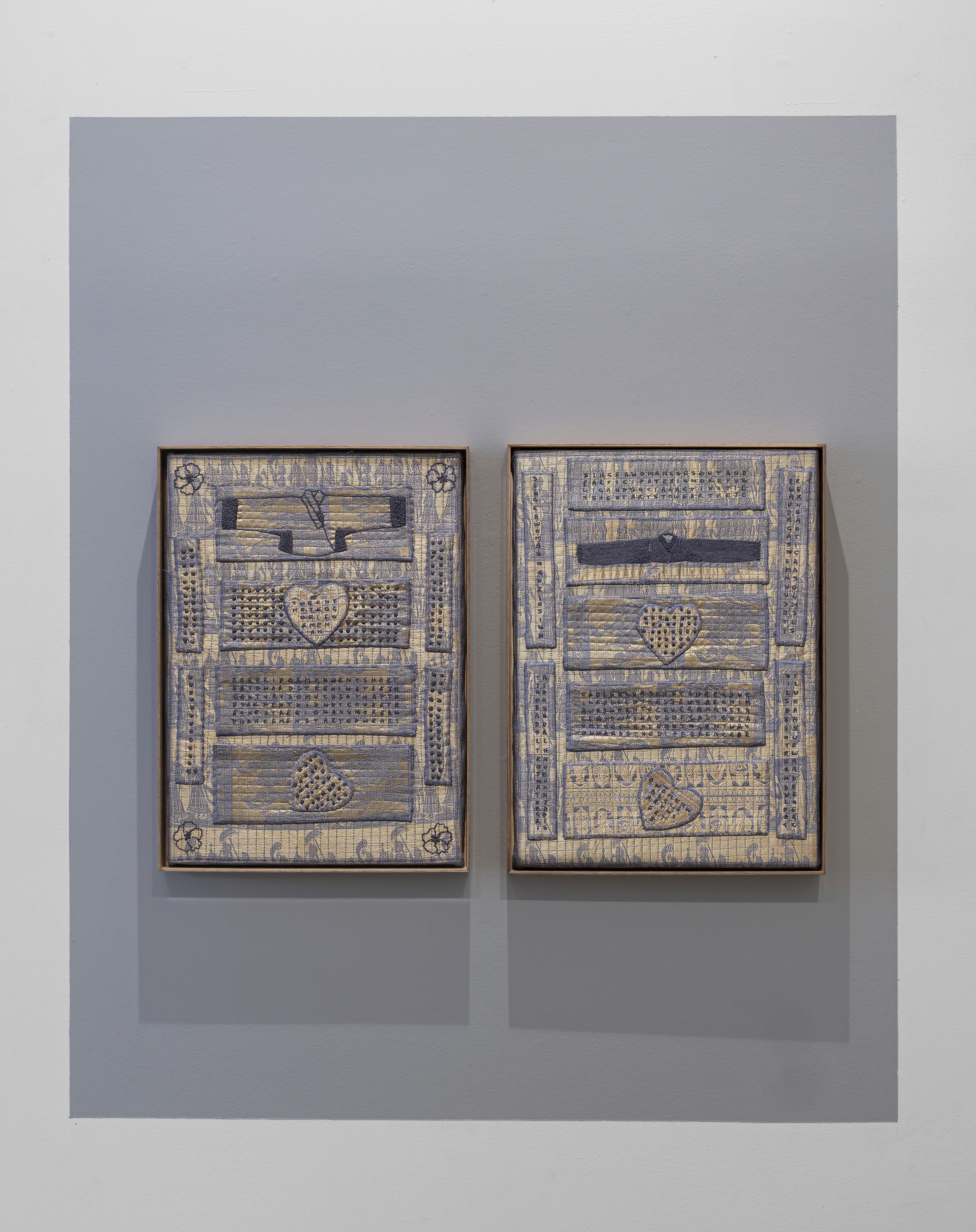
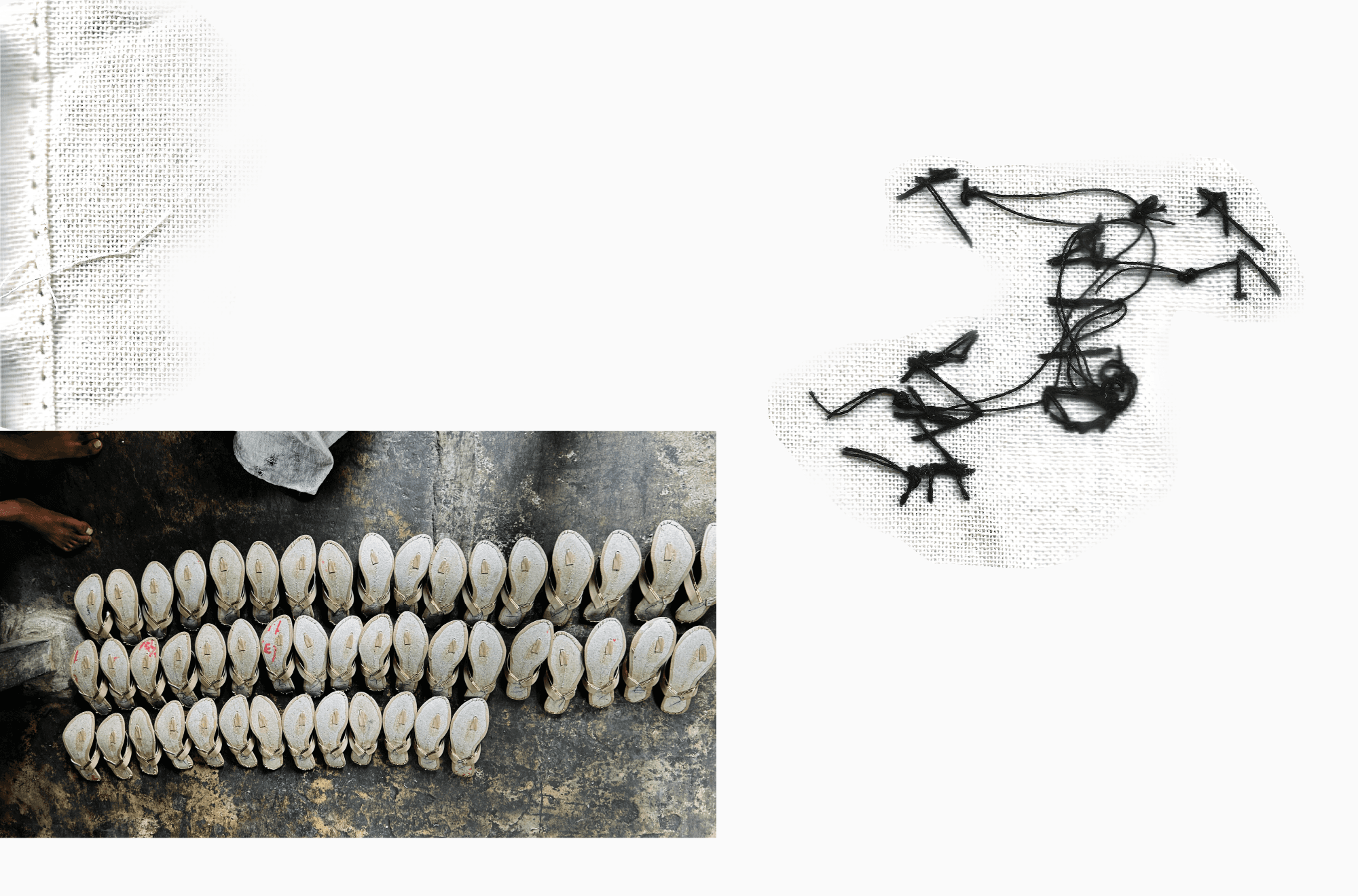
(L) Poster 07 and (R) Poster 06, Half-Truths Our Clothes Told Us, Kallol Datta, Volume IV: Truths, Half-Truths, Half-Lies, Lies, 2025, Installation view.
Image courtesy of Experimenter and the artist. Photo by Anil Rane
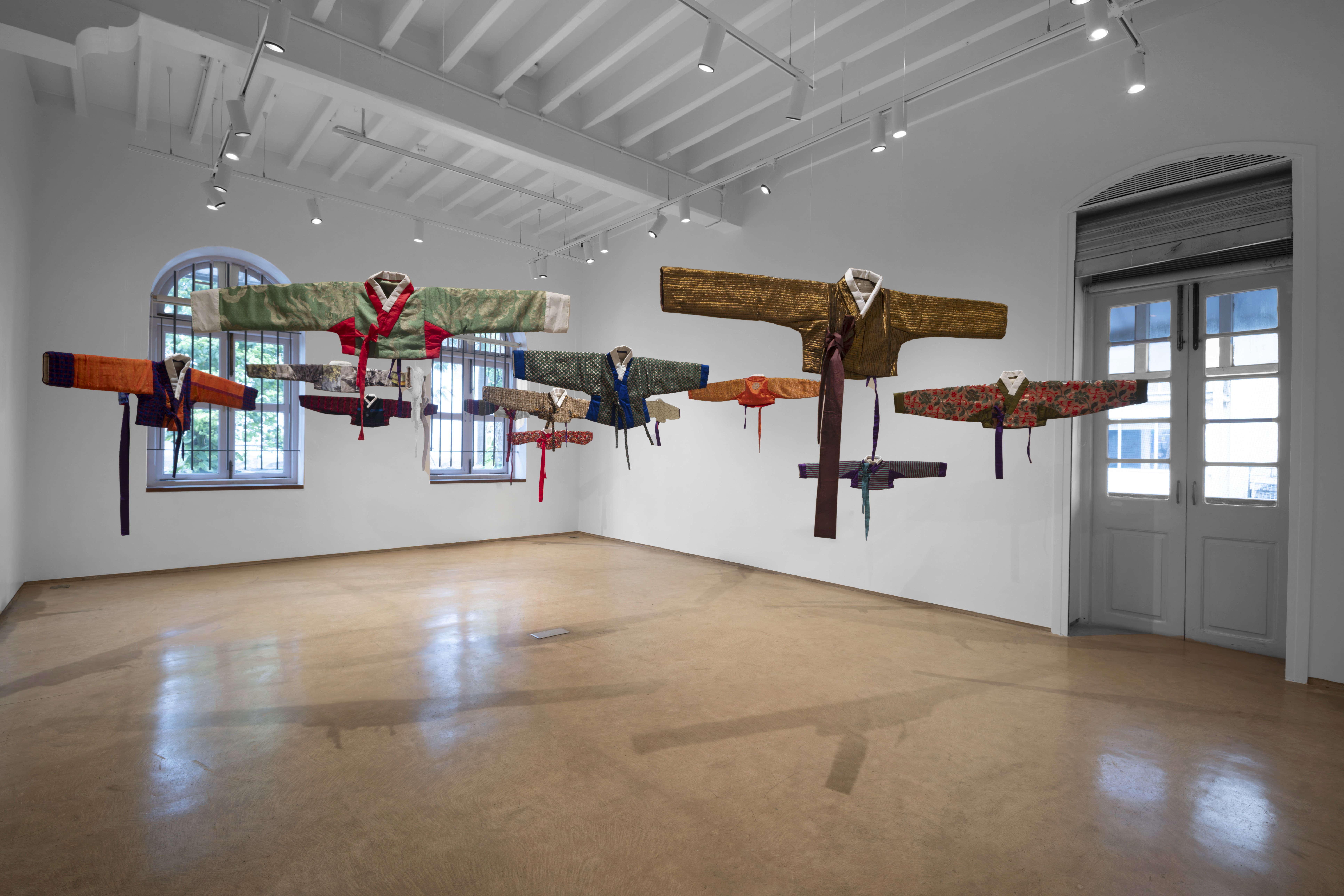
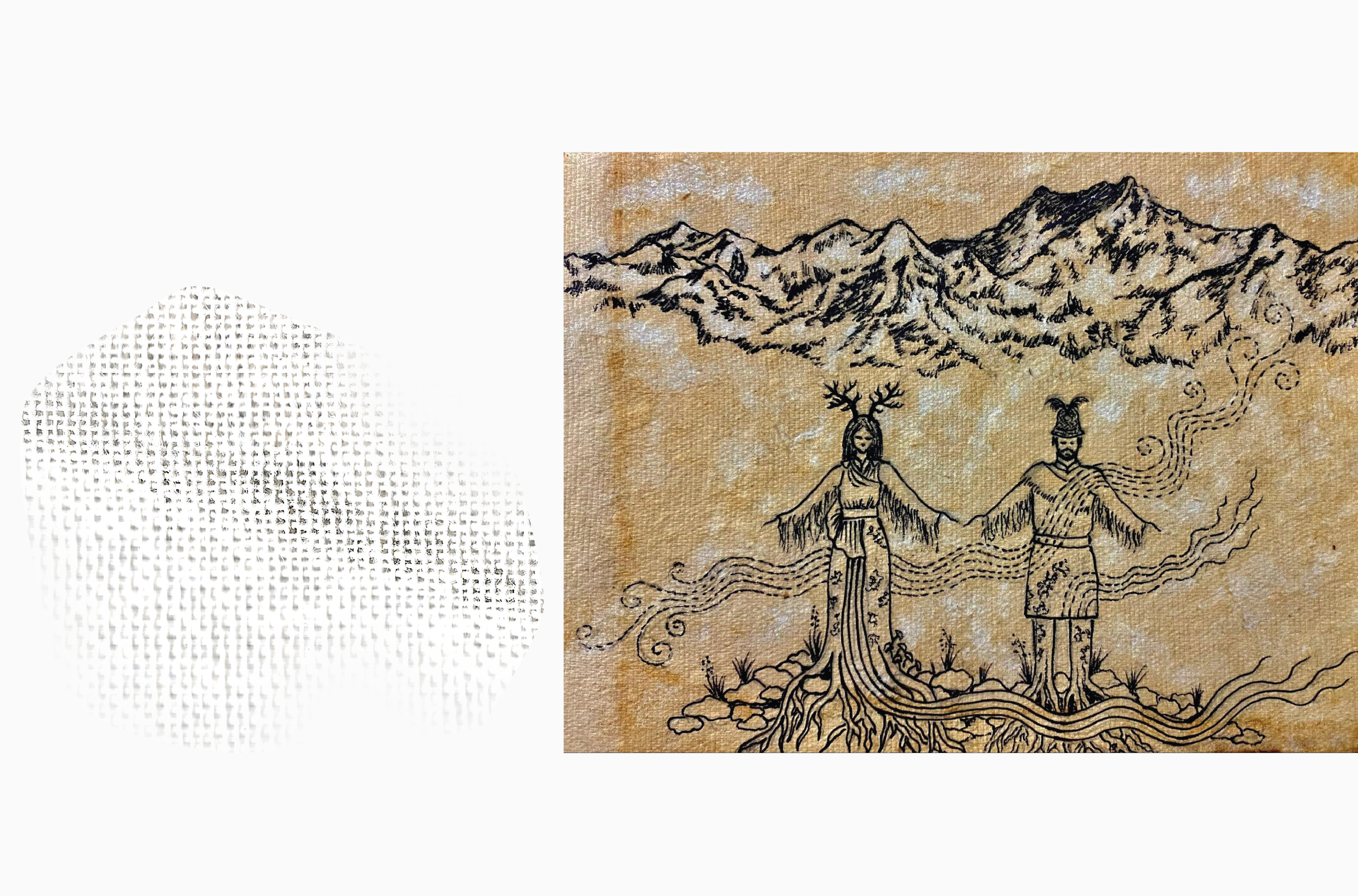
Truths Our Clothes Told Us, Kallol Datta, Volume IV: Truths, Half-Truths, Half-Lies, Lies, 2025, Installation view.
Image courtesy of Experimenter and the artist. Photo by Anil Rane
My creative research on clothing practices of the Korean Peninsula has spanned over a decade and I have been privileged and fortunate to access various repositories of information, across mediums; literature, art, imperial journals, photography, textile collections of museums, newspapers and magazines printed during the late Joseon period. The historical texts seemed familiar and commonplace because immediate parallels could be drawn to ongoing socio-political episodes in India, where I live and work. Violent caste based crimes are the norm. Clothing, facial hair, and food are used as markers to commit horrific crimes against Dalits, Bahujans, and Adivasis in South Asia; cosigned by politicians who occupy the highest political offices. As with the historical and often orientalist documentation of the Joseon class and caste systems, contemporary testimonies about caste-based atrocities in India are sanitised and only upper class reportage and academics writing on caste, class and clothing are platformed and acknowledged.
I have been thinking about ways to reimagine archives as a means to dismantle fascist origin points, and the role necessary inventions could play in looking between the gaps of existing national archives; be it recollections, re-imaginations, establishing an active voice to forefront the lives of those who are disproportionately impacted by dominant majorities in the region. Reclaiming clothing and textiles could perhaps be a conduit for the same.